


Transparency is a virtue that is accepted blindly by most blockchains. All transactions, balances, and interactions are transparent and such a lack of privacy is usually positioned as an assurance of fairness. The issue is that financial markets fail not due to the concealment of rules, but because information is sprayed out so readily. In the actual market, the information asymmetry and exposure determines the results much more than ideology. Dusk Network starts with this unpleasant fact, instead of denying it.
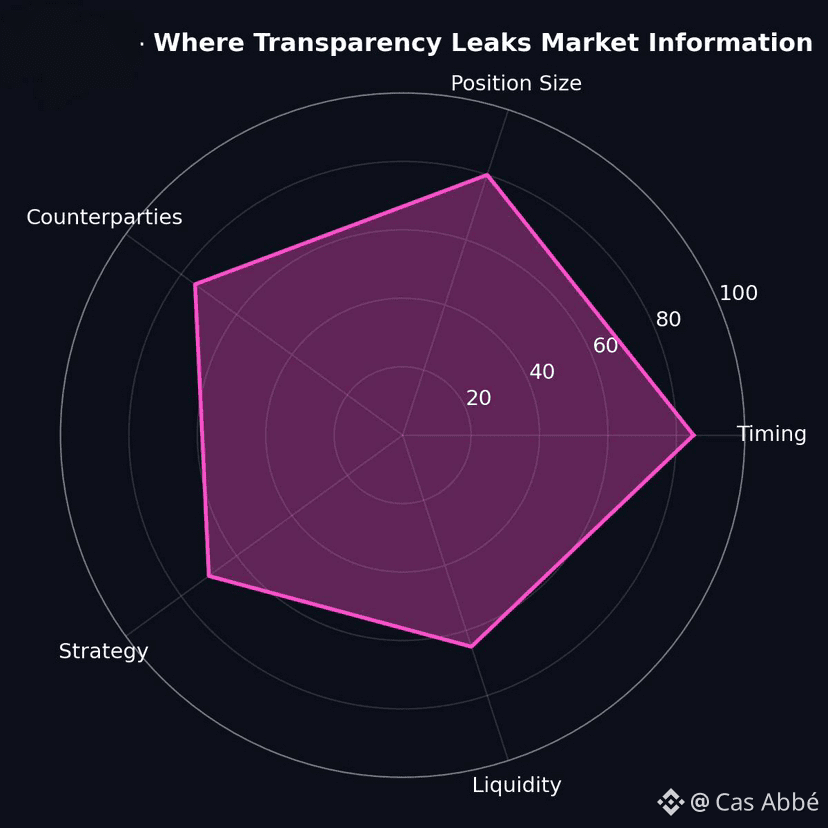
The fact that confidentiality is not a loophole in traditional finance but a stability mechanism. Banks, funds, and institutions do not post their positions in real time as this will attract manipulation, front-running and strategic exploitation. This logic is default in public blockchains. Metadata broadcasting is a competitive advantage that will persist even in cases where the transaction is legal and compliant. The main idea of Dusk is that the lack of transparency on the incorrect layer reduces systemic trust, but systemic vulnerability.
Dusk is more of privacy as a strategy in order to minimize unwarranted exposure than conceal action. The system has been created in such a way that verifying of rules has the ability to be done without providing raw transactional data. This difference is important in that it redefines privacy as a compliance mechanism rather than an anti-compliance mechanism. Instead of concealing activity, Dusk allows participants to demonstrate that activity was done within specified limits with the confidentiality of sensitive information.
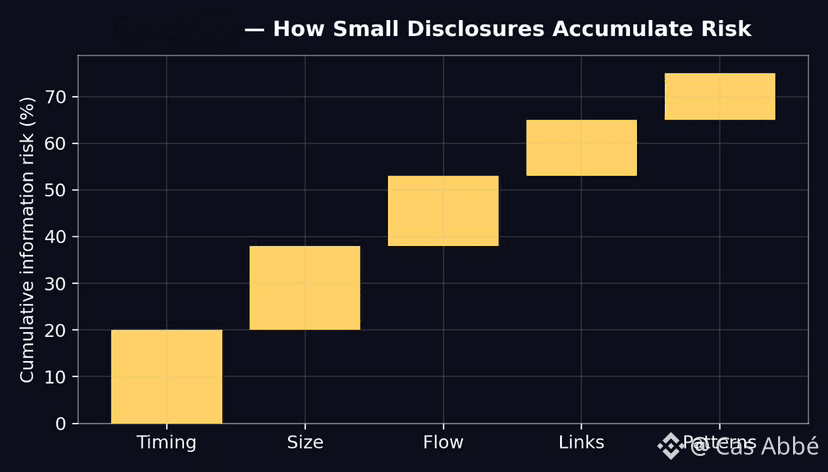
The structural implication is positive. The number of assets that are not tolerant to information leakage, including regulated securities, debt instruments, and institutional trading flows, can be practiced on a public blockchain without transferring to totally permissioned systems. Dusk tries to maintain the principle of decentralization but at the same time recognizes the fact that not everything should be in the open.
Competition is the danger of execution. Privacy-preserving verification is a complex cryptography and system design. This raises development cost and slows the iteration. Mistakes are more difficult to identify, and the audit process becomes more challenging. Dusk is willing to take this risk since the alternative, which is plain transparency, is not scalable to serious financial needs.
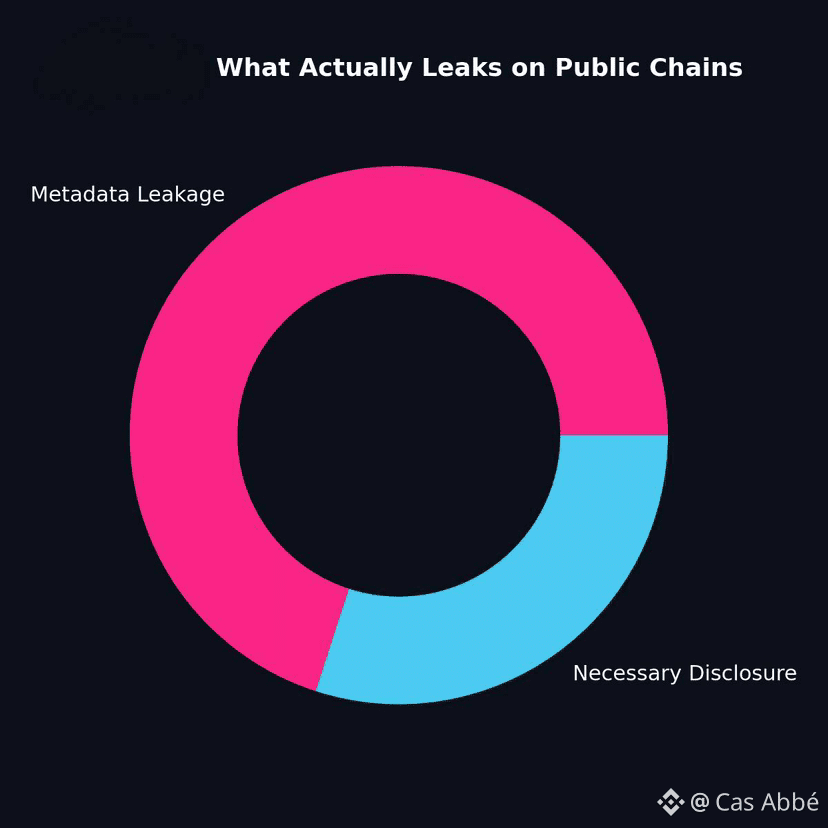
Misunderstanding is also another risk. Privacy systems are viewed with a lot of suspicion by regulators and observers who confuse privacy with secrecy. Dusk should always show that confidentiality and accountability do not contradict each other. Unless it is able to convey this, adoption can stop even when there is technical soundness.
This renders Dusk to be a long-horizon project. It is not its worth in terms of immediate traction but its value in terms of whether it would ultimately be demanded by financial markets that infrastructure would be less informative through default. In case that demand comes true, the designing of Dusk will become prophetic. Otherwise, Dusk is an unmatched technically correct solution in search of the appropriate problem.