

Late last year, around the holidays, I was settling a handful of cross-border payments for a small trading desk I run on the side. Nothing dramatic. Just stablecoins moving between accounts to keep fiat ramps balanced. What caught my attention wasn’t the fees themselves they weren’t outrageous it was how unpredictable everything still felt. A small congestion spike slowed confirmations, fees crept higher than expected, and I found myself waiting longer than I should have for something that’s supposed to behave like digital cash.
I’ve been around infrastructure tokens long enough to know that this usually isn’t a technical issue. It’s economic. Unlocks landing at the wrong time. Inflation pushing supply into weak demand. “Utility” that exists on paper but doesn’t actually absorb pressure when it matters. None of it broke anything outright, but it was enough to make me step back and look more closely at how some networks handle their token models once the launch excitement fades.
The bigger pattern is hard to ignore. A lot of chains still design tokenomics for the early narrative phase, not for what happens after real usage begins. Distributions skew toward insiders. Unlock schedules hit before demand is organic. Inflation keeps flowing whether the network is healthy or not. For people actually using these systems not just trading them that shows up as uncertainty. Are fees going to be offset by burns? Will staking rewards hold value, or just dilute? Does governance actually affect settlement behavior, or is it cosmetic?
For stablecoin rails in particular, this matters more than most people admit. These flows are supposed to be boring. Predictable. When the token layer adds volatility instead of absorbing it, the whole system feels less dependable, even if the tech underneath is solid.
I keep coming back to how municipal bonds work. They aren’t designed to excite anyone. They exist to quietly fund roads, utilities, and transit, with issuance schedules tied to real usage and predictable cash flows. When supply and demand are aligned, nothing dramatic happens and that’s the point. When they aren’t, yields spike and confidence erodes fast. Payment networks need that same mindset, where economics support reliability instead of amplifying noise.
Plasma is clearly trying to build around that idea by keeping its scope narrow. It doesn’t pretend to be a general-purpose playground. It’s an EVM-compatible chain built almost entirely around stablecoin payments, with an emphasis on zero-fee USDT transfers and fast, deterministic settlement. By skipping things like NFT marketplaces or heavy DeFi primitives, it avoids the congestion patterns that usually distort fee markets.
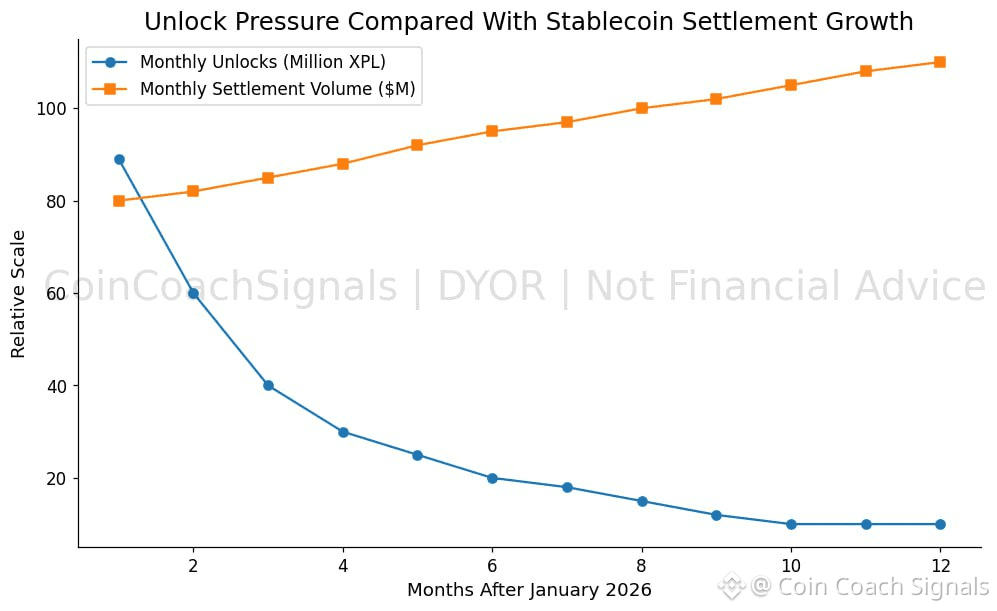
That focus shows up in the mechanics. PlasmaBFT their modified HotStuff consensus pipelines block production so proposal, voting, and commitment overlap instead of stacking sequentially. In practice, that allows high throughput without chasing headline TPS. Live usage today sits closer to the teens, but it’s handling real merchant volume over eighty million dollars a month without the variability you usually see when networks get noisy. The protocol-level paymaster for USDT transfers reinforces that design choice. Simple sends are sponsored and rate-limited, which keeps them cheap and predictable while still discouraging abuse. Since the beta launch late in 2025, total transactions have crossed two hundred million, and stablecoin deposits now sit north of eight billion dollars across variants like USDT and pBTC.
XPL itself stays out of the spotlight. It’s used where it needs to be used base fees for non-sponsored transactions, staking for validator security, and settlement guarantees for things like cross-asset bridges. A portion of fees gets burned through an EIP-1559-style mechanism, which helps counter inflation when activity picks up. Inflation started at five percent and has already stepped down to around four and a half, with a path toward three over time. That doesn’t make it deflationary, but it does anchor issuance to a longer horizon instead of perpetual growth.
Governance runs through XPL as well, though it’s intentionally conservative. Recent proposals adjusted validator requirements and staking parameters rather than chasing flashy changes. It’s not designed to make the token feel exciting. It’s designed to keep block production boring and predictable.
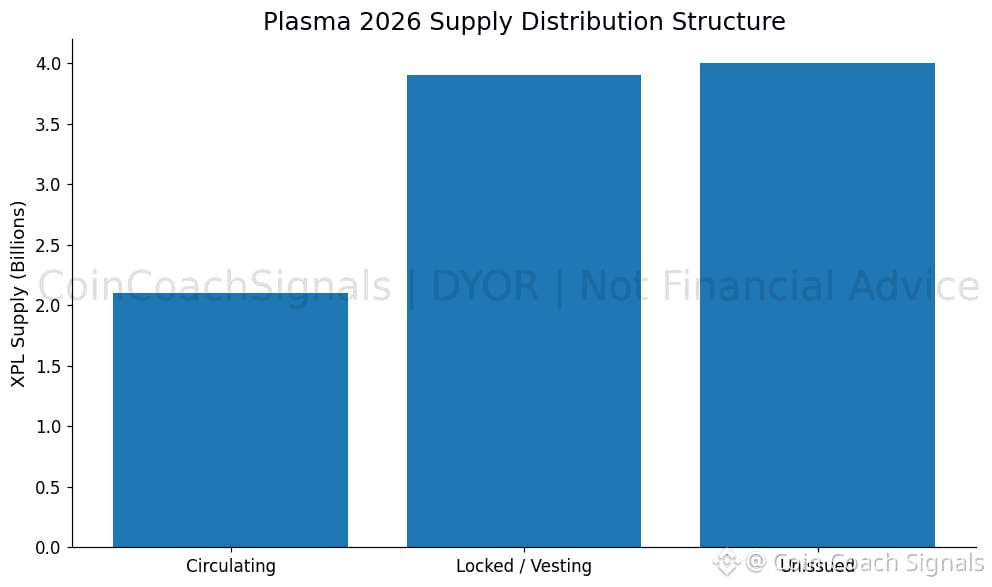
Market-wise, the circulating supply is a little over two billion out of a ten-billion maximum, with daily volume around seventy-five million dollars. Liquidity is there, but it’s not the kind of order book that whips around on small trades.
Short-term price action still behaves like crypto. Unlocks matter. Narratives matter. The upcoming January 25 release of roughly eighty-nine million tokens for ecosystem growth is a real overhang, and I’ve traded enough of these cycles to know how quickly sentiment can swing around vesting events. Flips can work if you time them well, but they’re noisy and often disconnected from what the network is actually doing.
Longer term, the question is simpler and harder at the same time. Does this chain become habitual? If integrations like the Tangem wallet support or cross-chain lending flows keep pulling in steady usage, then fees, burns, and staking demand start reinforcing each other quietly. That’s when tokenomics stop being a talking point and start acting like infrastructure. But that kind of alignment takes time. It shows up in second and third transactions, not announcement spikes.
There are real risks. Solana and Tron already dominate cheap stablecoin movement. Regulatory pressure around stablecoins especially with Tether so deeply involved could slow expansion. And any PoS system has edge cases. A coordinated validator failure during a high-volume merchant window could freeze settlements long enough to undo a lot of trust very quickly. There’s also the open question of whether inflation tapering alone is enough if adoption stalls. Without broader issuer participation, burns may not offset supply meaningfully.
Looking at it in 2026, tokenomics like this feel less about clever design and more about restraint. Distribution, unlocks, and incentives only matter insofar as they support repeat usage. If Plasma’s economics fade into the background while payments just keep clearing, that’s probably success. If they stay visible, it usually means something isn’t working yet.
@Plasma