

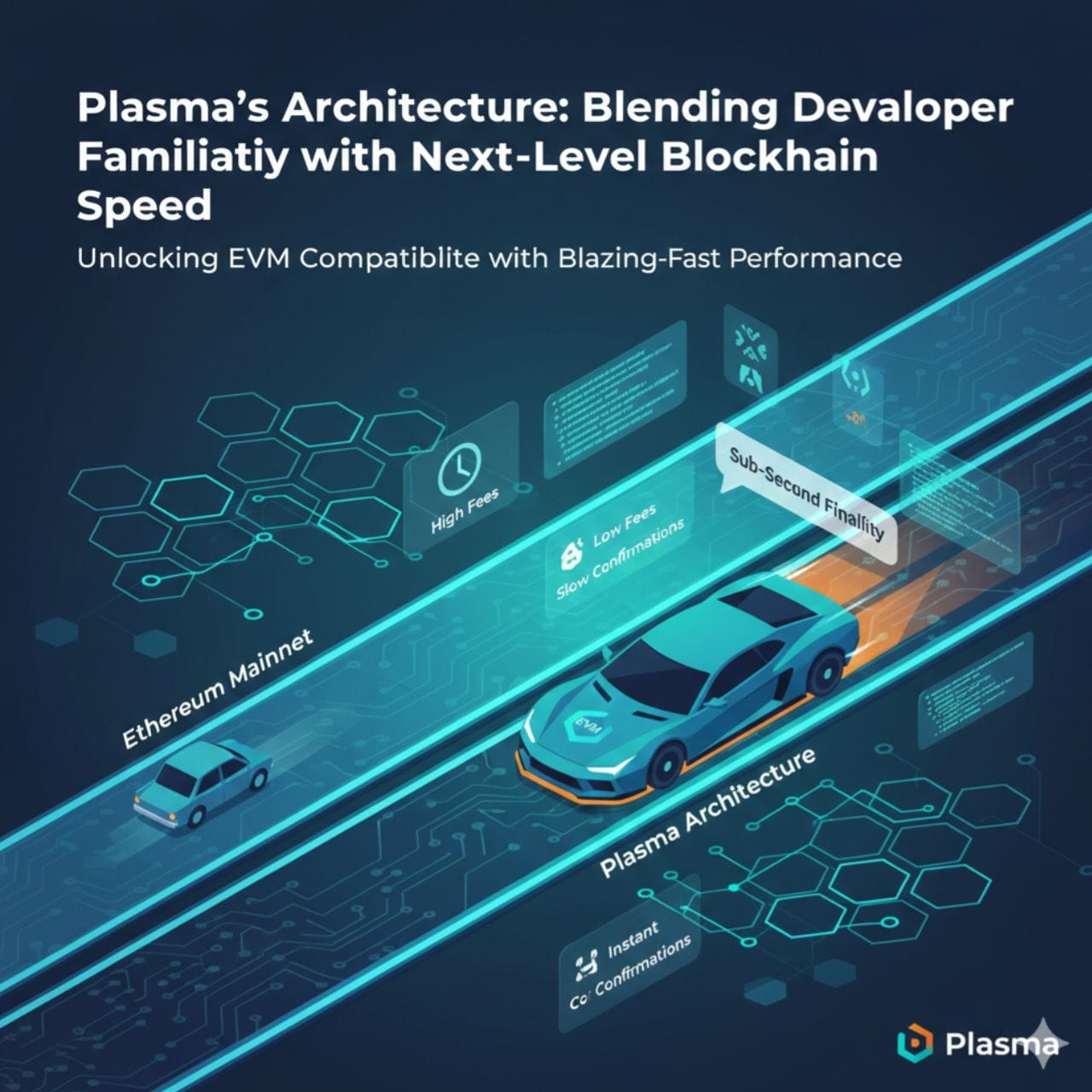
The speed limitations of today’s blockchains are often the first hurdle users and developers encounter. Whether it’s waiting for a transaction to confirm, watching fees climb during busy periods, or experiencing sluggish updates in apps, the friction is real and immediate—often before anyone even starts thinking about the underlying code. Plasma’s architecture was created to tackle these frustrations head on, without forcing developers to abandon the tools and knowledge they’ve built up over years of working with Ethereum.
Instead of scrapping the familiar, Plasma takes a pragmatic approach: it delivers a significant boost in performance while keeping EVM compatibility at its core. This means developers can keep building with the same smart contracts, libraries, and frameworks they already know, but with execution and confirmations that happen in the blink of an eye, often in under a second. The result is a blockchain platform where applications feel as fast and fluid as mainstream web apps, yet developers don’t face a steep learning curve.
Let’s unpack exactly how Plasma achieves this, and why its choices matter for both the people who build on blockchain and those who use it every day.
1. EVM Compatibility: The Foundation for Accessible Innovation
Ethereum’s Virtual Machine (EVM) isn’t just a piece of technology—it’s the backbone of a massive ecosystem. Over the years, developers have created an extensive suite of tools, libraries, and infrastructure for building, testing, and deploying smart contracts on the EVM. This collective investment has made Ethereum the default choice for decentralized application development.
Plasma recognizes the value of this ecosystem. By maintaining EVM compatibility, it allows developers to:
- Instantly port existing smart contracts to Plasma without rewriting code from scratch
- Use tools like MetaMask, Hardhat, Truffle, and popular wallets seamlessly
- Migrate projects with minimal disruption, reducing both cost and risk
This approach is akin to upgrading a city’s roads: you introduce better paving and traffic flow, but drivers don’t have to relearn how to get around. The rules, signs, and vehicles stay the same; only the experience improves.
2. Overcoming Ethereum’s Built-In Bottlenecks
While EVM compatibility is crucial for adoption, Ethereum’s architecture imposes unavoidable trade-offs. The network prioritizes security and decentralization, which means every transaction must be processed and validated by thousands of nodes, slowing things down. At times of high demand, this results in congested networks, high gas fees, and long confirmation times.
Plasma addresses these issues by:
- Reengineering the execution layer to minimize delays and maximize throughput
- Shortening confirmation times so users see results nearly instantaneously
- Updating consensus mechanisms to enable the network to reach agreement at much higher speeds
Plasma separates the act of quickly processing transactions from the slower, more deliberate process of final settlement. This dual-layer model allows for a trade-off: you get the responsiveness users crave without sacrificing the underlying security that blockchains are known for.
3. Sub-Second Finality: What It Means in Practice
Finality is blockchain’s way of saying, “This transaction is done and cannot be reversed.” In many blockchains, users must wait several seconds—or even minutes—before being sure their transaction is permanent. This wait time can be a dealbreaker for real-world applications, especially those requiring instant feedback.
Plasma aims for sub-second finality, which transforms the user experience. Imagine playing an on-chain game, trading assets, or running an AI-powered app where every action is confirmed almost instantly. This makes decentralized apps feel as smooth and interactive as their centralized counterparts.
For developers, this unlocks new use cases:
- Real-time multiplayer gaming, where every move is securely recorded on-chain without lag
- Decentralized exchanges that can match and settle trades in the time it takes to blink
- Live, interactive AI and IoT applications that react instantly to blockchain events
Faster finality doesn’t change the fundamental capabilities of blockchain, but it dramatically expands what’s practical—and enjoyable—to build.
4. Engineering for Performance and Reliability
Plasma’s architecture isn’t about empty promises or chasing benchmarks that look good in marketing materials. It’s a considered overhaul of how blockchains process transactions, with an emphasis on transparency and user experience.
Key design choices include:
- Deterministic transaction ordering, so developers and users know exactly what to expect
- Ultra-low latency execution, making apps feel responsive and modern
- Decoupling execution from settlement, allowing both to improve independently and reducing bottlenecks
By removing traditional obstacles—like waiting for slow consensus or dealing with unpredictable confirmation times—Plasma clears the path for developers to focus on building innovative applications rather than troubleshooting infrastructure.
5. Real-World Impact: Why Speed and Familiarity Matter
For traders, rapid finality means they can execute trades with confidence, knowing there’s little chance for price swings or network delays to derail their strategies. This is especially important during periods of high volatility, when every second counts.
For everyday users, the advantages are just as tangible. Transactions feel as seamless and reliable as using a mainstream payment app or messenger. There’s no more anxiety about whether a transfer went through or waiting minutes to see an in-app update.
From real-time gaming to instant NFT minting and beyond, the benefits of Plasma’s architecture ripple across the entire ecosystem:
- Developers can experiment with new ideas, knowing the underlying infrastructure won’t hold them back
- Users enjoy trustworthy, responsive apps that behave the way they expect
- The broader crypto community benefits from lower fees, predictable performance, and a smoother onboarding experience for new users
Frequently Asked Questions
Q: Is Plasma just Ethereum with a fresh coat of paint?
A: Plasma uses the same tools and smart contract standards as Ethereum, but its execution and consensus layers are purpose-built for speed and responsiveness, offering a distinct experience.
Q: Can Plasma guarantee sub-second confirmations in every situation?
A: Sub-second finality is the target, and the architecture is optimized for it. However, as with any distributed system, actual performance can vary based on network conditions and usage patterns.
Q: Does speeding things up compromise security?
A: Not inherently. Plasma’s security is rooted in how it structures consensus and settlement. By separating quick execution from final settlement, Plasma preserves security while dramatically improving user experience.
Plasma’s architectural philosophy is all about bridging the gap between what developers know and what users demand. By combining EVM compatibility with a high-speed execution layer and near-instant confirmations, Plasma makes blockchain technology approachable and practical—without sacrificing the innovations that make it secure and decentralized.
Ultimately, the value of any blockchain isn’t just in how fast it can process transactions, but in how well its design serves real users and developers. When evaluating new platforms, look beneath the surface: the true measure of innovation is whether it actually improves the way you build and interact with apps—not just how impressive the numbers sound.

Disclaimer: Not Financial Advice