
After researching for so long @Plasma I found that the market is often easily swayed by 'novel' technological narratives. Many people are praising the Move language (Sui/Aptos) or new virtual machine architectures, believing that they are the future. But if we return to the essence of business and development, we will discover an overlooked truth: in the field of software engineering, compatibility often triumphs over superiority.
We should study carefully, it's not about which language is more elegant, but which migration path has the lowest cost.
In the talent war of public chains, Plasma ($XPL) chose a route that seems conservative but is actually highly lethal: extreme EVM (Ethereum Virtual Machine) compatibility.
Today, we will deeply analyze from the perspective of the developer ecosystem why this strategy constitutes the unbreakable moat of Plasma.
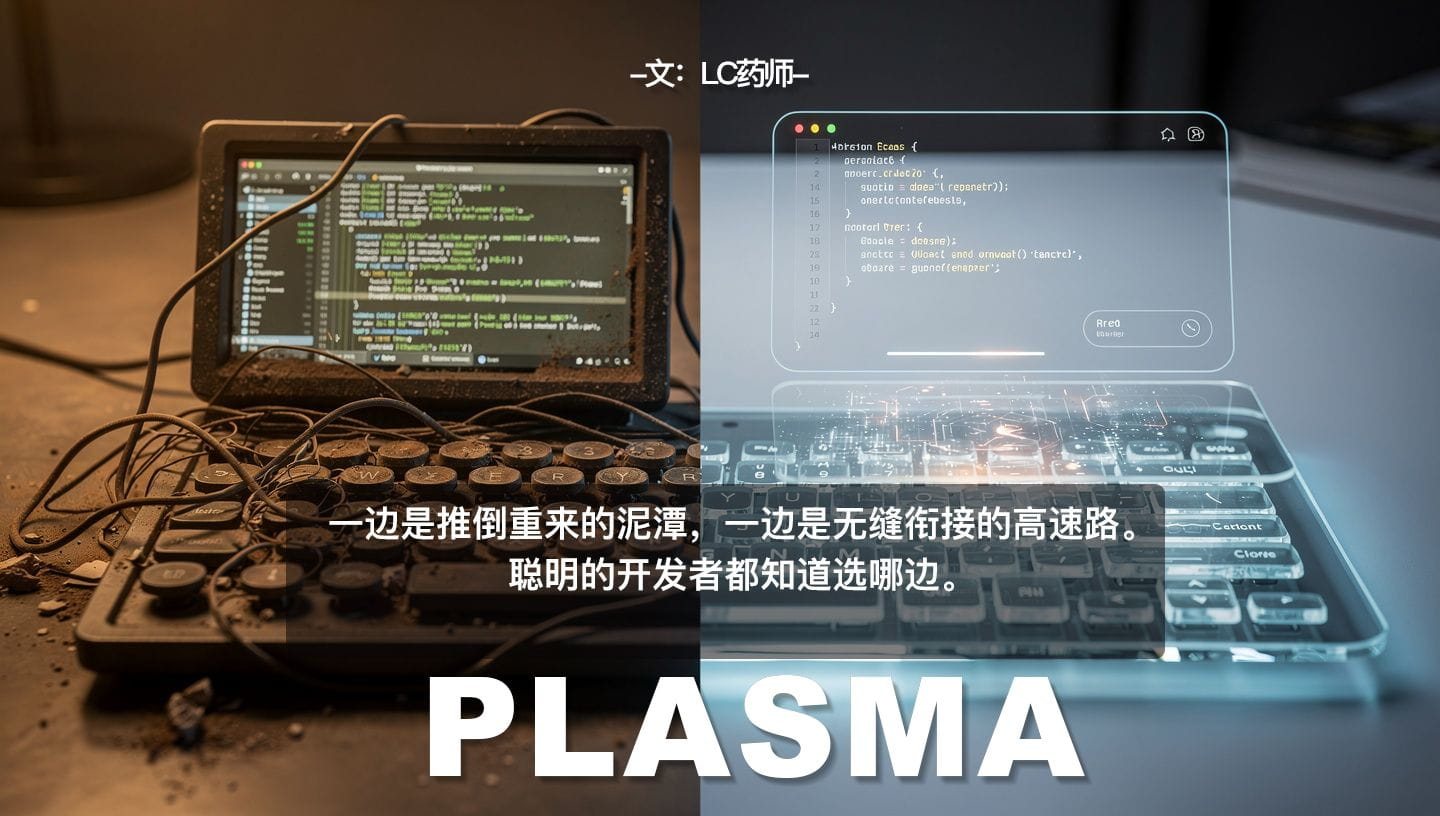
1. The Matthew Effect of Language: Solidity is the 'English' of Web3
In the world of blockchain development, there is a strong 'path dependence'.
Currently, over 90% of active smart contract developers globally and 99% of top DeFi protocols (such as Uniswap, Aave, Curve) are based on the Solidity language. Solidity, to Web3, is like English to global trade, an absolute universal standard.
Other competing public chains attempt to establish their own language barriers (like Move or Cairo). While this may be innovative from a technical perspective, it creates a huge barrier to entry commercially. For a mature project party, the cost of rewriting all code and reassessing security risks to migrate to a new chain is astronomical.
Plasma's strategy is very pragmatic: fully embrace the EVM standard.
What does this mean?
This means that the codebase, talent pool, and security experiences accumulated over ten years in the Ethereum ecosystem can be 'seamlessly inherited' by Plasma. Developers do not need to learn new syntax or modify core logic; they only need to change the RPC configuration to deploy existing DApps onto the $XPL network.
This level of 'Ctrl+C, Ctrl+V' migration experience is a seamless siphoning of the existing developer market.
2. Maturity of the Toolchain: From 'Bare Shell' to 'Luxury Finish'
To evaluate whether a public chain is developer-friendly, one cannot only look at the language but also at the toolchain.
This is the soft spot of many emerging public chains — although they have launched on the mainnet, their development tools are as rudimentary as 'bare shell': lacking useful browsers, debugging tools, and mature wallet adaptations.
In the Plasma ecosystem, developers can directly use industry-leading tools like MetaMask, Hardhat, Foundry, Remix, etc.
For users: No need to download new wallet plugins, zero threshold for usage habits.
For developers: Move in with a suitcase, complete infrastructure, allowing focus on business logic rather than environment setup.
The significant difference in this 'Developer Experience (DevEx)' directly determines the speed of ecosystem explosion. When the bull market arrives, the opportunity is fleeting, and developers will definitely prefer the platform that can go live the fastest and monetize the quickest. Plasma, with its mature EVM toolchain, just provides this 'plug-and-play' capability.
3. Reth Engine: Installing a 'New Heart' on Old Standards
Of course, some may question: 'If it's just compatible with Ethereum, isn't Plasma just a cheaper Ethereum? Where's the competitive advantage?'
This is precisely the most core technological breakthrough of Plasma — the high-performance execution engine (Reth).
It has adopted the 'shell' of Ethereum (EVM standard) but has completely replaced the underlying 'engine'.
Plasma uses the Reth client written in the Rust language.
Advantages of Rust: Compared to Ethereum's traditional Geth client (Go language), Rust has made qualitative leaps in memory safety, concurrency handling, and operational efficiency.
Actual effect: This allows the $XPL network to maintain 100% compatibility with the Ethereum ecosystem while achieving high throughput and low latency that can match or even surpass Solana.
This is a perfect solution of 'wanting both': both the vast ecosystem and compatibility of Ethereum and the high-speed experience of high-performance public chains.
Through the Reth engine, Plasma has successfully found the optimal solution between 'compatibility' and 'performance'.
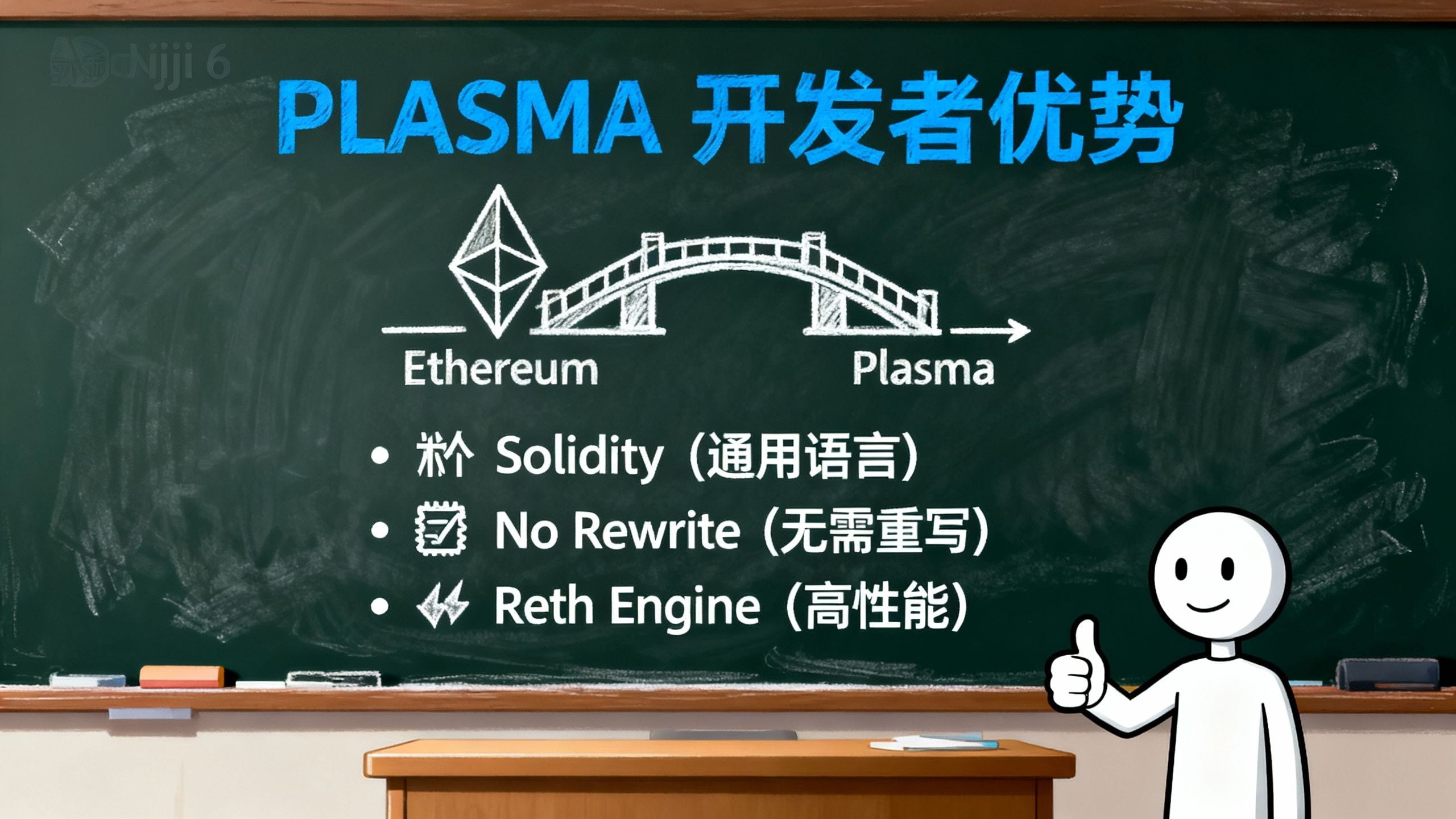
[Conclusion]
The essence of business competition is often not about who has the 'newest' technology, but about who is more 'human-centric'.
To reduce developer frustration, minimize detours for project parties, and ensure efficient capital flow, this is the underlying philosophy of Plasma.
While other public chains are still trying to teach developers 'to relearn', Plasma has already laid down standardized tracks, waiting for the trillion-dollar ecosystem to 'migrate with one click'. For investors, betting on $XPL is essentially betting on the greatest common divisor of the Web3 developer ecosystem.