
This week, the market is raising its predictions for the probability of a U.S. government shutdown. The temporary funding bill passed in November last year will expire on January 30, and the Republicans and Democrats still disagree on core issues such as the extent of Medicaid cuts and homeland security funding. Against the backdrop of deepening political polarization, this game has evolved from budget negotiations into a test of endurance; whoever compromises first will lose the narrative initiative.
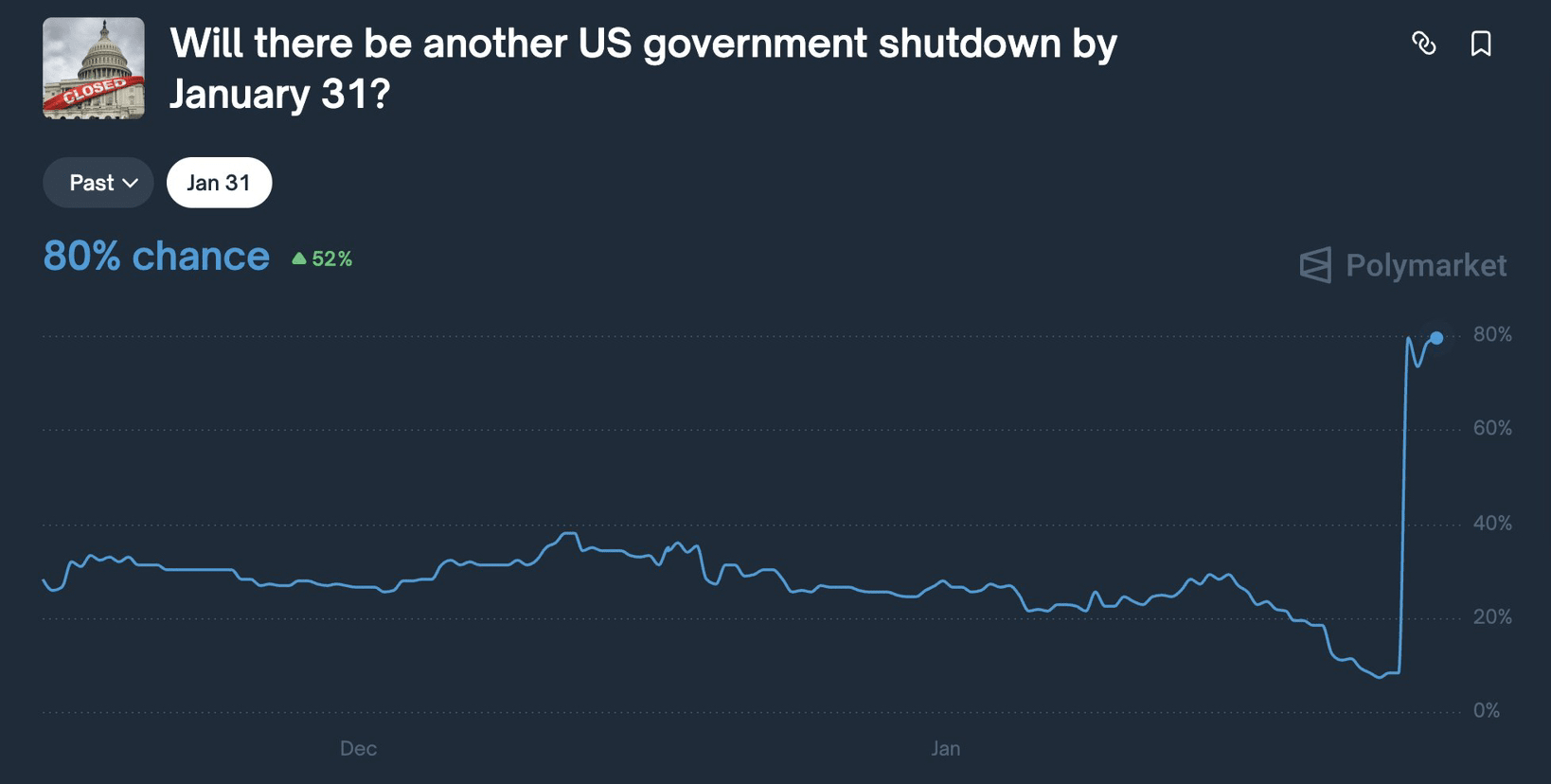
Looking back at the longest shutdown in history in 2025
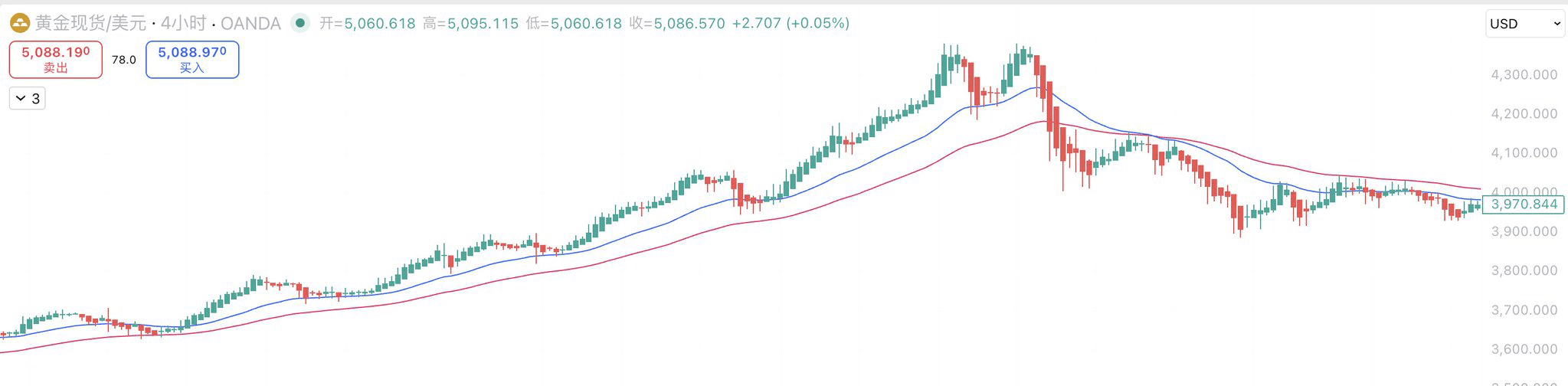
Not long ago, the U.S. experienced a 43-day-longest government shutdown in history. During that shutdown, both gold and Bitcoin reached all-time highs: the spot gold price soared to $4300 per ounce, while Bitcoin broke through $126,000.
This means that the market formed a consensus at that time: when the White House is closed, Washington's credit begins to be discounted, and non-sovereign assets will be repriced.
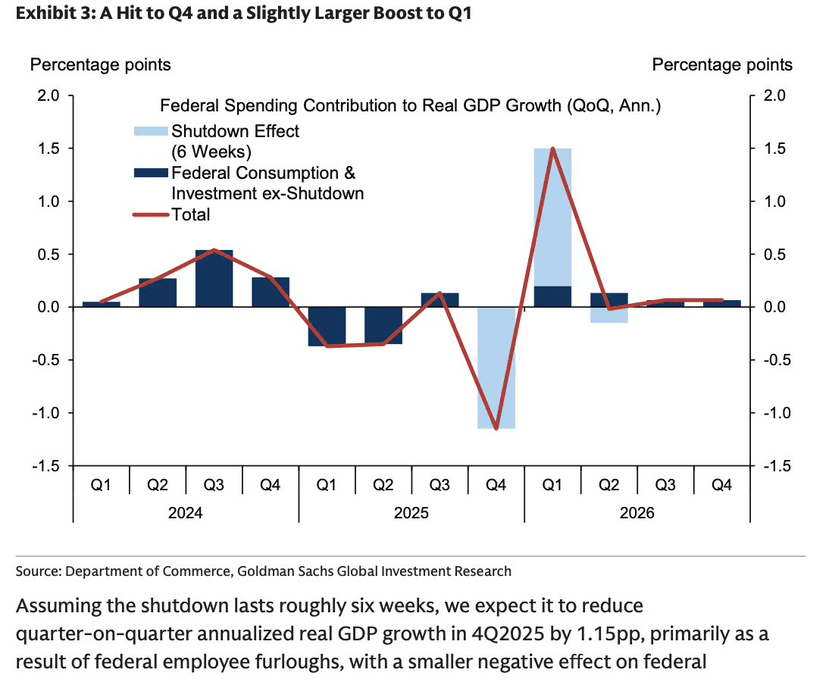
The shutdown has a substantial impact on the economy
The government shutdown is not merely a symbolic political game, but a direct interference with the operation of the economy. Last year's shutdown reduced the quarterly real GDP growth rate in the U.S. by more than about 1 percentage point. More destructively, the Department of Labor and the Department of Commerce suspended the release of key macro data such as non-farm payrolls and CPI, causing monetary policy to enter a semi-blind state.
When interest rate expectations lack data anchors, market risk pricing may experience brief disorder. This is also why during the shutdown period, the correlation between safe-haven assets and risk assets repeatedly reverses.
Why do safe-haven assets oscillate back and forth at the shutdown nodes?
Pre-shutdown (hedging risk): Currently, safe-haven funds are in a defensive rally stage. Investors are hedging against the uncertainty of whether 1.30 will shut down. The logic at this time is: if it shuts down, I need to have gold; if it doesn't shut down, I can just exit with a small loss.
Mid to late stage of the shutdown (liquidation): Once a shutdown occurs, a pullback may happen in the mid to late stage when the good news is exhausted. The reason lies in liquidity: federal employees are furloughed, government contracts are interrupted, and the market will experience a phase of dollar tightness. Institutions often prioritize selling the assets with the largest unrealized gains—gold and crypto assets are naturally the first to be affected.
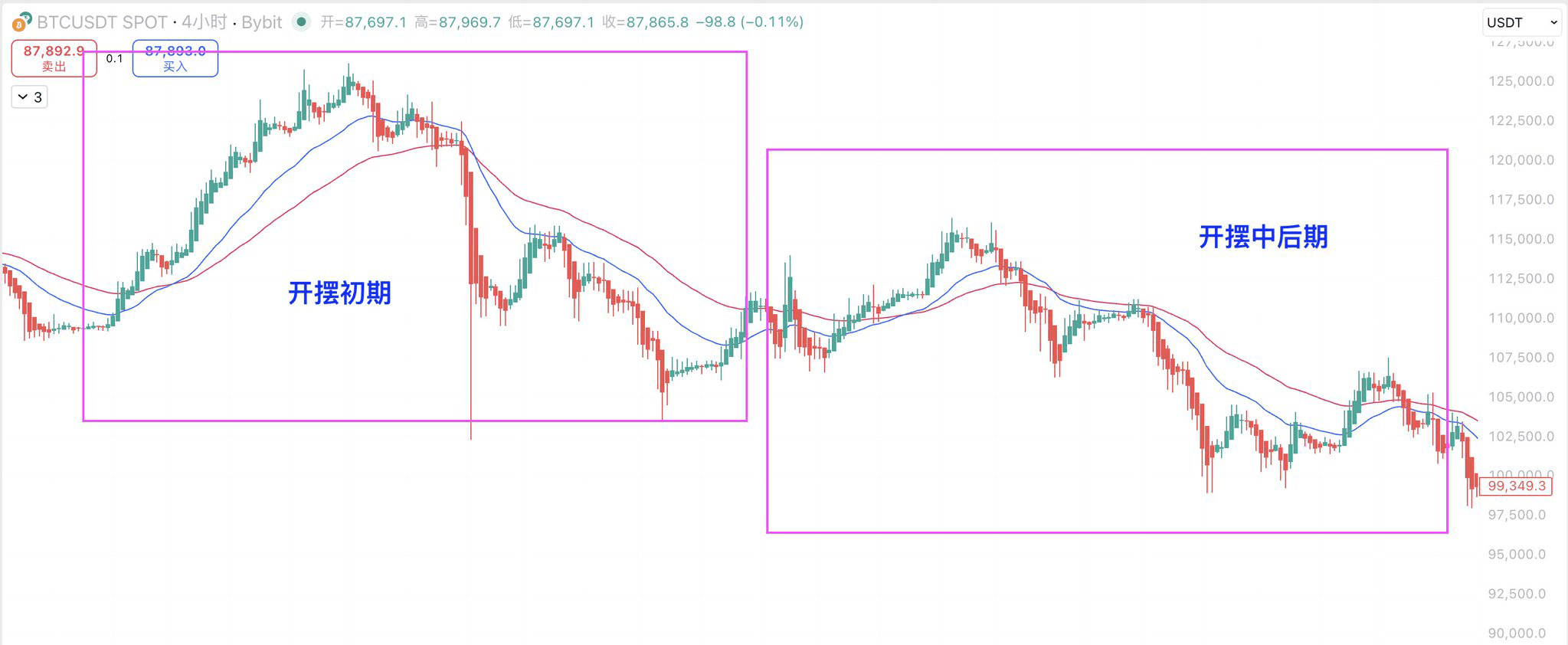
Ultimately, the government shutdown has never been a single-point event, but a continuously extending timeline. On this axis, the objects of market pricing are continuously switching: from initial uncertainty, to mid-term liquidity, and then back to credit itself.
Setting aside whether there will be a shutdown, the question the market should now consider is: when the U.S. once again enters a credit pricing vacuum period, where will global funds flow? Will it cling to the shrinking dollar, or embrace bitcoin and precious metals?