
About a month ago, I was moving some USDT across chains to test a basic remittance flow. Nothing fancy. Just trying to see how close crypto actually gets to the “send money like an email” promise. I routed through a chain that markets itself as stablecoin-focused, expecting it to be smooth. Fees were low, sure, but during a small activity spike confirmations slowed more than I expected, and I still had to keep a balance of the native token around just in case. That part annoyed me. For something meant to behave like digital cash, having to think about gas buffers and timing windows still feels like unnecessary friction. After years of trading infra tokens and poking at DeFi systems, it was another reminder that the rails matter as much as the asset.
The root of that friction is how most blockchains are still built as everything-chains. NFTs, meme coins, leveraged trading, gaming, all competing for block space. Stablecoins get dragged into that same mess. Fees jump when speculation heats up, finality stretches when unrelated activity spikes, and suddenly a payment feels less like cash and more like a bet on network conditions. For users, that means watching gas instead of just sending money. For developers, it means designing around uncertainty instead of reliability. And for anything involving remittances or merchants, that variability is poison. You don’t want “usually fast.” You want boring and predictable.
I think of it like freight traffic sharing lanes with sports cars. The trucks aren’t trying to win races. They just need steady speed and clear lanes. Mix them together and everyone suffers. Separate them, and the whole system runs smoother.
That’s the philosophy #Plasma is leaning into. It’s a Layer 1 that narrows its focus to stablecoin movement rather than chasing every trend. EVM compatibility stays, so builders don’t start from scratch, but the chain avoids pulling in unnecessary complexity. Sponsored gas for assets like USDT means basic transfers don’t require users to juggle another token. Security is reinforced through Bitcoin anchoring rather than fragile bridge designs. In practice, this setup is meant to support things like payroll, merchant payments, or lending flows where consistency matters more than raw experimentation. The Confirmo integration in January 2026 is a good example. That’s real merchant volume, not testnet noise, and it depends on transfers behaving the same way every time.
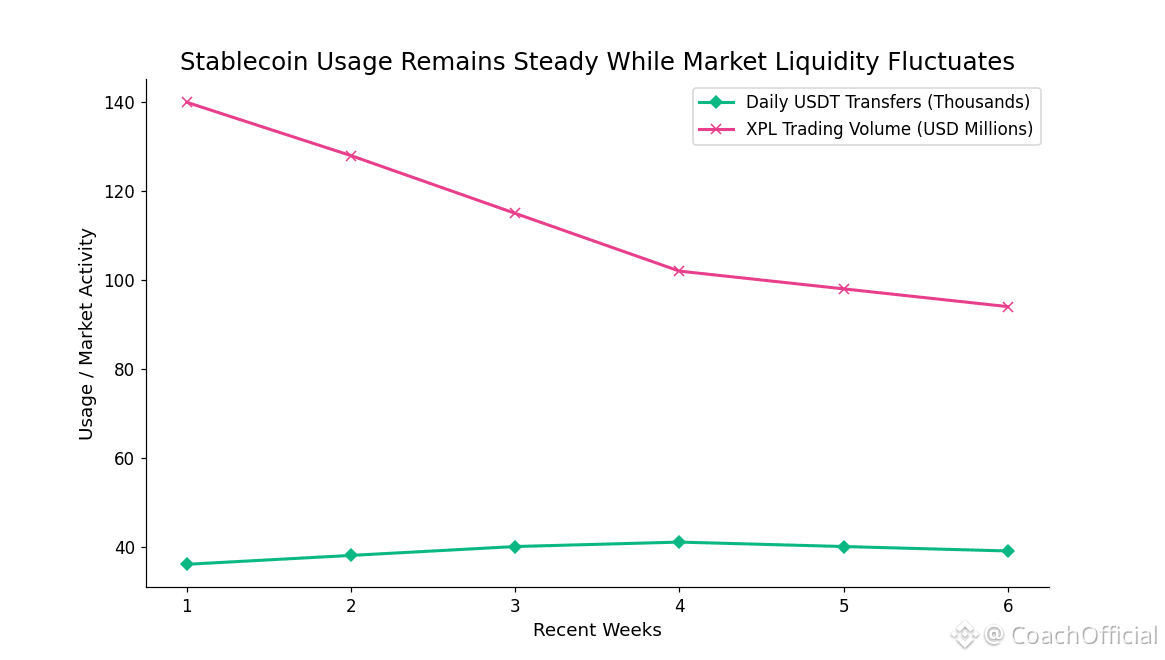
Under the hood, PlasmaBFT is one of the key trade-offs. It’s a modified HotStuff-style consensus that pipelines block production to keep finality tight. The goal is sub-second blocks, but in real conditions the network has been averaging around the mid-teens TPS recently, up from single digits late last year. That’s not a problem for payments, but it does mean surprise demand spikes still need to be managed carefully. The paymaster system helps here by absorbing fees for stablecoin transfers within limits, which is how things like Rain cards can work without users ever thinking about gas balances. It smooths onboarding, but it also introduces subsidy dynamics that have to scale responsibly.
$XPL sits in the background of all this. It’s not meant to be front-and-center for users, and that’s intentional. You only need it when transactions aren’t sponsored or when interacting with more complex DeFi flows. Validators stake XPL to secure the network and earn rewards from emissions that start higher and taper over time. Burns offset part of that through an EIP-1559-style mechanism, but only as activity grows. Governance runs through XPL as well, with holders voting on upgrades and parameter changes. It’s a support token, not a mascot, which fits the project’s attempt to avoid hype-driven economics.
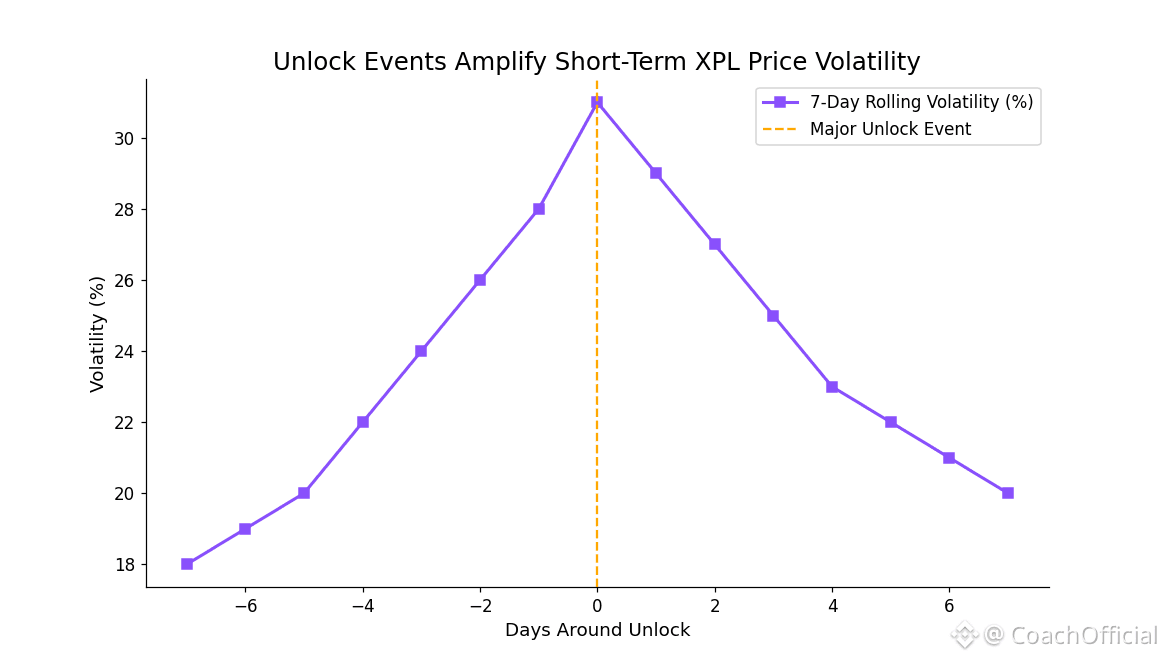
From a market standpoint, XPL is still volatile. The market cap sits just under three hundred million dollars, with daily volume around a hundred million. Circulating supply is roughly 2.15 billion tokens out of a 10 billion max, so there’s still a lot of supply yet to come. That context matters. Since launch, price action has shown how sensitive the token is to unlocks and sentiment shifts. The sharp drop from the October highs into November wasn’t about the chain breaking. It was supply meeting expectations that got ahead of themselves.
Short-term trading around $XPL has been mostly narrative-driven. Integrations like NEAR Intents can spark bursts of interest, but they fade quickly if broader markets turn risk-off. I’ve traded setups like this before. You ride the announcement, manage the exit, and move on. That doesn’t tell you much about long-term value. What matters more is whether the underlying usage stabilizes. The rebound in stablecoin deposits from under two billion back toward seven billion is encouraging, as is the growth of protocols like SyrupUSDT, but those numbers need to hold through dull periods, not just good weeks.
The biggest risks cluster around supply and competition. Unlocks are real. Ecosystem allocations, team vesting, investor releases, all add pressure if demand doesn’t keep up. An eighty-plus million token release during a quiet market can overwhelm thin liquidity, regardless of fundamentals. Competition doesn’t help either. Tron already handles massive stablecoin throughput. Solana attracts builders by sheer gravity. Plasma’s narrow focus only works if it keeps winning where it’s specialized.
There are also structural risks that don’t show up on price charts. If validator participation drops during a volatile period, security assumptions get tested at exactly the wrong time. A failure during a high-volume event, like a remittance surge through partners, would do lasting damage to trust. And regulatory attention on stablecoin-heavy networks is only increasing, especially when Bitcoin anchoring and cross-chain flows are involved.
Stepping back, this feels like one of those projects where time does most of the judging. Not weeks, but months. Do users come back for the second transaction? The tenth? Do merchants keep routing payments here when markets are boring? If unlock pressure fades into the background as usage compounds, the volatility story changes. If not, even good infrastructure can get drowned out by its own token dynamics. That’s the line Plasma is walking right now.
@Plasma #Plasma $XPL