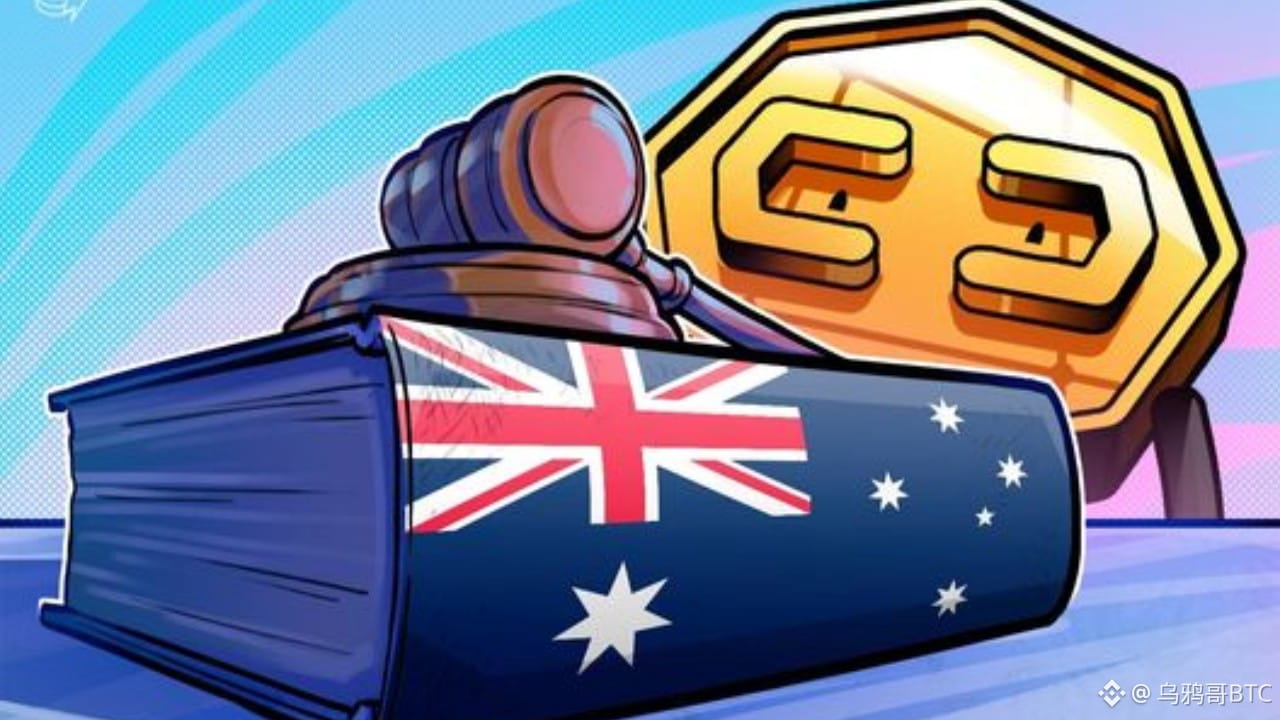
Brothers, stop staring at those fluctuating K-lines, quickly turn back and look at your backdoor. The Australian Securities and Investments Commission (ASIC) has just released the 'Hunting Plan' for 2024-2028. They call it the 'Corporate Plan', but I see through it and read between the lines that it’s all about 'we want to assimilate cryptocurrency'. ASIC has categorized cryptocurrency as a so-called 'regulatory perimeter' risk. Listen to this term, 'regulatory perimeter', which means: as long as you are playing with things they haven’t taxed or regulated yet, you are dancing on the edge of a knife. They want to drive all the wild horses that haven’t been shackled into the slaughterhouse called 'financial products'. Retail investors, you think you are pursuing decentralized freedom, but in the eyes of regulators, you are just a cash machine in urgent need of 'protection'. 🤡
This time, ASIC's moves are not to be taken lightly. They are tying cryptocurrency, AI, and payment fields together as key targets for regulation in the coming years. Why? Because in the eyes of old-school regulators, these three things are 'lawless territories.' The article explicitly mentions that they want to update regulatory guidelines, focusing on determining which crypto assets qualify as 'financial products.' This tactic is the most ruthless; once defined as financial products, the dirt coin you play with, the protocol you stake on, or even the NFT you think is art, all must obtain licenses, file reports, and undergo KYC. It's like a pancake vendor downstairs suddenly being required to possess a nuclear power plant safety operation permit—what a joke? This is a typical case of regulatory lag but with a heavy hand; by the time they drag their feet to 2026, many projects will likely have zeroed out under this 'protection.' 📉
The most ironic part is ASIC Chairman Joe Longo's 'for your own good' facade. He claims regulation is to protect consumers and prevent tragedies like FTX from recurring. I laughed; where were these regulatory bodies when FTX collapsed? At that time, they were busy discussing how to define 'underlying code' at high-end cocktail parties. Once retail investors lost their shirts, they jumped out saying: 'See, I told you this was dangerous; now I'm here to regulate you.' This routine is too familiar: first, they let things flow freely, making you think it's an opportunity, and once a disaster strikes, they use fear to expand their power. The regulators never resolve risks; they only confine risks in cages they can charge fees for. This kind of 'post-hoc' regulation is essentially a legal plundering of innovation, masquerading as protection while actually castrating it. ✂️
There is also the connection between AI and payment fields, and the logic behind this is extremely sinister. ASIC has realized that merely suppressing cryptocurrencies is no longer sufficient, as current scammers and CX schemes are gravitating towards AI and high-tech payments. They want to create a comprehensive surveillance network. By 2026, they hope to establish a transparent 'digital asset regulatory framework.' In plain language, this means: no matter what technology you use, as long as it involves money, it has to be under their watchful eyes. Those who want to bypass the traditional banking system through cryptocurrencies, ASIC has already prepared a full set of 'compliance' meals for you. By then, every on-chain transaction you make may require approval from bureaucrats who can't even use MetaMask. 🙄
In this so-called 2026 vision, ASIC emphasizes the need to improve 'market transparency.' Don't make me laugh; the most transparent thing in the crypto world is the blockchain ledger, which anyone can see—how is that not transparent enough? What they want in terms of 'transparency' is the ability to check your water meter at any time, freeze your account at any time, and define whether your assets are legal at any time. This pathological obsession with 'regulatory boundaries' is, to put it bluntly, an extreme fear of losing control over currency. The current market is already miserable, with project teams harvesting, and big influencers in CX. Just when you finally want to find a safe haven, regulators are coming with big scissors. The so-called 'compliance' is often just a way for big institutions to sweep in and clear obstacles, while retail investors are always the sacrificial 'boundary.' 🔪
A word to those still in Australia or paying attention to global regulatory trends: don't harbor any illusions about the regulators. They are not here to save you; they are here to set the rules. The more rules there are, the higher the cost of innovation, and your dreams of hundredfold coins will shatter faster. Before the deadline in 2026 arrives, projects that should run will run harder, and the schemes that need to harvest will become more covert. Do not trust any shady exchanges that claim to be 'compliant' because true compliance often means extremely low returns and extremely high management fees. Remember, in the crypto world, the only protector is your own cold wallet and that string of mnemonic words, not some bureaucratic regulatory document. Actions speak louder than words; cherish what you have. 🚬