

If my browser history could talk, it would probably cry about the abuse it suffered this week. To figure out whether these so-called 'AI public chains' on the market are really doing something or just making grand promises, I forced myself to dig through every project I could find like an obsessive-compulsive patient. To be honest, the process was quite nauseating. The more you see, the more you realize that this circle has a pathological inertia: as soon as GPT-4 updates a feature, the crypto world can immediately produce ten so-called 'earthdog projects' claiming to perfectly solve the AI computing power problem. I truly admire the courage of those who dare to say they are the 'decentralized OpenAI' armed with just a few pages of PPT. It was in the early morning when I wanted to shut down my computer and take a big nap that the name Vanar Chain crashed into my line of sight.
I'm not a believer, nor am I one of those gamblers who shout 'All in' at every new concept. My first impression of Vanar was quite average, even somewhat biased. A public chain that emphasizes its close relationship with Google Cloud and its environmental friendliness sounds too much like a PowerPoint project meticulously packaged to please Wall Street capital. But in research, the worst thing is to be led by emotions. To test my bias, I clicked on the Creator Pad link, intending to find a few bugs to criticize and then go to sleep. But this trial not only kept me up but also left me staring at the screen all night.
First, we need to clarify what this overused term 'AI-ready' really is. The mainstream narrative in the market treats AI as a gimmick, as if just issuing a coin that allows on-chain NPCs to chat with you makes it an AI blockchain. This is nonsense. True AI-readiness has never been about appealing to human users. It's about being machine-readable. In the future on-chain world, 90% of active addresses may not be real people but various AI agents. The high-frequency trading, data exchange, and model invocation between these agents will be the ultimate test of infrastructure. You expect an AI to run on Ethereum? That's practically abuse. A transaction confirmation may take ten seconds, and gas fees depend on luck—this is unworkable for AI programs that need millisecond-level responsiveness and deterministic costs.
This was the first strange feeling I had while tinkering with the Vanar Creator Pad. I tried to create a simple NFT collection, and the whole process was so smooth that I felt a bit uncomfortable. There were none of those alarming signature pop-ups, nor the anxiety of watching a progress bar spin. For a moment, I even thought I was using some SaaS platform from Web2. This 'unconsciousness' is precisely the most terrifying competitive advantage. We've been PUA'd by public chains for so long that we always feel that if it's not hard to use, it can't be blockchain. But for AI developers looking to access Web3, they don't need to understand gas mechanisms or nonce management; they just need an API and a stable operating environment. Vanar has surprisingly made this layer so 'decentralization-free,' which caught me off guard.
But there are also drawbacks. When I was uploading a large file, Creator Pad actually froze once. The interface showed that the upload was successful, but the on-chain data was slow to refresh. I got frustrated, thinking that it was indeed still a work in progress. But I didn't rush to close it; instead, I checked their browser console and found it was a local node synchronization delay issue. Interestingly, when I mentioned it in their tech community, I expected it to sink without a trace like other projects or to be drowned out by those spam bots, but within ten minutes, someone with a developer title came out to explain that it was due to a bug in some load balancing configuration on the testnet and told me they were fixing it. This human touch, in a space filled with air, actually gave me a sense of long-lost reassurance.
Now let's take a look at the competitors. I have put in a lot of effort in this comparison. For example, Fetch.ai has a forward-thinking concept with autonomous agents and machine learning, but that technology stack is too closed. You need to learn their specialized language and logic, which is prohibitively high for current general developers. Looking at Solana, it is indeed fast, but sacrificing stability for speed is something I wouldn't trust with critical AI model assets. What if it crashes one day? Wouldn't my AI agents 'brain-dead' on-chain for hours? Vanar's strategy appears quite cunning or pragmatic. It is fully compatible with EVM, meaning existing Ethereum developers and Solidity code can almost migrate seamlessly. It doesn't try to reinvent the wheel; instead, it refines the existing wheels to be better suited for highway travel.
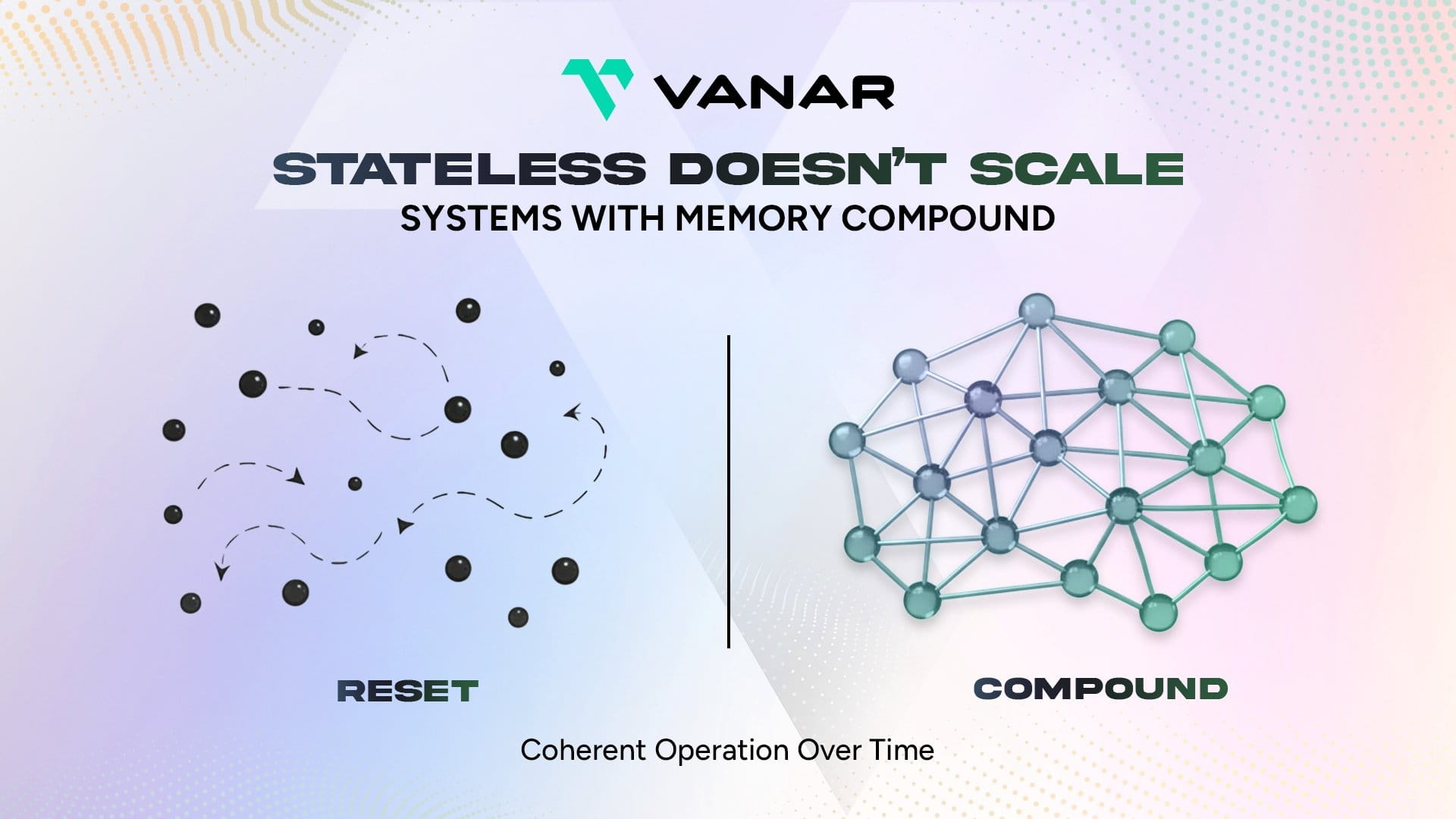
I have to mention the Google Cloud partnership that I initially scoffed at. I dug deep into their node architecture and found that it was not simple. Many so-called partnerships in public chains are just about buying some cloud services and issuing a press release. But Vanar seems to have integrated Google's underlying security capabilities and global node network into its consensus layer. What does this mean? It means that under the guise of decentralization, it has Web2-level attack resistance and stability. You might say this isn't geeky or crypto-native enough. But think about it: do those real large AI companies, whether OpenAI or Anthropic, care if your node is in some unknown basement on this planet? They don't. What they care about is SLA, compliance, and security. Vanar's 'hybrid approach' is precisely a backdoor left for these giants.
This leads to the core question: why is holding $VANRY considered participating in infrastructure rather than simple speculation? Speculation is betting on size, betting whether the next hot spot will be this one. But infrastructure bets on trends. If you believe that AI will definitely integrate with blockchain in the future and that data rights and micropayments are essential for the AI economy, then you need to find that project that resembles a 'shovel' the most. It seems that Render is a shovel, but it only handles rendering; Arweave is a shovel, but it only deals with storage. What Vanar aims to do is to be the paver. It doesn't produce AI; it just smooths the road so that AI can run. This positioning may not see tenfold returns like MEME coins in a bull market, but in a bear market or during industry reshuffles, it can survive.
I also found an interesting detail in the testnet regarding fee prediction. Ordinary EVM chains have dynamically fluctuating gas fees, which is a disaster for AI. Because AI agents need to calculate ROI (Return on Investment) before executing tasks. If costs are uncontrollable, the decision-making logic of AI will collapse. Vanar seems to have established a mechanism at the base layer to keep fee fluctuations within a very small range. This machine-friendly design isn't prominently stated in the white paper, but anyone who understands code can see the underlying reasoning. This shows that the project team is genuinely considering how to use AI, rather than just how to fool retail investors.
Of course, Vanar is not perfect either. Besides the stuttering bug I encountered earlier, its ecosystem is indeed a bit desolate right now. You can take a spin around, and apart from a few official demos, there aren't many big third-party applications running. But it's like a newly repaired highway: the road conditions are excellent, but there are few cars. That's both a risk and an opportunity. The risk is that if there are no cars for a long time, the road becomes useless; the opportunity is that you can occupy a toll booth position before traffic jams occur. What I see now is that they are desperately trying to attract Web2 creators and developers through low-barrier tools like Creator Pad. This move is clever; instead of competing with Ethereum for those DeFi old gamblers in a saturated market, they target the incremental market to attract newcomers who want to play with AI but don't understand blockchain.
There's another aspect that makes me feel it doesn't resemble an AI coin, which is its marketing style. Other projects are eager to tattoo 'AI' on their foreheads and shout about changing the world every day. Vanar's Twitter and official documents focus more on how to connect APIs, how to use SDKs, and how to calculate carbon emissions. This kind of nerdy, engineering-minded bluntness makes me feel they are genuinely building infrastructure. Infrastructure is inherently boring. Sewers, power grids, highways—none of them are sexy. But which one can we live without? When we talk about AI-Ready, we're not talking about a chatbot, but a system that allows billions of robots to collaborate online simultaneously without crashing.
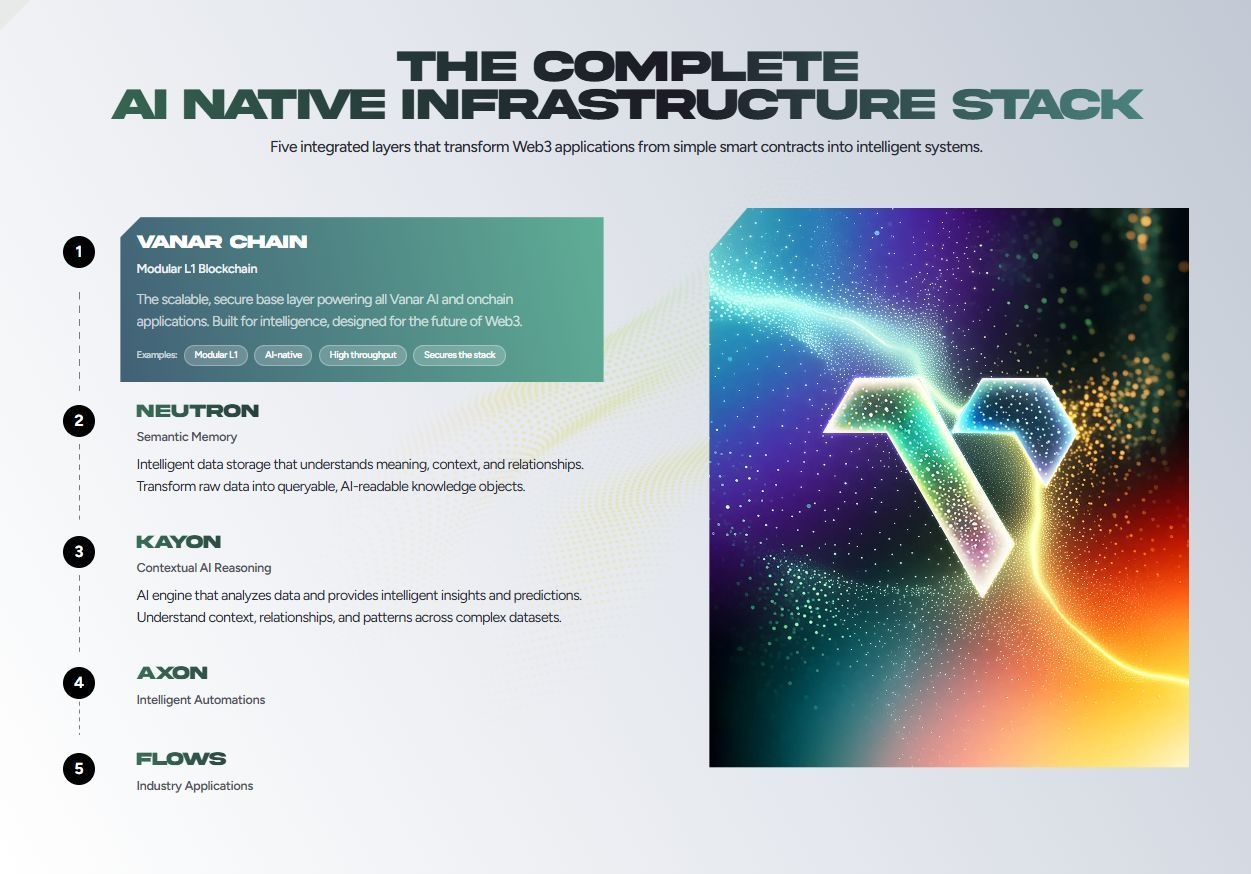
I tried to compare Vanar with Polygon. Polygon has spread itself too thin; it has ZK, sidechains, and carries a heavy burden. Moreover, there are too many junk assets on Polygon, which is actually noise for AI that requires a high-quality data environment. Vanar's 'clean room' environment, along with its compliance friendliness to IP and brand parties, is likely to become the top choice for legitimate players entering the market. I can even imagine a scenario: in the future, Nike or Louis Vuitton issue AI-generated NFTs, and the underlying layer runs on Vanar because they wouldn't dare to bare their assets on a public chain filled with hackers and rug pulls.
Writing this, I feel quite emotional. In the crypto space, we always overestimate the changes in a year and underestimate the transformations over a decade. Everyone is focused on the ups and downs of K-lines, but few are willing to read a line of code or try out a rough test version of a product. What impacted me most about Vanar is not how disruptive its technology is, but its attempt to bridge the huge gap between Web2 and Web3. It is not decentralizing for the sake of decentralization; it's searching for the optimal solution through compromise. This kind of pragmatism stands out in a market filled with fundamentalism and speculative bubbles.
For those looking to get into the market, I have to pour a bucket of cold water. Don't expect to get rich overnight just by buying Vanar. The value discovery cycle for infrastructure projects is very long. You have to endure its obscurity for a long time and tolerate its early-stage desolation. You might even get so frustrated by encountering a few bugs while using its products that you feel like cursing—just like I did last night. But it is precisely these bugs that convinced me there is a team of real people writing code behind it, not a bunch of beautifully generated nonsense by GPT.
If you're really interested in the combination of AI and blockchain, I suggest you don't just look at the analyses from big voices or my article. Go check out that Creator Pad, even if it’s just to post a worthless test NFT. Experience the smoothness of the operation, and see the data bouncing in its block explorer. You'll realize that beyond the noisy hype, there are indeed people trying to create a home for AI. This home might still be very rudimentary and not fully furnished, but the foundation is solid, and the beams and columns are upright.
In this noisy world, those who can read signals are always in the minority. At the intersection of AI and blockchain, the sign that Vanar is erecting is very clear to me. It points not to the moon but to the ground, to a solid, tangible foundation that can support a trillion-level AI economy in the future. Isn't that more appealing than those ethereal moon landing plans? Those who focus on short-term fluctuations will never understand the layout of long-termists. This is not just a story about a token; it's about how we define the AI production relationships of the Web3 era. After all, in this industry, those who survive the longest are not necessarily the fastest, but the ones with the deepest roots.
