
Most layer 1 blockchains treat AI like an add-on—just another feature to bolt on because it’s trendy. Vanar Chain flipped that script. From day one, it was built as an AI-native stack, not just a blockchain with a few AI tricks. So, you get memory, reasoning, and automation right on the chain itself. Instead of static apps, you get systems that actually learn and adapt as they run.
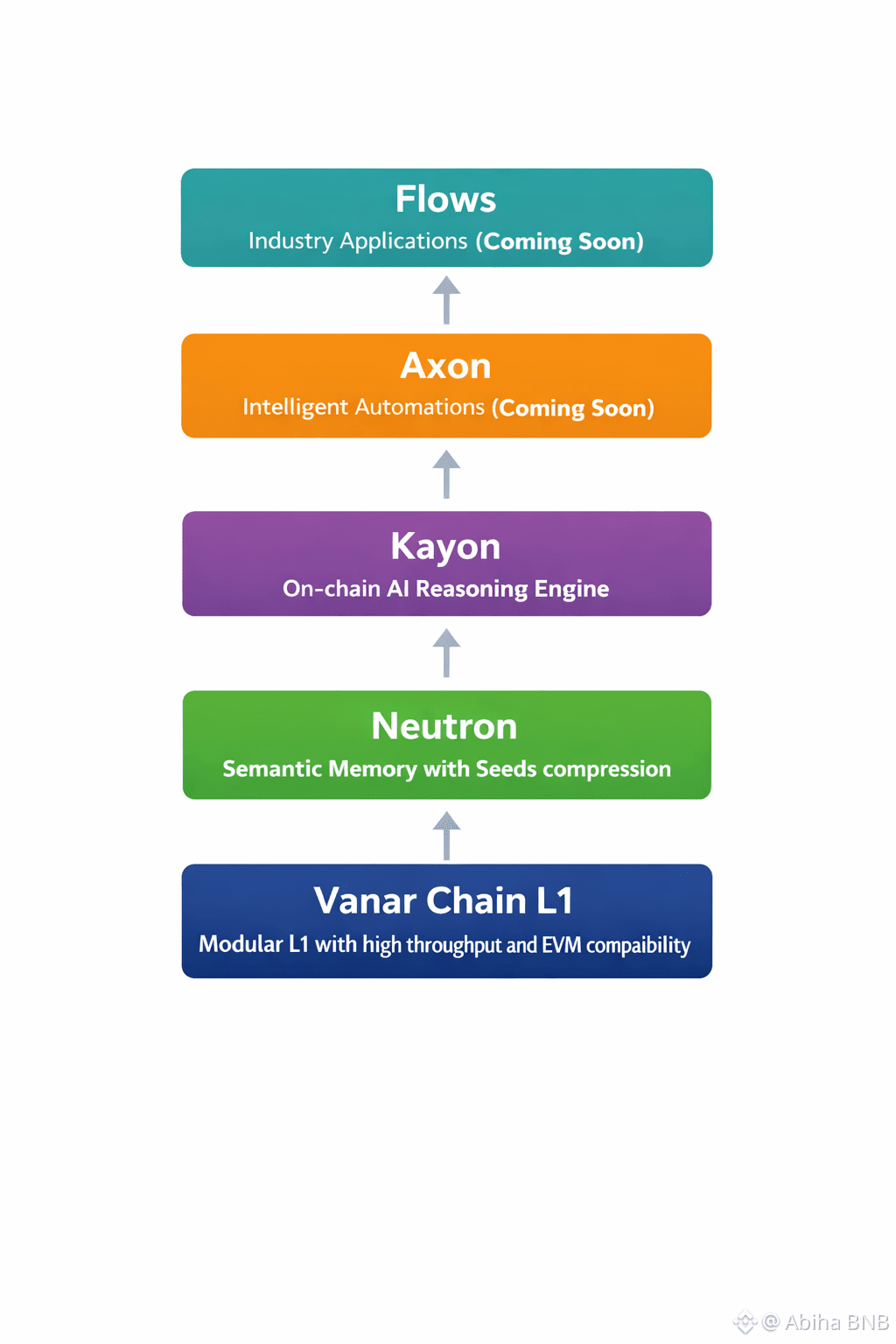
Vanar’s a modular L1 chain, built for speed and security, but with AI workloads in mind. Its five-layer architecture is the backbone:
At the base, Vanar Chain handles fast, cheap transactions. It’s got structured storage and works with anything that runs on the EVM—plus, it’s boosted with AI-native features.
Then there’s Neutron. This layer compresses messy, complicated data into smart, searchable “Seeds” using neural networks and algorithms, making on-chain memory actually useful.
Kayon acts as the reasoning engine. It pulls off contextual analysis, insights, and predictions, all on-chain, with zero need for oracles or off-chain processing.
Axon (coming soon) will bring in intelligent automation.
Flows (also coming soon) will enable industry-specific applications.
Put it all together, and you’re not just programming Web3 anymore—you’re making it intelligent.
And this isn’t all theory. Real apps are already showing what’s possible. myNeutron proves you can have semantic memory and context that stick around at the infrastructure level. People are building AI companions that follow them across dapps, handling asset management, gaming, or just helping them get around. Kayon, on the other hand, shows that reasoning and explainability can live entirely on-chain. It takes those compressed Seeds and runs logic on them, so you get outcomes you can actually verify.
Vanar hasn’t sacrificed performance for smarts. Block times clock in at 3 seconds. Fees are fixed—about a penny per transaction. No gas wars. With high gas limits, real-time apps run smoothly. And because the chain runs on efficient, carbon-neutral setups like Google Cloud, it’s green, too. EVM compatibility means developers just bring their existing tools, layering in AI features with SDKs for JavaScript, Python, and Rust.
Payments are the glue holding it all together. For AI agents to move from cool demos to real business, they need global, compliant settlement. Vanar nails this with partners like Worldpay, pushing agentic payments—so smart systems can actually transact on their own. Working with Nexera adds compliance, making sure everything works for enterprises handling real money and assets.
And Vanar’s not content sticking to its own backyard. By expanding to chains like Base, it opens the door to more ecosystems and more users. The VANRY token powers usage across every layer, rewarding real adoption of memory, reasoning, and automation.
Launched in 2023, Vanar’s team has grown to over 50 people, all focused on making this tech fit smoothly into real-world workflows. They’re serious about going beyond prototypes—building systems ready for scale. Bringing in leaders like Saiprasad Raut as Head of Payments Infrastructure just shows how hard they’re pushing into mainstream finance.
Vanar Chain stands out because it solves AI’s real on-chain headaches—memory, context, and actionable smarts—right at the infrastructure layer. As Web3 turns intelligent, this is the kind of foundation builders have been waiting for.
@Vanar $VANRY #Vanar