
When I look at how most AI-focused blockchains are designed, a pattern becomes obvious very quickly:
they attach AI to existing blockchain models instead of restructuring the chain around AI’s actual needs.
Vanar takes a very different approach.
It doesn’t treat AI as an application layer.
It treats AI as a first-class system requirement.
That distinction changes everything.
The Real Problem: AI Doesn’t Just Need Compute — It Needs Memory
Most AI chains talk about inference speed, GPU access, or integrations with external models. What they rarely address is something more fundamental:
AI systems fail when they cannot retain verifiable memory.
On most blockchains today, data lives off-chain (IPFS, Arweave, cloud storage), while the chain only stores a pointer. That works for NFTs and media links — but it breaks down for AI reasoning.
If the data disappears, mutates, or becomes inaccessible, the AI loses context.
That’s not decentralization. That’s fragility.
Vanar addresses this directly through its Neutron layer.
The “Storage Illusion” Fix: On-Chain Semantic Data, Not Just Links
Vanar does not rely on off-chain storage links as its primary data layer. Instead, it stores compressed semantic representations directly on-chain.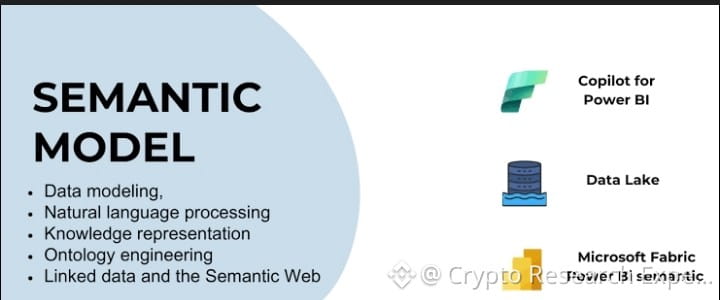
Using semantic compression, large files — legal documents, ownership deeds, structured records — are reduced by ratios as high as 500:1 and converted into what Vanar calls Seeds.
These Seeds are not just files.
They are machine-readable, permanent knowledge units.
From my analysis, this is critical for two reasons:
1. AI agents can reference the same data forever without dependency on external availability
2. Verification becomes deterministic — the chain itself is the source of truth
This is not about cheaper storage.
It’s about removing uncertainty from AI reasoning.
Protocol-Level Reasoning: Why Kayon Matters More Than Most People Realize
Another under-discussed design choice is Kayon.
Most chains integrate AI as an external service. Vanar embeds reasoning inside the protocol itself.
This means smart contracts don’t just execute logic — they can evaluate context.
For example: A contract can release payment only after Kayon verifies that an on-chain invoice Seed matches predefined contractual conditions. No oracle dependency. No external API trust.
From a system design perspective, this is subtle but powerful.
It allows: • Conditional execution based on document meaning
• Automated compliance verification
• AI-verified settlements without intermediaries
This is not “AI-powered dApps.”
This is AI-aware infrastructure"
Semantic Memory: Solving AI Amnesia at the Blockchain Level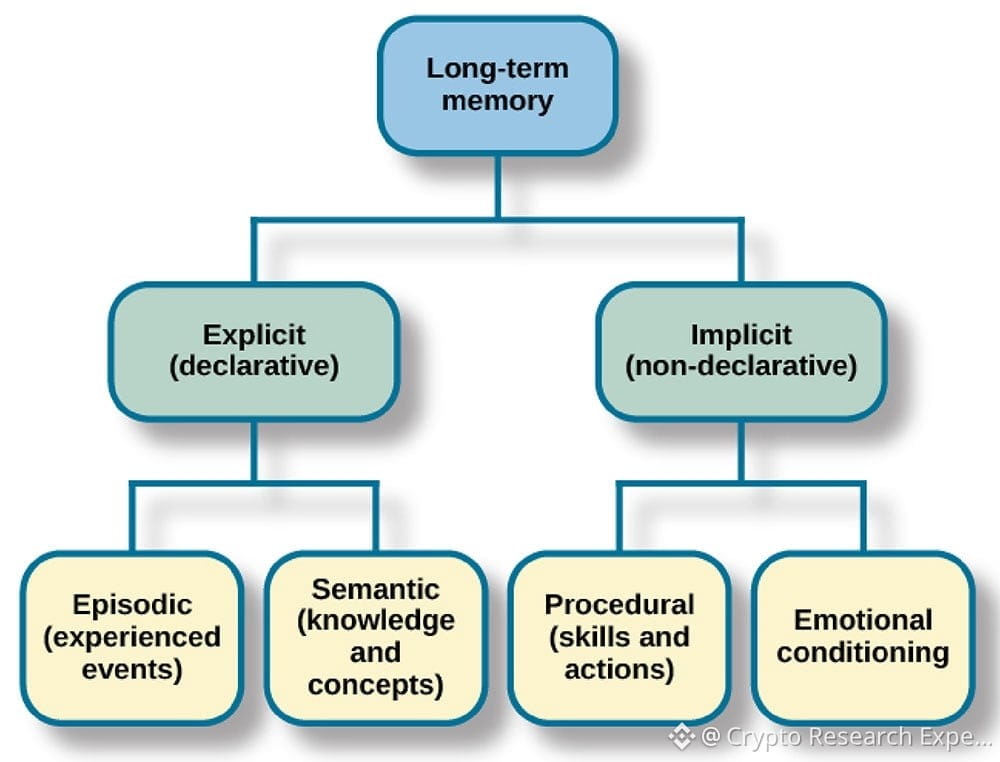
One of the most overlooked problems in AI systems is session reset.
Most AI agents start fresh every interaction unless memory is recreated externally. Vanar’s focus on persistent state changes this dynamatic.
AI agents on Vanar don’t just process data — they learn from the data and check history events as a back testing.
That means They are able to do these things:
• Decisions can evolve over time
• Patterns can be recognized across sessions
• Learning becomes cumulative, not disposable.
From my perspective, this is essential for autonomous agents, on-chain governance logic, and long-lived financial systems.
Without persistent memory, AI remains reactive. With it, AI becomes structural.
Why This Architecture Is Hard to Copy
What makes Vanar’s approach defensible is that it’s not a single feature — it’s a stacked design philosophy.
On-chain semantic storage
Protocol-embedded reasoning
Persistent AI memory
Each layer reinforces the others.
You can’t bolt this onto an existing chain without redesigning how data, execution, and verification interact.
And that’s why Vanar doesn’t feel like an “AI narrative chain” to me.
It feels like a chain designed for a future where AI systems need permanence, not speed alone.
My Takeaway
Vanar isn’t trying to impress with surface metrics.
It’s trying to solve problems most chains haven’t fully acknowledged yet.
If AI is going to operate autonomously, settle value, and interact with real-world systems, then memory, verifiability, and reasoning must live at the protocol level.
That’s the bet Vanar is making.
And structurally, it’s a bet that ages well.