
Let’s be honest—right now, AI agents are making decisions that shape everything from finance to entertainment, but the data behind those choices? It’s often a mystery. Data lives in walled gardens, gets altered, or you just can’t prove where it came from. Walrus steps in here, running on Sui, and flips the whole situation. Instead of treating data as a black box, Walrus turns it into programmable, rock-solid assets. It’s not just another storage system; it’s the plumbing that finally lets people trust their data at AI scale, so teams can actually build something new without the old headaches.
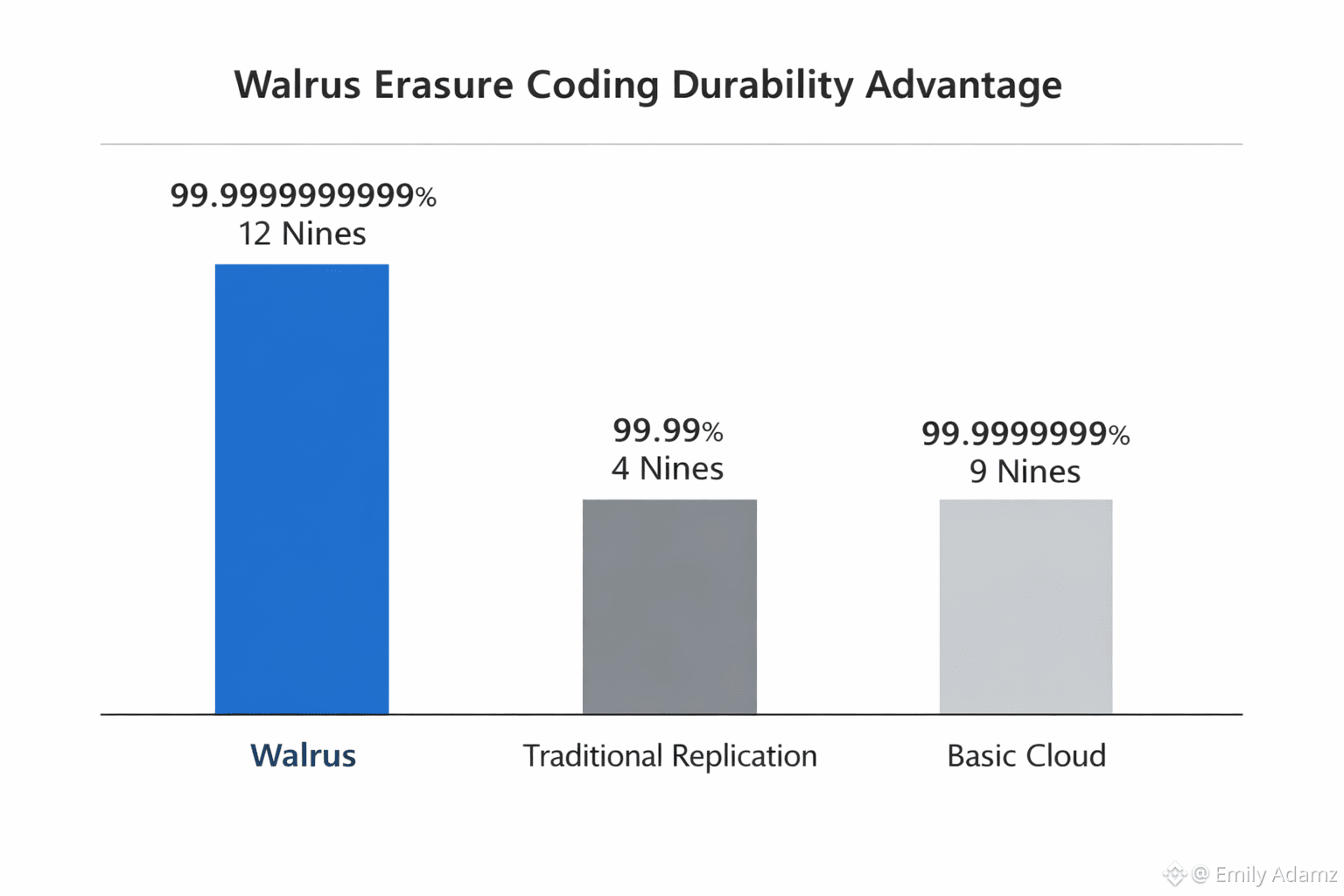
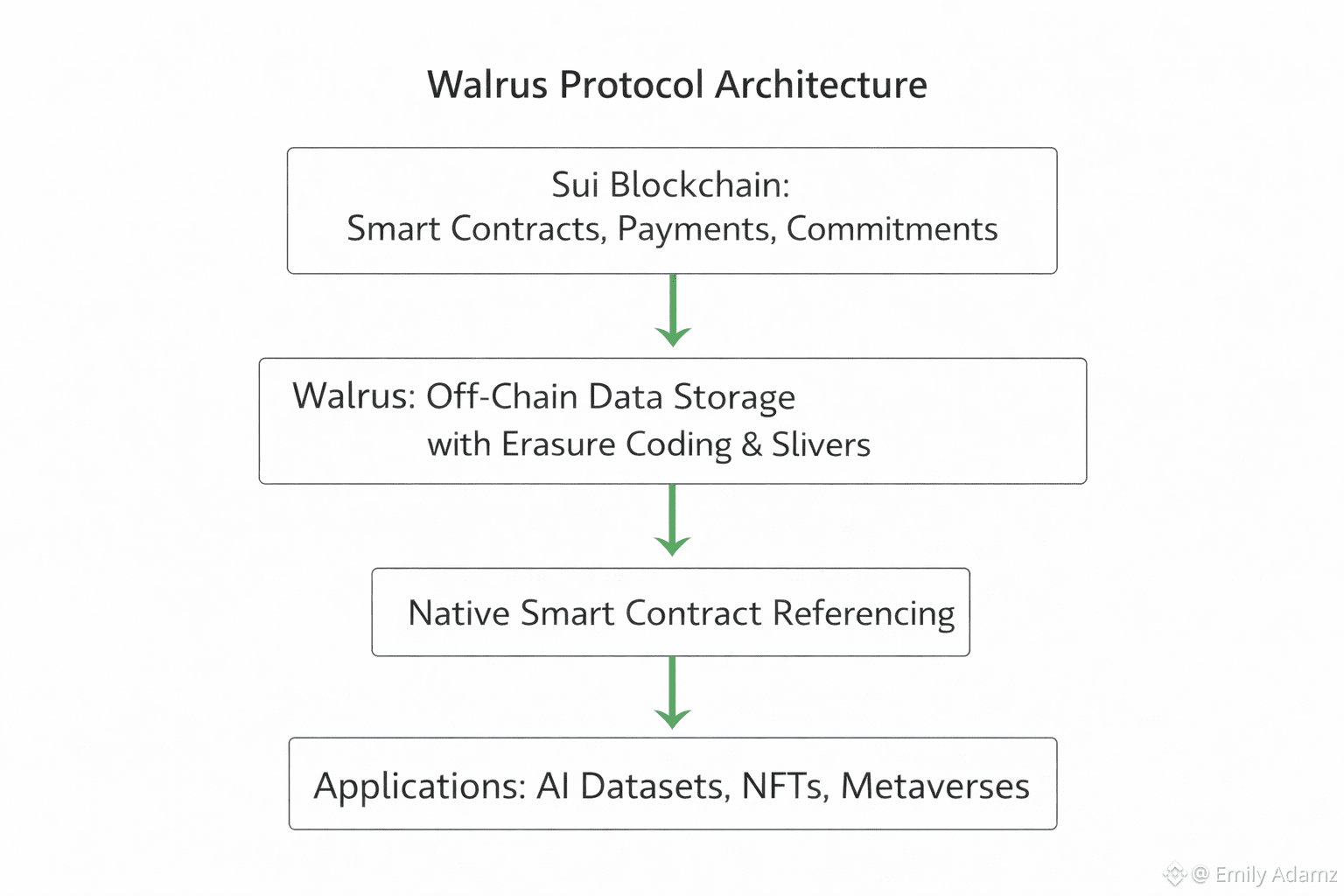
The magic comes from Walrus’s layered architecture. It splits up the brains and the brawn—the Sui blockchain deals with smart contracts, payments, and all the agreement stuff, while Walrus handles storing the data off-chain. This move keeps things fast and cheap, and it means Walrus can scale sideways as data grows like crazy. Developers get to plug their apps right into stored data—think AI datasets, huge game assets, even metaverse worlds. Walrus uses erasure coding, chopping data into encrypted slivers and spreading them across tons of nodes. You get wild durability—like, “12 nines” reliability—without wasting resources by copying everything everywhere. If a few nodes go down, Walrus just rebuilds the data, no big deal. It's way tougher and more efficient than old-school systems like Filecoin or Arweave.
But what really makes Walrus stand out is how it treats data. It’s not just sitting there; it becomes an asset, with cryptographic proof baked in. You can track where it came from, who owns it, who’s allowed to use it, all the way through. So, if you’re building AI, you can see exactly what’s in your datasets, break them into chunks, set prices, and control access automatically. No more worrying about data being faked or misused—every piece is traceable, which helps dodge ethical and legal landmines. Walrus’s Asynchronous Complete Data Storage (ACDS) even throws out the old idea that everything has to sync up at once. Proofs come in whenever the network is ready, and the system checks them cryptographically. If someone cheats, they get penalized on-chain—keeps everyone playing fair. Data moves around as stake changes, so power never piles up in one spot, and the system keeps things steady without a ton of reshuffling.
The Walrus ecosystem is taking off. They’ve pulled in Seal to lock down data with confidential, decentralized access controls. Real partnerships are rolling in: Itheum lets people actually make money from their own data, safely. Talus uses Walrus so their AI agents can keep persistent, verified context. Even TeamLiquid—yeah, the huge esports org—is moving their content to Walrus for permanent, decentralized storage, so their history sticks around for good. Realtbook’s putting their Bookie NFT collection on Walrus, too, showing it’s built for creative assets that need to last forever. And with wal.app, anyone can launch a fully decentralized website—whether it’s a dApp on Sui, Ethereum, or Solana, or tools for collaboration or reading. These aren’t just ideas; they’re already live, proof that Walrus is making the decentralized web actually work.
Get into the weeds, and Walrus’s system for asynchronous challenges and proofs is a game-changer, especially when things get adversarial. Nodes constantly prove they’re holding up their end, and anyone slacking gets hit with real penalties. This lines up everyone’s incentives—data suppliers get paid for quality, operators earn for uptime, and builders only pay for what they use. It’s built to work with any chain, but ties in deep with Sui for speed. Plus, the SDKs and templates make it easy for developers to dive in and start building, instead of wrestling with setup.
And the traction? It’s real. The Walrus Foundation pulled in $140 million from giants like Standard Crypto and a16z to keep pushing this network forward. Storage numbers are climbing fast—one record hit 17.8 TB uploaded in a single push, then got broken again. Their RFP program is putting money behind new tools and better performance, especially for AI needs. The whole ecosystem is moving at enterprise speed, and there’s no sign it’s slowing down.@Walrus 🦭/acc $WAL #Walrus