
The meeting between technical builder and billionaire networker happened sometime in 2024, though exactly when remains unclear. What matters is that Paul Faecks, who studied both philosophy at Ludwig Maximilian University Munich and technology management at Technical University Munich before building derivatives infrastructure at Deribit, found common cause with Christian Angermayer, the Malta-based German investor whose Apeiron Investment Group manages 3.5 billion dollars across life sciences, psychedelics, fintech and crypto ventures. They’re building Plasma, but the partnership reveals something deeper about how blockchain infrastructure projects actually get built when serious money and serious technical competence converge around serious problems.
Paul Faecks brings builder credentials that matter. His time at Deribit from 2020 to 2021 placed him inside one of crypto’s most sophisticated derivatives platforms where understanding market mechanics at deep technical level became daily requirement rather than theoretical exercise. His 2021 founding of Alloy, an institutional digital asset operations platform serving clients including German Stock Exchange and Franklin Templeton, demonstrated capability translating technical understanding into products that traditional finance actually uses. That matters because most blockchain founders come from either pure crypto backgrounds or traditional tech without meaningful experience bridging the two worlds. Faecks navigated both successfully before touching stablecoins.
Christian Angermayer brings something equally rare: genuine billionaire-level access combined with willingness to take positions early when outcomes remain uncertain. His Apeiron portfolio includes psychedelics company atai Life Sciences that he founded and took public on NASDAQ, biotech ventures exploring radical life extension, the Enhanced Games proposing Olympics alternative permitting performance enhancement substances, and cryptocurrency investments alongside Peter Thiel and Mike Novogratz through vehicles like Cryptology Asset Group and Bullish exchange. When Angermayer commits capital and reputation to Plasma, he’s bringing network that includes Thiel, Trump family connections, German politicians, Austrian former chancellor Sebastian Kurz, and business relationships spanning continents. I’m not suggesting these connections guarantee success, but they certainly create opportunities for regulatory conversations and strategic partnerships that typical crypto startups can’t access.
The CTO Who Studied Blockchain at Academic Frontier
Hans Walter Behrens represents third crucial piece completing Plasma’s technical foundation. His PhD in computer science from Arizona State University matters specifically because ASU runs one of America’s most respected blockchain research labs where academic rigor meets practical implementation. The ASU Blockchain Research Lab has partnered with dozens of industry leaders since 2017, won recognition at the NuCypher CoinList Spring Hackathon, and focuses explicitly on real-world problem solving rather than purely theoretical research. Hans didn’t just study distributed systems abstractly—he worked on applying blockchain technology to actual use cases through research that demanded both theoretical sophistication and engineering pragmatism.
His previous role as CEO of Topl, another Bitcoin Layer 2 protocol, provided leadership experience translating academic understanding into operational infrastructure. Topl focused on supply chain transparency and impact verification, domains requiring robust consensus mechanisms, data integrity guarantees, and practical considerations around enterprise adoption. That background shaped how Hans approaches Plasma’s technical architecture. If you examine Plasma’s design choices, you’ll find consistent emphasis on practical engineering over theoretical elegance. The PlasmaBFT consensus mechanism evolved from Fast HotStuff, itself a well-studied Byzantine fault tolerance protocol with known performance characteristics. The EVM compatibility ensures developers can deploy existing Ethereum smart contracts without modification. The Bitcoin anchoring provides ultimate finality through the most secure blockchain while maintaining sub-second transaction speeds through the internal consensus layer.
This isn’t flashy innovation pursuing novelty for novelty’s sake. It’s methodical engineering selecting proven components and assembling them into architecture optimized for specific use case. Hans brings academic rigor insisting on solutions that work reliably under real-world conditions rather than just impressive benchmarks in controlled environments.
Building Distribution Before Perfecting Technology
The September 2025 announcement of Plasma One reveals strategic thinking that distinguishes Plasma from typical Layer 1 blockchain launches. Most new blockchains launch mainnet, attract some DeFi protocols, then struggle endlessly with the distribution problem—how do you get actual humans using your infrastructure when switching blockchains creates friction and existing options work adequately? Plasma inverted that sequence by building consumer distribution product simultaneously with core infrastructure. They’re creating demand for their rails by giving people reason to want accounts on Plasma beyond just speculating on tokens.
Plasma One promises stablecoin neobank combining spending through physical and virtual cards, earning through yields exceeding ten percent on stablecoin balances, and transferring through instant fee-free USDT movement between users. The cards work at 150 million merchants across 150 countries. Onboarding provides virtual card in minutes rather than days. The cashback reaches four percent on purchases. These aren’t theoretical capabilities mentioned in whitepaper—they’re commitments to actual product features launching alongside mainnet. The cards are issued by Rain, company that already operates Avalanche Card and understands compliance requirements for cryptocurrency-linked payment cards across jurisdictions.
The genius becomes visible when you consider what this solves. Exporters in Istanbul need dollar-denominated accounts protecting earnings from Turkish lira volatility but face barriers accessing traditional international banking. Merchants in Buenos Aires paying employees want stable currency avoiding Argentine peso devaluation but struggle with banking infrastructure that makes international transactions expensive and slow. Commodity traders in Dubai moving large sums across borders need reliable settlement rails that don’t depend on correspondent banking relationships that can freeze arbitrarily. Plasma One addresses these use cases directly rather than hoping someone else builds applications on top of Plasma infrastructure.
The phased rollout strategy targets markets where dollars are most in demand, implementing localized approaches including native language support, local staff, and integration with peer-to-peer cash systems that already facilitate informal currency exchange. This isn’t generic global launch hoping for adoption everywhere simultaneously. It’s targeted deployment in specific geographies where problem Plasma solves creates immediate value measurable in user behavior rather than just blockchain metrics.
When Capital Structure Reveals Strategic Intent
The fundraising sequence tells its own story about what Plasma prioritizes. The initial four million dollar seed round in October 2024 brought strategic investors including Bitfinex, Paolo Ardoino personally, Peter Thiel, crypto trader Cobie, and Zaheer Ebtikar. That collection signals something specific—these aren’t generic venture capitalists writing checks hoping for exit. Bitfinex and Ardoino connect directly to Tether, the dominant stablecoin issuer whose USDT holds seventy percent market share. Peter Thiel brings PayPal founding experience understanding payment infrastructure at scale plus political connections through relationships with figures like Donald Trump Jr. Cobie represents crypto-native trading expertise. The seed investors aren’t just providing capital—they’re validating thesis and opening strategic doors.
The February 2025 Series A raised twenty million dollars led by Framework Ventures, known for early positions in DeFi, AI, and decentralized physical infrastructure. Additional participants included USD₮0 (Tether’s omnichain initiative), DRW, Bybit, Flow Traders, 6th Man Ventures, IMC, Nomura, Karatage among others. That roster combines crypto-native trading firms understanding market structure with traditional finance entities like Nomura exploring digital asset infrastructure. The diversity matters because Plasma needs both worlds cooperating for consumer payment products bridging cryptocurrency and traditional banking systems.
Then came the public token sale in July 2025 that epitomizes what happens when institutional interest meets retail demand. Plasma set fifty million dollar target. Users deposited over one billion dollars in stablecoins to earn allocation rights. The final commitment exceeded 373 million dollars—over seven times oversubscription. The deposit campaign ran through February with users placing USDT, USDC, USDS, or DAI into Plasma Vault where funds earned yield through Aave and Maker while securing allocation. The longer someone held deposits and the larger the amount determined their units translating to final allocation. This structure aligned incentives beautifully—participants provided early liquidity, demonstrated genuine demand rather than just speculative interest, and earned yield compensating for capital lockup.
The total funding approaching 500 million dollars when combining all rounds positions Plasma among largest stablecoin infrastructure raises in blockchain history. That capital provides runway for aggressive product development, marketing, regulatory navigation, and partnership establishment without immediate pressure for revenue generation.
The Technology Choices That Actually Matter
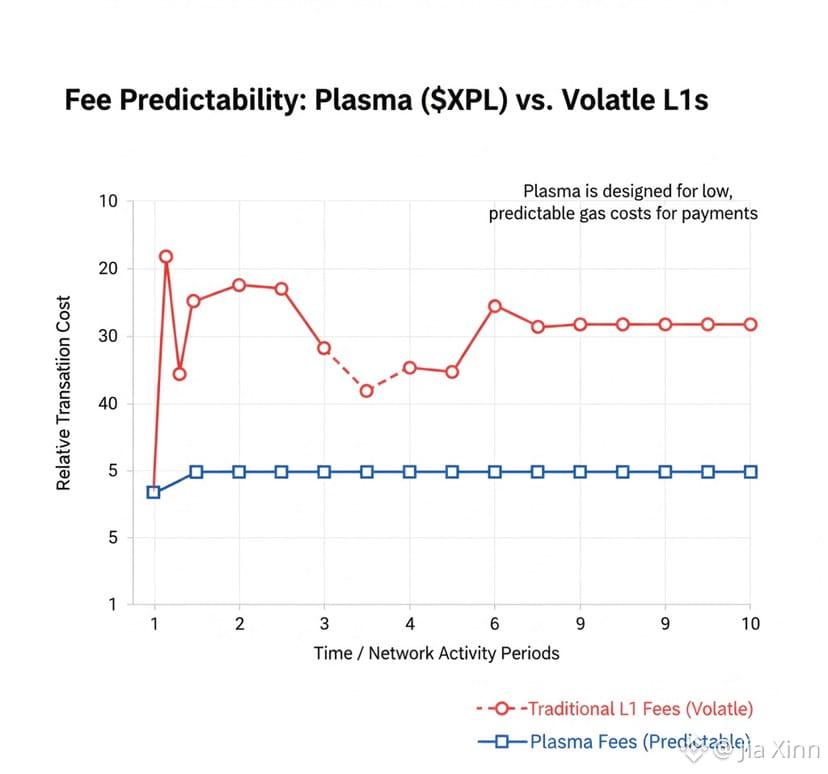
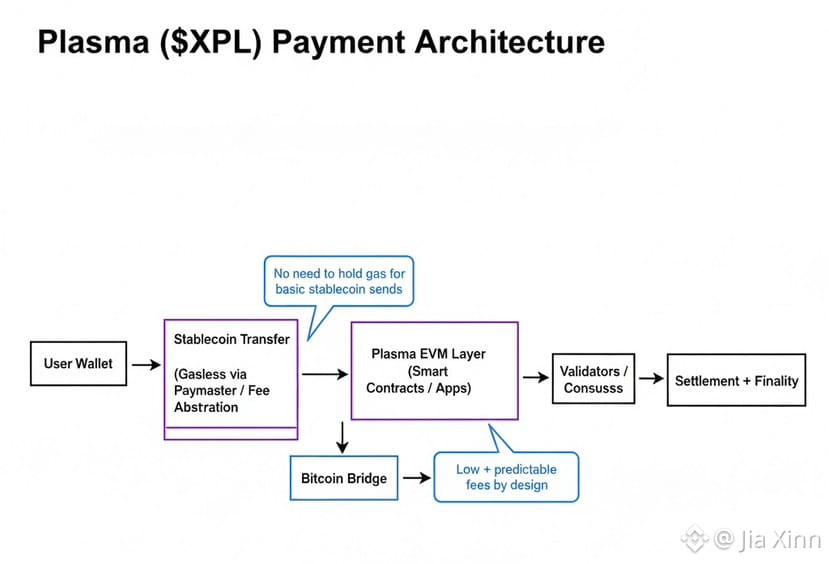
We’re seeing technical architecture decisions that prioritize practical utility over theoretical optimization. The protocol-level paymaster system enabling completely free USDT transfers represents the most visible differentiation from existing blockchains. On Ethereum, Tron, or other networks, every transaction requires paying gas fees in native token regardless of what you’re actually transferring. This creates friction forcing users to acquire and manage additional tokens just to move stablecoins. Plasma’s paymaster eliminates that by allowing DeFi protocols and service providers to subsidize gas costs. Users send USDT without paying anything or even knowing XPL token exists. The business model works because protocols profit from transaction volume and can absorb gas costs as customer acquisition expense.
The Bitcoin anchoring deserves deeper examination than typical sidechain discussions provide. Plasma periodically commits its state to Bitcoin blockchain, providing ultimate finality backed by Bitcoin’s proof-of-work security and censorship resistance. This matters psychologically for institutions more than technically. Enterprise treasurers and compliance officers understand Bitcoin as the most secure blockchain. If becomes easier to explain why Plasma transactions carry Bitcoin-level security guarantees even while settling with sub-second speed internally. The architecture gains credibility through association with proven security rather than requiring trust in novel consensus mechanisms.
The EVM compatibility represents pragmatic choice favoring adoption over theoretical purity. Some new blockchains pursue novel virtual machine designs promising superior performance or capabilities. Plasma chose compatibility allowing developers to deploy existing Ethereum contracts without modification. The installed base of Solidity developers, audited contract code, and tested infrastructure makes EVM compatibility path of least resistance toward ecosystem development. Plasma doesn’t need to convince developers to learn new languages or rebuild applications from scratch. They can port existing DeFi protocols, wallets, and tools with minimal effort.
The PlasmaBFT consensus evolved from Fast HotStuff provides thousands of transactions per second with low latency meeting high-frequency trading requirements. The mechanism has been studied extensively in academic literature and deployed in production systems providing confidence in reliability and security properties. This isn’t unproven experimental consensus—it’s battle-tested Byzantine fault tolerance adapted for Plasma’s specific requirements.
What Success Looks Like Five Years Forward
The pathway toward sustained relevance requires Plasma achieving multiple objectives simultaneously over extended timeline. Plasma One needs actual users measuring in millions rather than thousands, with those users maintaining balances, executing transactions, and recommending product to others based on genuine utility rather than token speculation. The yields exceeding ten percent must prove sustainable through actual DeFi strategies generating returns rather than temporary promotional subsidies. The four percent cashback needs funding mechanism that aligns with long-term business model rather than representing customer acquisition cost that becomes unsustainable at scale.
The enterprise partnerships enabled through Bitfinex, Tether, and Thiel network connections need translating into actual payment infrastructure deployments. If commodity traders genuinely adopt Plasma for cross-border settlement, if exporters genuinely park reserves in Plasma One accounts, if merchants genuinely pay employees through Plasma rails, then the infrastructure proves its value through usage patterns independent of token price speculation. The regulatory licenses being pursued in Netherlands through Plasma Nederland BV and Italian entity Plasma Italia SrL need delivering MiCA CASP and EMI authorizations enabling regulated operations across European Union.
The developer ecosystem requires building beyond just DeFi protocols cloning Ethereum applications. Plasma needs applications leveraging its unique characteristics—the zero-fee USDT transfers, the Bitcoin finality, the consumer distribution through Plasma One—to create experiences impossible on other blockchains. The XPL token economics need creating sustainable alignment where network usage drives value through validator rewards, governance participation, and DeFi utility rather than purely speculative trading.
Reflecting on Philosophy and Payments Infrastructure
There’s something fitting about Paul Faecks having studied philosophy alongside technology before building stablecoin infrastructure. Philosophy trains thinking about first principles, questioning assumptions, examining whether solutions actually address root problems rather than just treating symptoms. The financial system’s friction around moving money across borders, accessing stable currencies, and earning reasonable returns on savings represents symptoms of deeper structural issues where intermediaries extract rent through monopoly positions while delivering suboptimal service.
Stablecoins solve these problems by eliminating intermediaries, but only if the infrastructure supporting stablecoins becomes reliable, accessible, and integrated enough that regular people can use it without technical expertise or cryptocurrency knowledge. Plasma approaches this by building full stack from consensus layer through DeFi ecosystem to consumer application, controlling the experience end-to-end rather than hoping other teams build missing pieces.
Whether this succeeds depends on execution across dozens of dimensions—technical reliability under real-world load, regulatory navigation across jurisdictions, marketing and user acquisition in competitive markets, yield sustainability through volatile market conditions, partnership activation translating relationships into actual integrations. The capital, team, connections, and early traction suggest capability. The tokenomics showing ninety percent decline from peak shows markets remain skeptical about long-term value despite impressive fundraising.
The next several years determine whether Plasma becomes infrastructure powering billions of dollars in daily payment flows or becomes another well-funded project with impressive technology that never achieves critical mass for self-reinforcing adoption. The difference between those outcomes rests less on technical capability, which they’ve demonstrated, and more on whether their consumer distribution strategy through Plasma One actually works to onboard users at scale who continue using product because it solves real problems in their financial lives. That’s the bet that matters, and it won’t resolve through whitepapers or benchmarks—only through millions of individual decisions by actual humans about which payment infrastructure best serves their needs.