
When top VCs and regulatory giants are at loggerheads over the issue of 'privacy,' I see Dusk quietly harvesting the entire battlefield.
After researching for so long @Dusk , I realized that I shouldn't focus on those black-and-white simple long and short logic, but rather should seriously study why Dusk can survive as the only 'chosen one' amidst the 'contradictory storm' where Galaxy and a16z support privacy, while Coinbase and the EU oppress it.
Brothers, at the beginning of 2026, an extremely bizarre phenomenon appeared in the cryptocurrency market, which I call the 'Privacy Paradox.'
On the one hand, top venture capital firms such as a16z, Galaxy Digital, and Messari unanimously proclaimed in their annual reports: "Privacy is the only path for Web3 to go mainstream."
On the other hand, compliant exchanges led by Coinbase and regulators represented by the European Union (MiCA) are carrying out a major purge in the privacy sector, with established privacy coins such as Monero (XMR) being ruthlessly delisted.
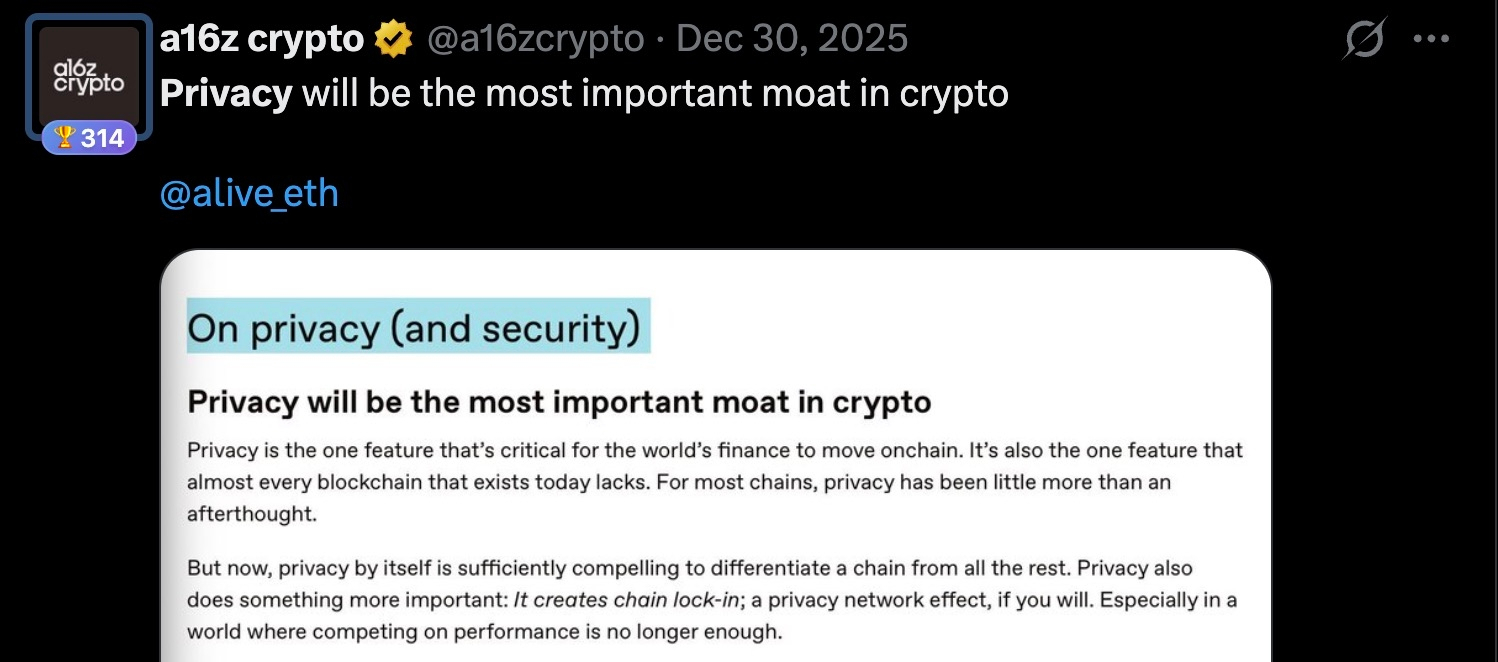
One was shouting "Advance!", and the other was shouting "Kill!"
Retail investors are bewildered: Is this sector a gold mine or a fire pit?
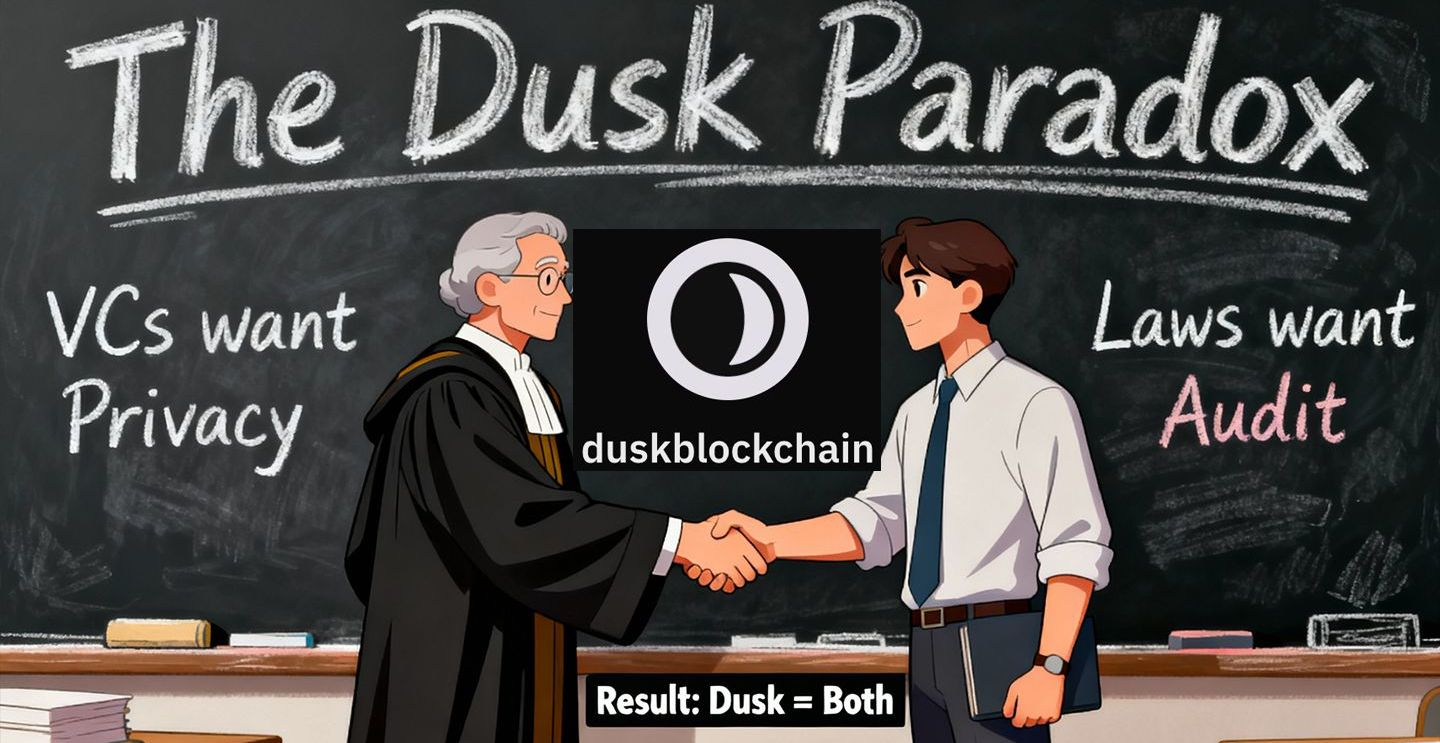
Actually, neither side is wrong. They are just waiting for the same thing to appear—"compliant privacy".
And that's why Dusk is standing in the center of the stage right now.
I. The Institutional Needs: Why does a16z say "No privacy, no future"?
Let's look at the bulls first. Why are top VCs so anxiously seeking privacy?
Because current blockchains (Ethereum/Solana) are too transparent, so transparent that "businesses cannot function."
Imagine if BlackRock were to buy $100 million worth of Bitcoin ETFs on-chain.
On Ethereum, his address is flagged, his orders are monitored, and global "squeeze bots" will frantically place orders, resulting in extremely high slippage and soaring costs.
What's even more frightening is that his investment strategy and fund flows will be completely transparent to his competitors. In traditional finance, this is called "naked exposure," which is absolutely unacceptable.
Therefore, Galaxy and Messari are right: without privacy protection, real institutional big money will never get in. Real Asset Wraps (RWAs) are a false proposition if privacy issues aren't addressed.
Dusk's "zero-knowledge proof" technology is designed to provide institutions with such an "on-chain black box," allowing them to enter the market in a respectable and secure manner.
II. Regulatory Bottom Line: Why Must Coinbase Delist Monero?
Now let's look at the short sellers. Why are exchanges and regulators taking such drastic measures?
Because older privacy coins (such as XMR) were “lawless black boxes”.
Once the funds are transferred in and out, no one knows whether they are tainted money or stolen funds from hackers. This complete anonymity challenges the bottom line of national financial security. The EU's MiCA (Missing Act) explicitly prohibits unauditable anonymous asset transactions.
Coinbase had no choice but to cut ties in order to keep its license.
But does this mean the privacy sector is dead?
No, what died was "unauditable privacy".
III. Dusk's "Greatest Common Divisor": The Calm in the Eye of the Storm
Now let's look back at Dusk.
You'll find that its positioning is simply a "genius design," perfectly positioned at the intersection of these two forces.
For institutions (like a16z): Dusk provides privacy. Through ZK technology, transaction amounts and strategies are hidden, solving the pain point of "commercial exposure," making institutions more willing to use it.
Regarding regulation (EU/Coinbase): Dusk provides compliance. Through the Citadel protocol, Dusk achieves "programmable compliance." Regulatory bodies can verify that the source of funds is clean and there is no money laundering risk by viewing the key or proof of compliance.
Dusk achieved both.
It gives institutions privacy and provides regulatory tools.
This is like building a unique bridge between a raging storm (regulatory crackdown) and towering waves (institutional demand).
IV. Endgame Analysis: The Benefits of Passive Monopoly
What will be the outcome of this "battle of the gods"?
The outcome is that old privacy coins will die out, non-compliant public chains will be abandoned by institutions, and all funds and traffic will be forced to flow into Dusk, the only outlet.
This is not competition; this is "passive monopoly."
When NPEX chose Dusk with its €300 million assets, they had already voted with their feet.
In 2026, a big year for regulatory compliance, Dusk is more than just a project; it is the ticket for the entire industry to move from the "wild west" era to the "era of established players."
V. Conclusion
Brothers, don't be intimidated by the apparent conflict.
When the bigwigs disagree, that's when huge profits are made.
In this huge disagreement, Dusk is the only "correct answer".
Once you understand this situation, you won't care about today's ups and downs, because you'll know that the future trillion-dollar market belongs to it.