
In the past two days, to be honest, most participants in the cryptocurrency market have not been feeling well. The overall market performance is very weak, and many people's assets have been affected again. Compared to the stock market and precious metals, crypto assets are clearly underperforming, and the trend looks particularly bad. This is why many people are wondering: what exactly has happened in the recent cryptocurrency market.
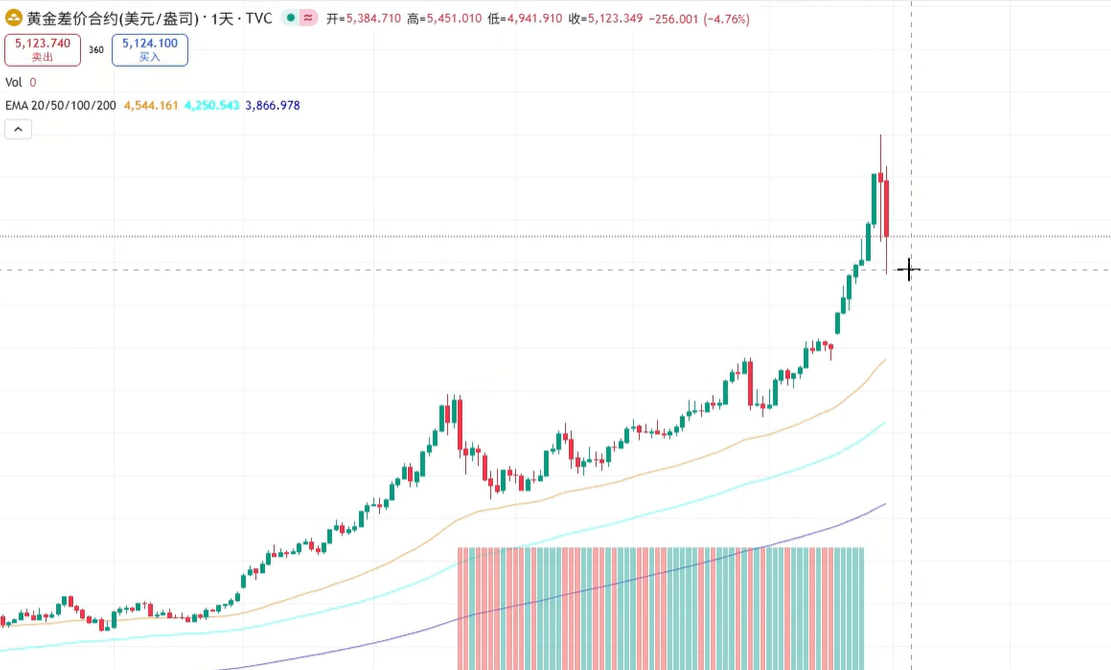
Let's start with gold, which everyone was highly concerned about yesterday. Gold has experienced a very sharp correction in a short time, quickly dropping from its high, and the overall candlestick pattern even resembles that of altcoins, with volatility far exceeding most people's traditional understanding of 'safe-haven assets.' Recently, the interest in gold has been significantly high, with many people who were originally not involved in the financial market starting to actively inquire about and buy gold. When an asset is overly hyped and emotions are clearly crowded, a correction itself is an inevitable result in trading logic. Essentially, market trading is about selling chips to later participants. When prices reach a temporary high, especially for institutional funds, cashing out becomes almost unavoidable. Additionally, gold was previously in a historically overbought range, so this round of correction is not surprising; the risk was actually ignored at high levels.
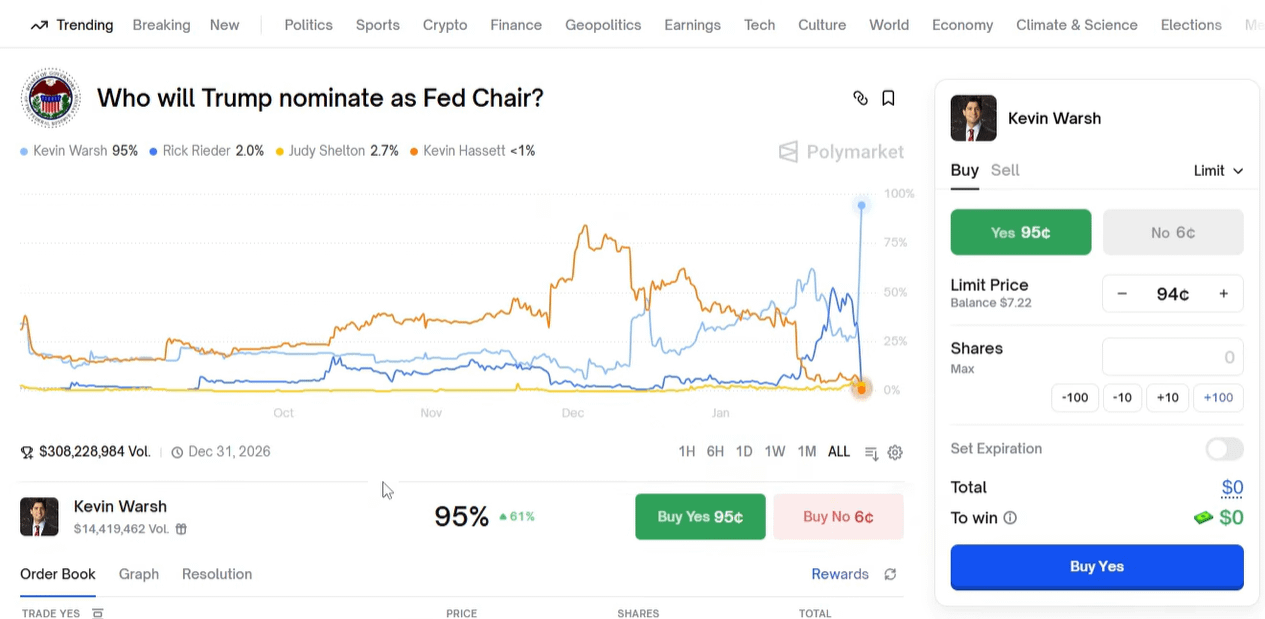
Meanwhile, there is another important change in the market: the rapid strengthening of the US dollar index. Against the backdrop of simultaneous declines in cryptocurrencies and gold, the dollar has become the direction of phase capital inflow. One reason comes from changes in market expectations for the next Federal Reserve chair. Predictions about the Federal Reserve chair candidates on Polymarket and the subsequently released related news have reinforced the market's judgment that future policies are more hawkish. Once liquidity expectations tighten, a stronger dollar will suppress gold and risk assets, which is also an important reason for the recent pressure on precious metals and crypto assets.
More importantly, the market is beginning to worry about a relatively "twisted" policy path, which is to promote rate cuts while advancing balance sheet reduction in a relatively tight liquidity environment. This policy combination will significantly increase market uncertainty, and many analysts have issued risk alerts regarding this. In a phase of rising uncertainty, funds often choose defense and wait-and-see, rather than actively taking on risk.
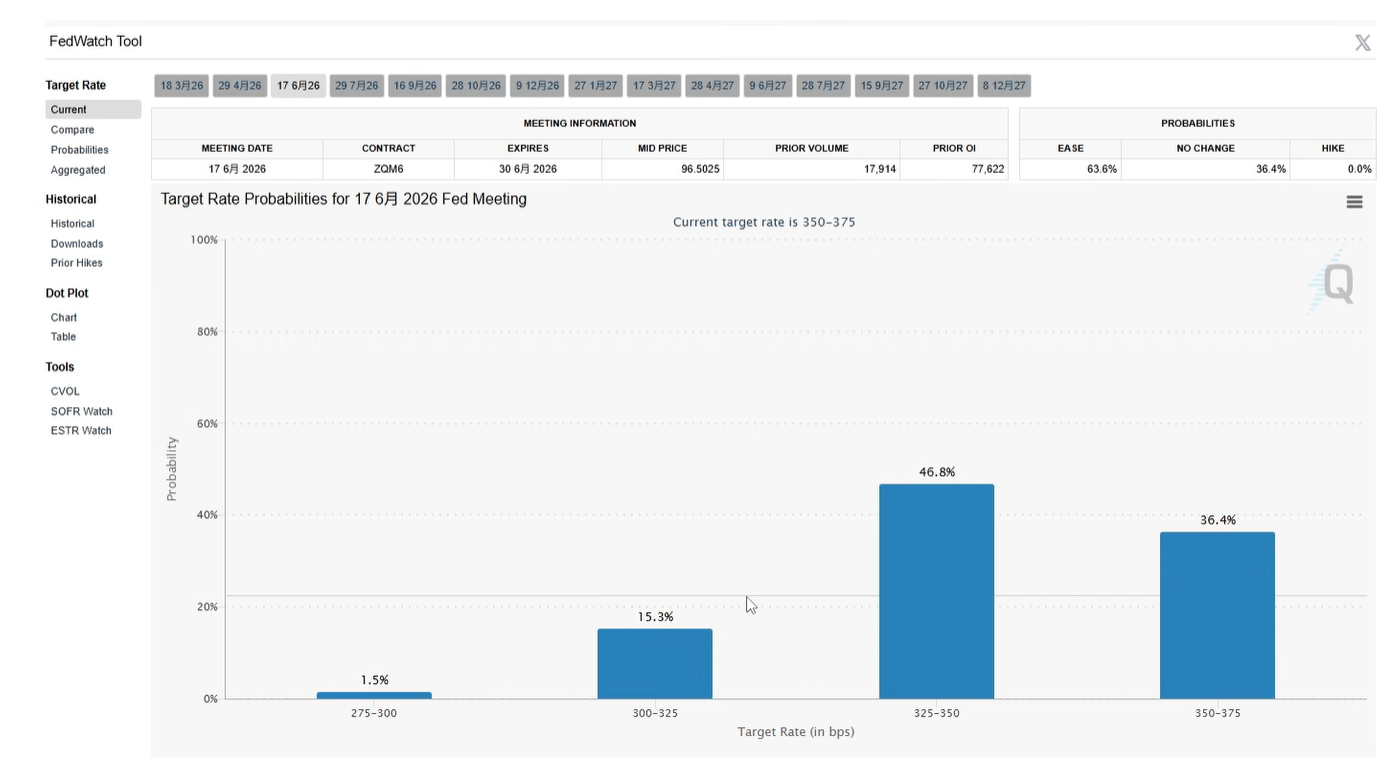
From the interest rate perspective, after the latest FOMC, data from CME shows that the probability of rate cuts in March and April is still relatively low, while rate cut expectations after June have clearly risen. This also means that it is difficult for the market to obtain clear long logic in the short term, and funds are more inclined to place their time window in the second half of the year, including the potential impacts from changes in the US political cycle. Therefore, the overall weakness of risk assets recently also aligns with the logic of fund behavior.
Geopolitical issues have also intensified market sentiment fluctuations. The news that Iran announced military exercises near the Strait of Hormuz does not necessarily mean that conflict will inevitably happen, but it is enough to amplify market panic in the short term. When macro policies, geopolitical factors, and capital flows are all negative, the market will naturally choose to reduce risk exposure.
Returning to the cryptocurrency market itself, from the data, the overall trading volume is currently not ideal. Despite the significant decline and extremely pessimistic sentiment, the trading volume remains low, indicating that participants are decreasing. Even in a clear rebound, bottom-fishing capital is not active. This is typically not a characteristic of the early stage of a market reversal.
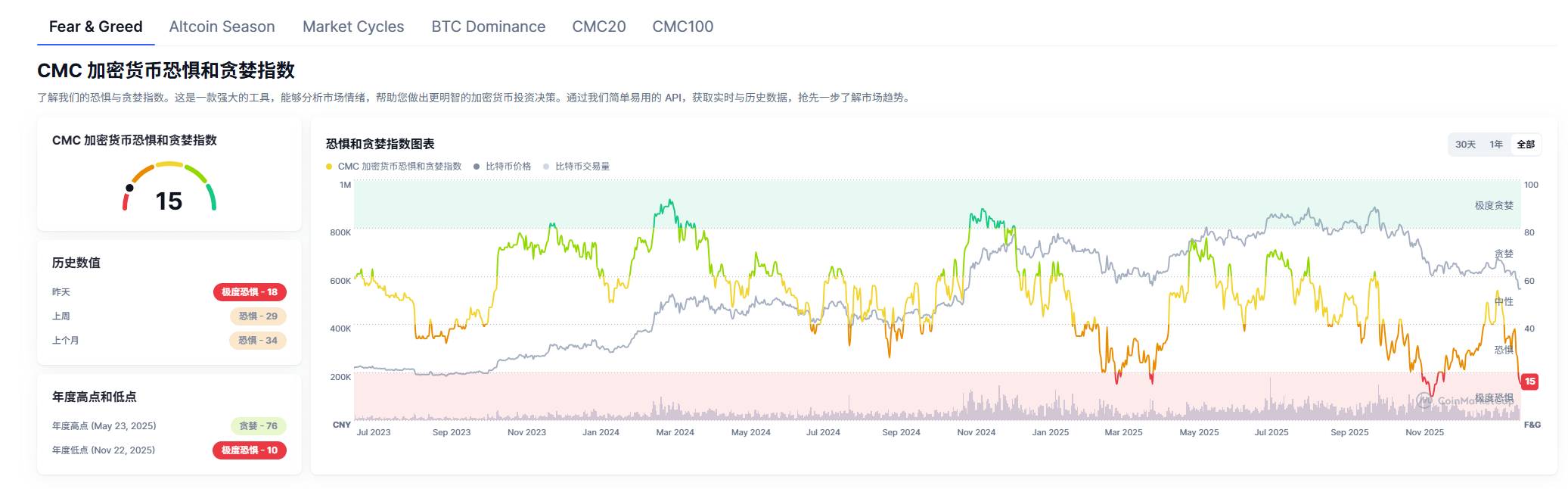
The Greed and Fear Index has now entered the fear zone, with different platform data showing variations, mainly depending on whether altcoin weights are included. From historical experience, this indicator has certain reference value in judging phase bottoms, especially in the extreme fear area, which often corresponds to Bitcoin's relatively low range. However, it is not suitable for accurately timing market peaks and is more suitable as an auxiliary signal for whether risk release is sufficient.
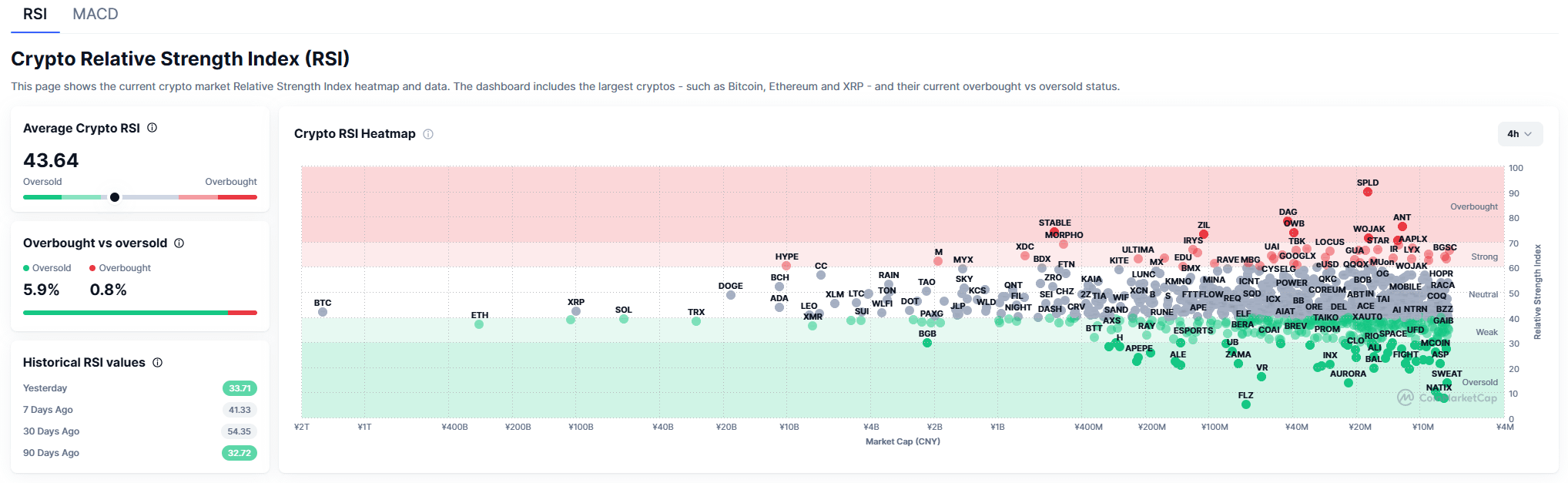
RSI is also an important reference indicator. When the market experiences extreme panic selling, the RSI usually enters a clearly oversold area. If both the Greed and Fear Index and RSI point to extreme states, the corresponding cost-effectiveness of buying often significantly improves. Currently, if negative news continues to ferment, the probability of the market entering the extreme fear zone is not low, and these two indicators are worth continuous attention.
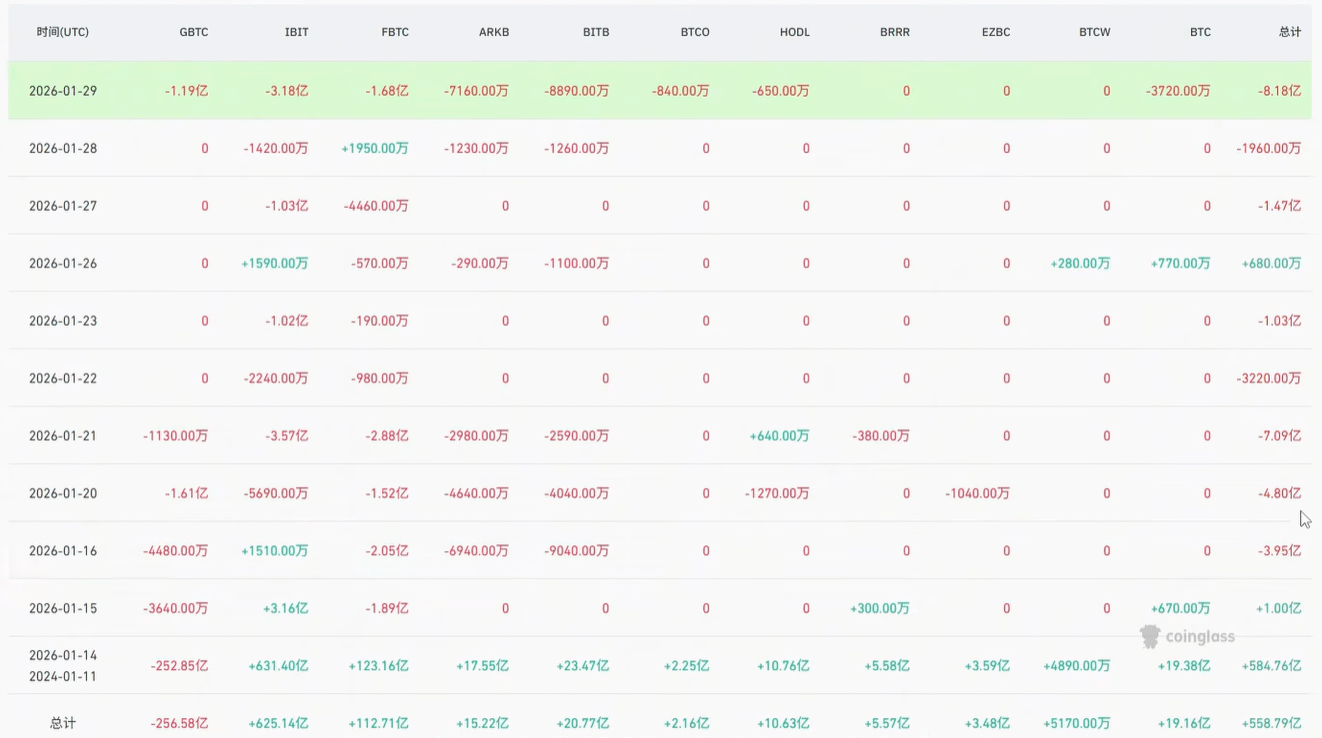
ETF fund flows also provide very intuitive signals. Since mid-January, Bitcoin ETFs continue to experience fund outflows, with more funds flowing into safe-haven assets like gold. This indicates that in the short term, institutional risk appetite towards crypto assets has significantly decreased, and market heat has cooled down accordingly.
Looking at the contract open interest data, the overall open interest has significantly fallen compared to its peak, and it is not far from the lows of the past year. This usually indicates that leverage is being gradually cleared, sentiments are becoming cautious, and it provides conditions for the subsequent stability of the market. However, whether it has reached an absolute bottom still requires more signals to resonate.
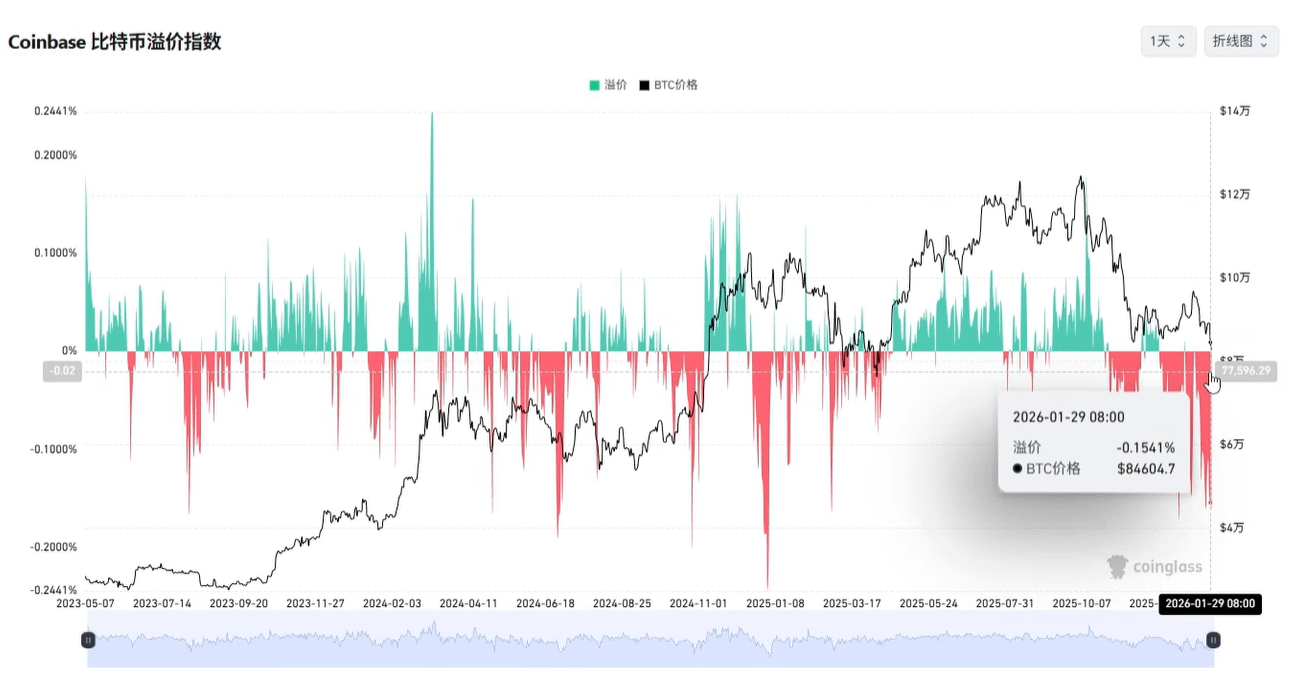
In addition, there is an easily overlooked data point, which is Coinbase's Bitcoin Premium Index, reflecting the strength of demand in the US market. When this index is weak, it indicates a decrease in participation from US investors, which corroborates the current logic of ETF fund outflows and a stronger dollar.
Considering these indicators, each has its limitations, but when multiple data points point in the same direction, the reliability of the judgment significantly increases. Instead of entering based on intuition, it is better to wait for data to gradually provide clearer signals.
In terms of specific operations, if the market really enters a bottom area where multiple indicators resonate, a more rational approach is not to make a one-time heavy investment, but to gradually build positions through phased and time-divided methods. This way, even if the market continues to dip, there is still room for adjustment, reducing overall position costs. For many new investors, the biggest risk is not being wrong about the direction, but being too aggressive in timing and position management.
The above is just some personal thoughts based on the current data and market structure, and does not constitute any investment advice. The uncertainty in the market still exists, and patience and discipline may be more important than the judgment itself.