

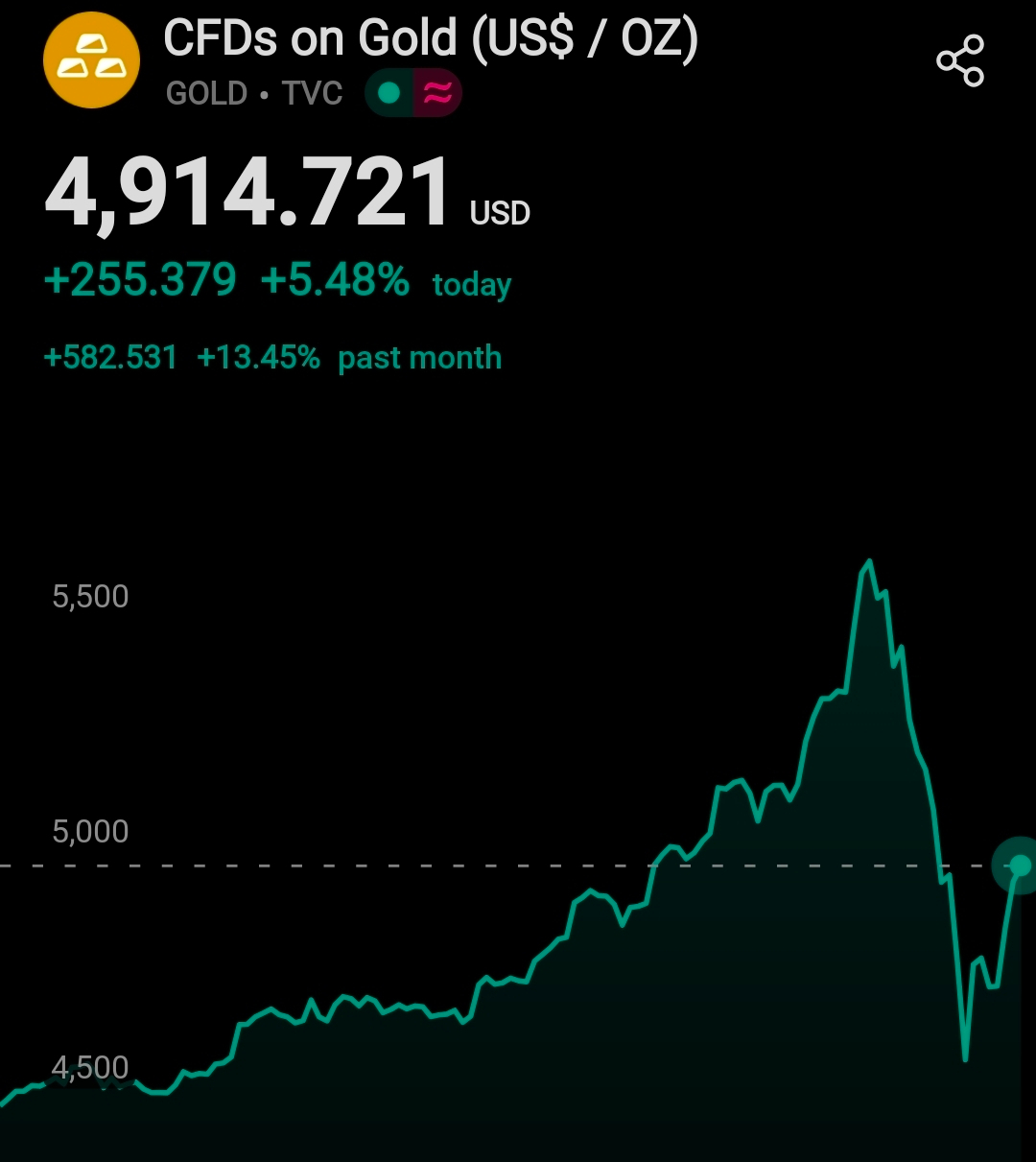
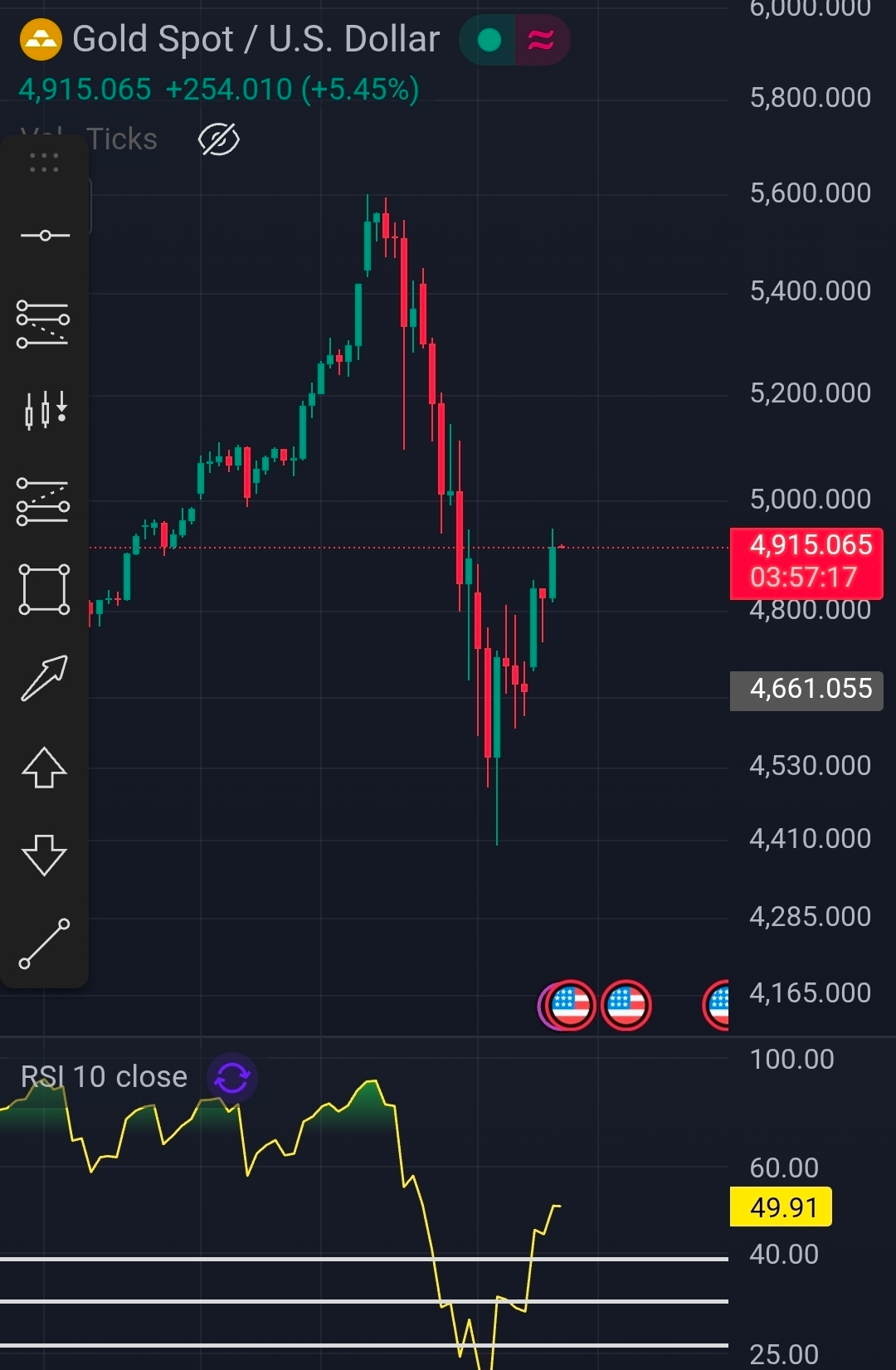
Gold and silver have just experienced one of the fastest short-term corrections in recent years. After a rapid rise and a new historical high, they faced significant selling pressure within just a few days. The candlestick pattern looks 'scary', but structurally, it resembles a cooling phase within a larger cycle of increases, rather than a long-term trend being broken.
What has truly changed? What has not changed? Let's break it down below.$XAU
What triggered this sharp decline?
This decline is not caused by a single event, but rather the result of multiple pressures overlapping at the same time:
1️⃣ Concentrated profit-taking after a parabolic rise
Gold and silver are clearly overbought on the technical front, and momentum indicators have entered extreme ranges. Short-term funds chose to cash out, and once selling pressure starts, stop losses are triggered consecutively, leading to amplified declines.
2️⃣ Strengthening US dollar + rising hawkish policy expectations
As the market re-prices the Federal Reserve's future leadership leaning towards a more hawkish stance, the US dollar has seen a rapid rebound. In the short term, expectations of tighter policy will weaken the appeal of 'non-yielding assets' like gold and silver.
3️⃣ Passive deleveraging of ETFs and leveraged positions
In the previous round of increases, ETF inflows and the proportion of long positions in futures were relatively high. When prices turn, redemptions and margin liquidations create a chain reaction, amplifying short-term volatility. This kind of 'mechanical selling' often makes pullbacks appear more severe than they actually are.
Why hasn't this pullback damaged the long-term bullish logic?
Even if the short-term trend is weak, the structural support for precious metals has not disappeared:
🔹 Continuous buying by central banks remains a medium- to long-term positive
Many central banks are still increasing their gold reserves to reduce dependence on fiat currency systems. This kind of demand is slow-paced and price-insensitive, more like underlying support funds that provide long-term price support.
🔹 Real interest rates remain a core macro variable
Even if nominal interest rates remain high, as long as inflation expectations fluctuate and fiscal pressures rise, the uncertainty of real interest rates still exists. Historically, when the real returns of cash and bonds become unstable, the allocation value of gold is often re-priced.
🔹 Silver's industrial demand has structural growth
Silver is no longer just a 'precious metal'; the growth rate of its demand in photovoltaics, EVs, power electronics, and advanced manufacturing is outpacing new mineral supply. This tightens the long-term supply-demand relationship for silver, but its volatility is also significantly higher than that of gold.
🔹 Geopolitical risks have not truly disappeared
A short-term improvement in risk appetite may suppress safe-haven demand, but global geopolitical uncertainty remains high. Precious metals often react to risk sentiment in a 'fast and sudden' manner; once expectations reverse, the speed of price re-pricing will also be rapid.
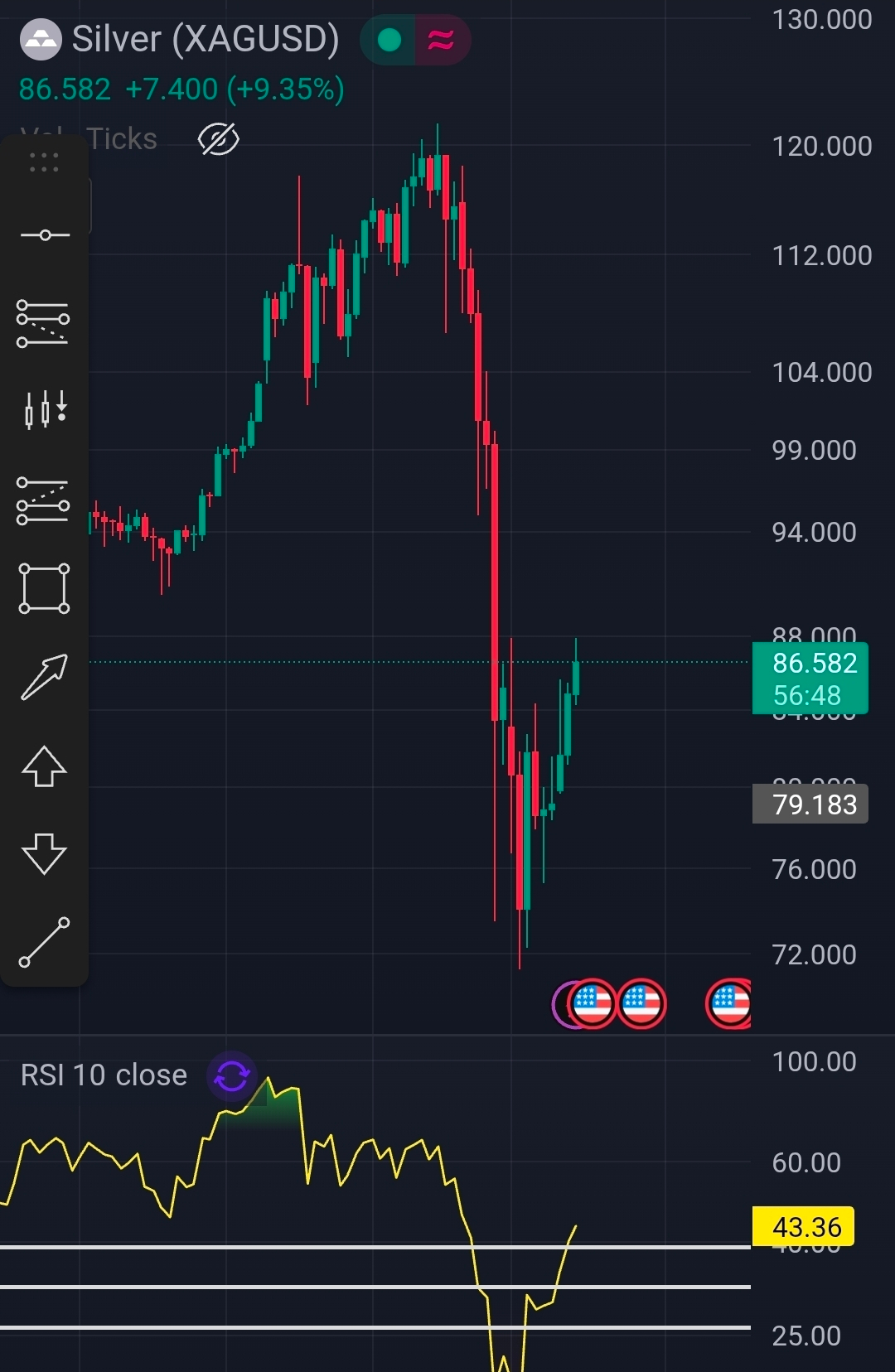
What signals are being released by the current technical structure?$XAG
From a structural perspective:
The previous round of increases was too steep → Usually accompanied by a rapid pullback
Short-term momentum indicators are rapidly cooling.
Increased volatility means the market is switching from 'exuberance' to a phase of 'volatile digestion'.
A healthy bull market often resets emotions and leverage through 'time for space (sideways)' or 'price pullbacks'.
The current shape resembles a typical overheating repair, rather than a trend reversal after high-level distribution.
More rational response strategies (not investment advice)
Instead of being led by volatility, it is better to optimize your position structure:
✔ Avoid making a large position after a parabolic market
Building positions in batches can reduce timing risk.$PAXG
✔ Be psychologically prepared for silver's volatility
The volatility of silver is usually 2-3 times that of gold, suitable for patient holding, but not for emotional buying and selling.
✔ Distinguish between short-term trading and long-term allocation
Short-term focuses on risk control and discipline; long-term pays more attention to macro structures rather than daily ups and downs.
✔ Focus on macro variables rather than a single piece of news
Real interest rates, US dollar strength, ETF fund flows, and central bank gold purchases are far more important than short-term news.
This round of sharp declines in gold and silver feels more like a necessary cooling after overheating, rather than a structural deterioration. Short-term pullbacks do not negate long-term logic, but often lay the groundwork for the next stage of the market by 'cleaning up leverage and emotions'.
If the macro environment turns again to a weakening of real interest rates, rising expectations of currency devaluation, or a return of geopolitical risks, the momentum of precious metals may quickly recover. Before that, prices are more likely to maintain fluctuations and repeated volatility, especially silver.
The focus at this stage is not 'precise bottom fishing', but rather to lay out plans for the next cycle in a more rational manner.