
There’s a brutal economic reality in blockchain gaming that everybody knows about but nobody wants to discuss publicly. Games cost enormous amounts of money to develop. Good games especially. And blockchain games have all the normal game development costs plus massive additional expenses that traditional games never face. This creates a financial sustainability problem that’s killed more blockchain gaming projects than any technical limitation.
Let me walk through the actual economics because the numbers tell a story that marketing materials carefully avoid.
Traditional game development for a moderately ambitious multiplayer game might cost anywhere from $5 million to $50 million depending on scope and quality expectations. That’s already a massive investment requiring careful planning about how to recoup costs and generate profit.
Now add blockchain to this equation and several new cost categories appear that traditional games don’t have.
Smart contract development and auditing costs run hundreds of thousands of dollars. You need specialized blockchain developers who are expensive and scarce. You need multiple security audits from reputable firms because one missed vulnerability could destroy the entire game economy. You need ongoing security monitoring and rapid response capabilities. Traditional games don’t have any of these costs because they don’t have economic assets with real-world value that attackers will try to steal.
Blockchain transaction costs create ongoing operational expenses that scale with player activity. On traditional blockchains, a successful game with millions of daily transactions might face hundreds of thousands or millions of dollars monthly in transaction fees. These costs scale directly with success which creates perverse incentives where popularity becomes expensive rather than profitable.
Legal and compliance costs explode when games involve blockchain assets with real economic value. Securities law analysis costs six figures. Regulatory compliance across multiple jurisdictions costs more. Ongoing legal monitoring as regulations evolve costs more still. Traditional games face minimal legal costs because they don’t deal with assets regulators care about.
Liquidity provision for game economies requires massive capital lockup. If your game has a marketplace where players trade items, somebody needs to provide initial liquidity. If your game has a token economy, somebody needs to maintain trading liquidity on exchanges. This capital lockup represents millions that could otherwise fund development but instead sits idle making markets function.
Marketing costs for blockchain games exceed traditional game marketing because you’re educating players about unfamiliar concepts on top of normal game promotion. Players need to understand wallets and transactions and ownership beyond just learning how the game works. This educational burden increases customer acquisition costs substantially.
Add all these blockchain-specific costs to already enormous traditional development costs and the total investment required becomes almost absurd. You might need $20 million to $100 million to properly launch a blockchain game with AAA quality expectations.
Now here’s where the economic sustainability problem gets brutal. How do you recover these investments and generate profit?
Traditional games have established business models. Premium purchase price. Free-to-play with in-app purchases. Subscriptions. Season passes. These models work because the company controls the economy completely. They set prices. They control supply. They capture all transaction value. They can adjust economics anytime to optimize revenue.
Blockchain games promise player ownership and open economies. This fundamentally limits the company’s ability to extract value. Players own items and can trade them peer-to-peer. Secondary markets capture value that would otherwise flow to the company. Price discovery happens through market forces rather than company pricing power. The company earns at most royalties on secondary transactions rather than controlling all sales.
This creates a massive problem. Blockchain games cost much more to develop than traditional games but generate less revenue because genuine player ownership limits value extraction. The economics don’t work unless something changes dramatically.
Most blockchain gaming projects have dealt with this through one of several approaches, all of which have serious problems.
First approach: Raise massive venture capital and figure out sustainability later. This works temporarily but venture investors eventually want returns. If the game can’t generate revenue covering costs plus providing returns on investment, the project dies when funding runs out. This has killed dozens of blockchain games that were technically successful but economically unsustainable.
Second approach: Implement extractive tokenomics that technically give players ownership while practically functioning as value extraction. This typically involves requiring players to stake tokens, pay fees in native tokens, or participate in inflationary token systems that benefit early investors and developers at expense of later players. These schemes usually collapse when new player growth slows and the Ponzi dynamics become obvious.
Third approach: Abandon genuine player ownership and implement blockchain features selectively while keeping economic control centralized. This makes the game economically sustainable but defeats the entire purpose of using blockchain. Players get pseudo-ownership that the company can revoke or devalue arbitrarily. This is honest but makes the blockchain aspects mostly marketing rather than fundamental architecture.
Fourth approach: Accept lower production values and smaller scope to reduce development costs to levels that realistic revenue can support. This makes economics work but means blockchain games compete with AAA traditional games using indie game budgets. The quality difference drives players toward traditional games regardless of ownership benefits.
All four approaches have been tried extensively and all have serious limitations. This is why blockchain gaming hasn’t achieved mainstream success despite years of effort and billions in investment. The economics are genuinely difficult in ways that technological improvements alone cannot solve.
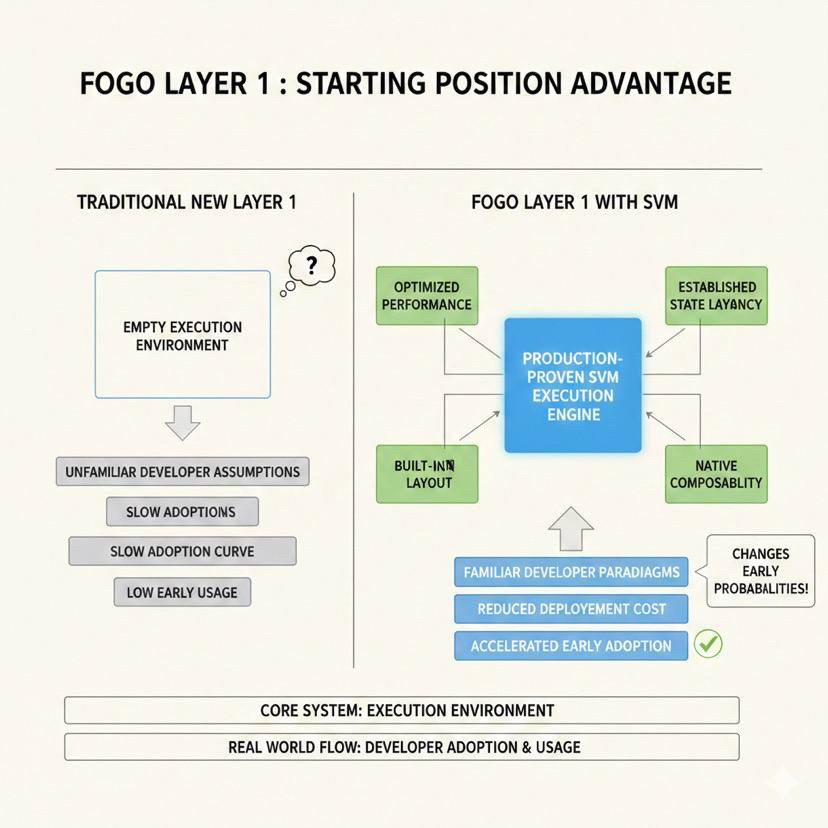
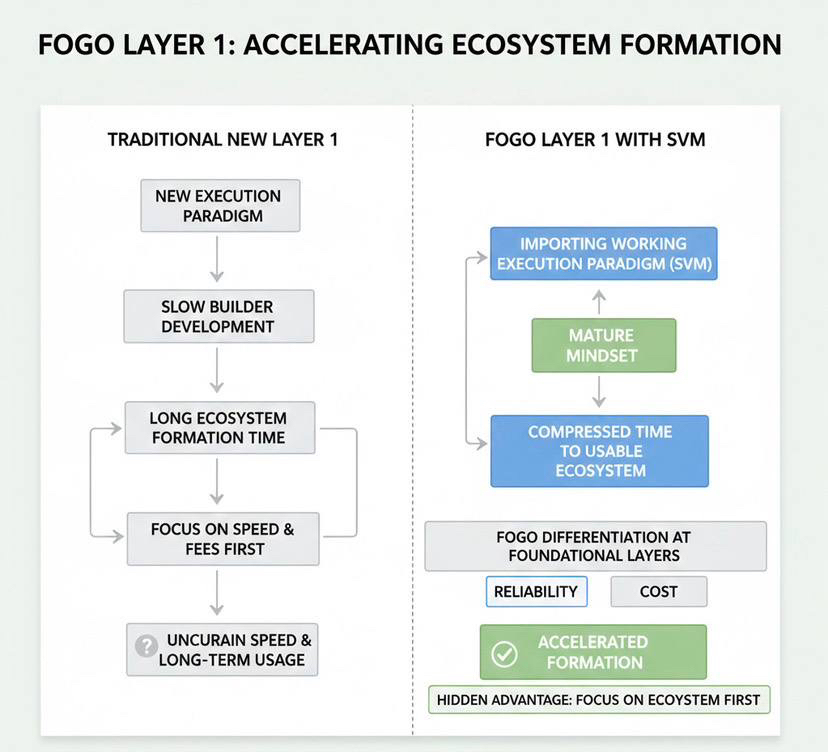
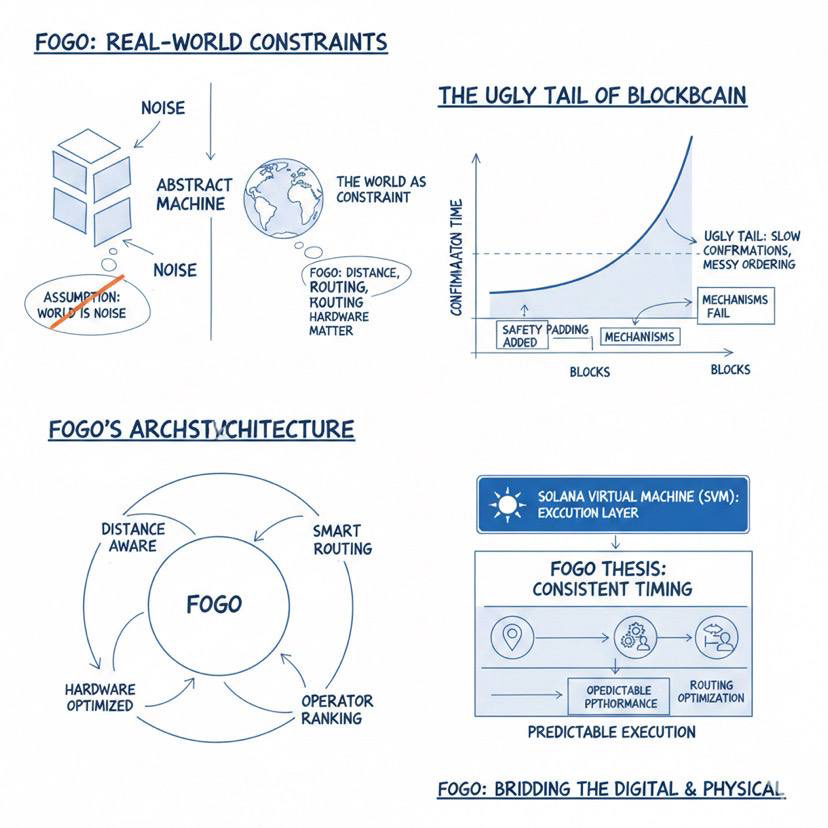
Fogo doesn’t magically solve the economic sustainability problem because infrastructure alone can’t solve business model problems. But the infrastructure does enable new economic possibilities that weren’t viable on expensive blockchains.
By reducing transaction costs to fractional cents, Fogo makes certain business models economically viable that were impossible when each transaction cost dollars. Developers can implement frequent small transactions without fees consuming all value. They can distribute modest rewards without transaction costs making distribution more expensive than the rewards themselves. They can enable active trading without fees preventing marketplace activity.
This doesn’t guarantee sustainable economics but it expands the possibility space for developers to experiment with business models that might work. Some possibilities that high transaction costs prevented:
Subscription models where players pay monthly fees for premium access or enhanced features. The subscription revenue funds development and operations while genuine ownership applies to items players earn. This separates access monetization from ownership monetization in ways that might balance developer needs and player benefits.
Cosmetic sales where players buy items directly from developers initially but then genuinely own them and can trade freely. Developers capture initial sale value. Players capture secondary market value. If developers keep creating desirable new cosmetics, they maintain revenue stream without needing to control secondary markets.
Tournament and competition fees where players pay entry fees for competitive events with prize pools. Developers organize competitions and take rake from entry fees. Players compete for prizes while genuinely owning items and rewards. This creates revenue from organizing competitive infrastructure rather than controlling item economies.
Creator tools and asset marketplaces where players create content and items that other players can purchase. Developers earn platform fees on creator transactions. Creators earn from their work. Players get diverse content and genuine ownership. This leverages community creativity to generate content and revenue that developers couldn’t produce alone.
Partnership and sponsorship models where brands pay to have presence in games. Developers earn from brand partnerships. Players get free or subsidized access funded by brand spending. Genuine ownership applies to items players earn. This separates player monetization from brand monetization.
None of these models are guaranteed to work at the scale needed to sustain AAA development costs. But they’re possible to attempt on infrastructure with negligible transaction costs where they were economically impossible on expensive blockchains.
The deeper problem Fogo enables discussion about is whether AAA development costs are even necessary or desirable for blockchain gaming.
Traditional AAA games need massive production values because they’re competing purely on experience quality. Better graphics. More content. Polished gameplay. Bigger worlds. These things cost enormous amounts to produce and players expect them from games charging $60 or requiring significant in-app purchases.
Blockchain games compete partly on different dimensions. Genuine ownership. Open economies. Persistence beyond any single company. Community-driven content. These benefits don’t require AAA production values to be meaningful. A game with modest graphics but genuine ownership and sustainable player-driven economy might attract players precisely because it offers things AAA games cannot.
This suggests blockchain gaming might succeed by competing in different categories rather than trying to match AAA traditional games directly. Find niches where ownership and open economies matter more than production values. Serve audiences who value these properties enough to accept graphics and content that can’t match hundred-million-dollar budgets.
Fogo enables this approach by making development costs more aligned with realistic revenue from these niche audiences. You don’t need tens of millions in funding to build games on infrastructure with negligible operating costs. Smaller teams can build sustainable games serving dedicated communities without needing to achieve mainstream blockbuster success to justify investment.
The economic sustainability question ultimately determines whether blockchain gaming achieves lasting success or remains perpetually promising but never profitable. Technology improvements help but business model innovation matters more. Fogo provides infrastructure that makes certain business models viable while developers still need to discover which models actually work sustainably at scale.
The projects that succeed will probably look different from what most people imagine blockchain gaming should become. They’ll make economic compromises that purists dislike. They’ll find niches rather than competing with everything. They’ll balance player ownership with developer sustainability in ways that satisfy neither group completely but work well enough to continue operating profitably.
The alternative is more projects that are technically impressive and ideologically pure but economically unsustainable and therefore dead within years regardless of how good the games are or how much players enjoy them. Sustainability matters more than purity for actual long-term success. Infrastructure that enables sustainable economics even if they’re not ideologically perfect serves the ecosystem better than infrastructure that enables perfect ideology but impossible economics.