
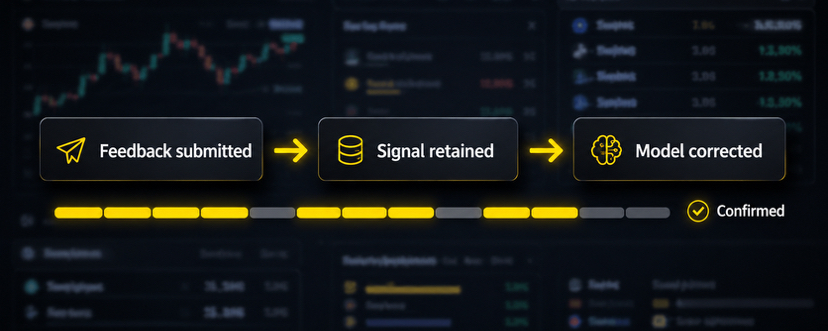
I use AI responses every day. I forward them to people. I make decisions based on them. Sometimes important ones.
And I almost never stop to ask where the answer actually came from.
That's the part OpenLedger keeps pulling me back to. Not the infrastructure — the idea underneath it. That an AI output doesn't have to arrive as a finished thing with no history attached. It can carry a record. Where the data came from. Who contributed to it. That record doesn't change the answer. But it changes what the answer means.
That felt fine for a long time — not asking. The response was useful. That was enough. But lately I've been sitting with a different question — what does it mean to trust something you can't trace?
Not trust in the sense of believing it's correct. That's a separate problem. Trust in the sense of knowing what went into it. Who contributed the data. Whether the model was trained on something solid or something scraped together at scale without much care about quality or accuracy.
Most AI outputs arrive with no record of that at all.
You get the answer. The path that produced it stays invisible. And most of the time nobody asks about the path because the answer feels good enough.
I've started to think that "good enough" is doing a lot of work in that sentence.
Because there's a difference between an answer that's useful and an answer that's trustworthy. Useful is when it helped you get something done. Trustworthy is when you'd stake your name on where it came from. Most AI outputs are the first thing. Very few are the second.
That gap is small right now because most AI is used for low-stakes things. Drafting an email. Summarizing a document. Finding information you could have found elsewhere. When it's wrong, you notice and move on.
But AI is moving into higher-stakes territory. Medical questions. Legal interpretation. The kind of decisions that follow you. In those contexts, the question of where the answer came from stops being abstract. It becomes the question.
I'm not entirely sure most people are thinking about this yet. AI feels productive and that's usually where the evaluation stops. But productive and trustworthy aren't the same thing. They just look the same until something goes wrong.
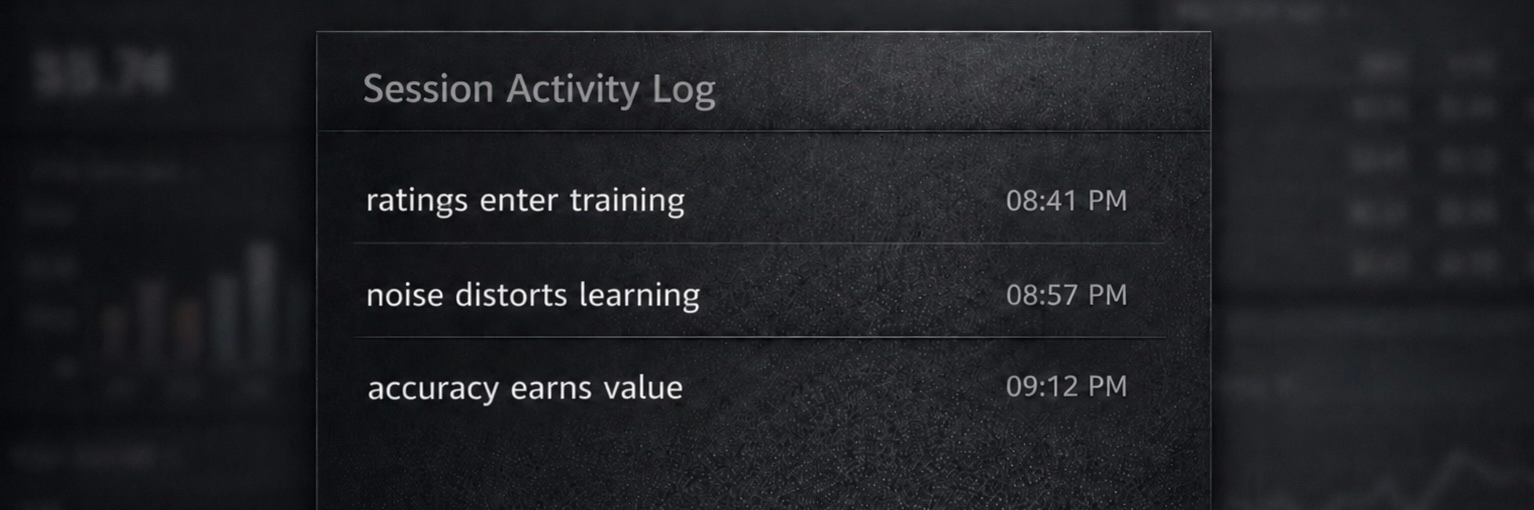
OpenLedger is trying to make those two things harder to confuse. Whether it works at scale is genuinely unclear to me. The record has to travel with the result. It has to be readable on the receiving end. It has to mean something to the person who gets the answer — not just to the system that produced it.
Easier to say than to build.
It works if the record becomes a normal part of what an AI output is — something a non-technical person can actually look at and understand. It fails if the verification stays buried in infrastructure that only developers think about.
There's a version of AI that knows its own history. And a version that doesn't.
Most of what exists right now is the second kind.
That's probably going to matter more than people currently expect.
