
I built a small dataset once. Notes, transcripts, things I'd written over years in a specific domain. Fed them into a fine-tuning pipeline. The model came out different — closer to how I actually reason about the subject. Useful in a way most general models aren't.
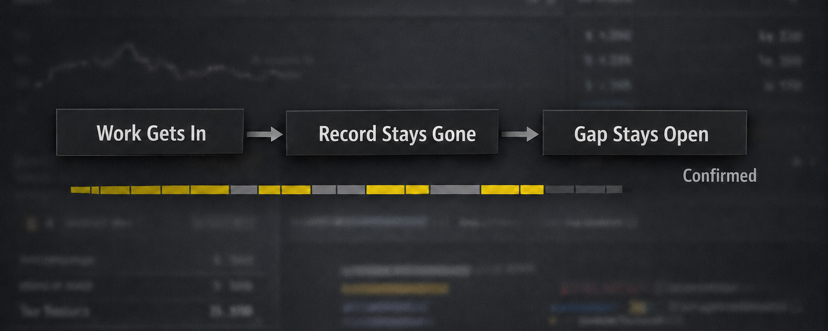
Then something changed on the backend. The model drifted. And when I tried to figure out what happened, I realized I had no record of what I'd put in. No baseline. No way to trace what my contribution had been worth before it quietly became worth less.
That's the part I keep sitting with. Someone built a system that at least tries to name what usually disappears. Whether OpenLedger actually delivers on that — I genuinely don't know yet. In their approach to Supervised Fine-Tuning, a contribution isn't just absorbed and forgotten. It's supposed to have a record. An influence traceable back to a specific source. That framing is asking the right question. I just don't know yet whether it answers it.
Whether that holds under real conditions is where I get stuck.
When contributions overlap — and they always do — how does any system decide what each one was worth? If the same reasoning pattern shows up across fifty different datasets and the model absorbs all of them, who gets credit for the outputs that pattern produces? I can't evaluate that from the outside. Which means I'm trusting a calculation I can't verify, running on a record I can't inspect independently.
Maybe that's fine. Most systems work that way.
But most systems don't make explicit promises about attribution to contributors who have no other leverage. When OpenLedger tells you your contribution will be recorded and compensated — and you have no way to confirm that's actually happening — the promise is doing a lot of work. More than most promises hold for long.
I've watched enough of these systems launch to recognize the pattern. The first cohort gets something real. The mechanism works, or seems to, long enough to build credibility. Then the project moves on. New features, new funding rounds. New contributors. And the people who came later — or who couldn't track what they were owed — get participation without compensation. Not because anyone decided to cheat them. Just because the system stopped being the point.
The on-chain record is supposed to break that. Something permanent enough that if payments stop or the mechanism shifts, there's at least something to point to after the fact. That's what I find genuinely interesting about OpenLedger's design — not the attribution promise itself, but the idea that it becomes harder to quietly walk back when it's written somewhere that can't be edited.
I'm just not sure a permanent record automatically produces a fair outcome. It makes the gap visible. It doesn't close it.
If you've ever put something specific into a system and watched it change later — did you have any way to know what you actually lost?
