
Nous célébrons Newton comme l'homme qui a expliqué la gravité 🍎✨ — le scientifique qui pouvait cartographier le mouvement des planètes et prédire le comportement de l'univers.
Mais au début des années 1700, même lui a été entraîné dans quelque chose de bien plus imprévisible que la physique : le comportement humain. 🧠🔥
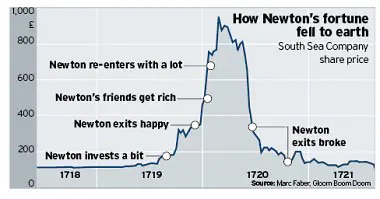
Newton a investi dans la South Sea Company — une entreprise soutenue par le gouvernement conçue pour gérer la dette nationale britannique. Sur le papier, cela semblait légitime. Prometteur. Révolutionnaire. 📜💰
Au début, il a parfaitement joué.
Il a acheté tôt. Il a regardé le prix augmenter. Il a vendu avec un profit incroyable — environ 7 000 £. 📈✅ Discipliné. Logique. Brillant.
Mais ensuite, la frénésie s'est intensifiée. 🎈🔥
Les prix continuaient de grimper. Amis et collègues devenaient plus riches chaque jour. L'excitation était contagieuse. Le récit était imparable. “Cette fois, c'est différent.” 😬📊
Donc Newton est réentré sur le marché — près du sommet.
Et quand la bulle a éclaté… 💥📉
Il a perdu plus de 20 000 £ — l'équivalent de 20 à 30 millions de dollars aujourd'hui🤯🤯🤯
Par la suite, il a célèbrement admis :
“Je peux calculer les mouvements des corps célestes, mais pas la folie des gens.”
Pendant la frénésie autour de la South Sea Company — tout comme pendant les manies spéculatives telles que l'essor des tulipes néerlandaises — les investisseurs étaient absolument convaincus qu'ils assistaient à une nouvelle ère financière. 🌷💎💎💎
Ils ont investi leurs économies de toute une vie. Ils ont écarté les sceptiques. Ils croyaient que cela ne pouvait pas s'effondrer. Jusqu'à ce que cela arrive.
Voici donc une question qui mérite d'être méditée — calmement, professionnellement et honnêtement :
Lorsque chaque génération croit que son nouvel actif est révolutionnaire… lorsque les foules insistent sur le fait “que ce n'est pas un pyramide”… lorsque les économies affluent plus vite que la compréhension… Sommes-nous certains d'assister à une innovation — ou regardons-nous simplement une autre pyramide magnifiquement emballée prendre forme, tout comme les investisseurs l'ont fait avant la chute ?
#crypto #bitcoin #TrumpNewTariffs