

When we hear the word mining in Web3, we instinctively associate it with network security, block validation, and infrastructure incentives.
But what if mining is not being used primarily as a security mechanism?
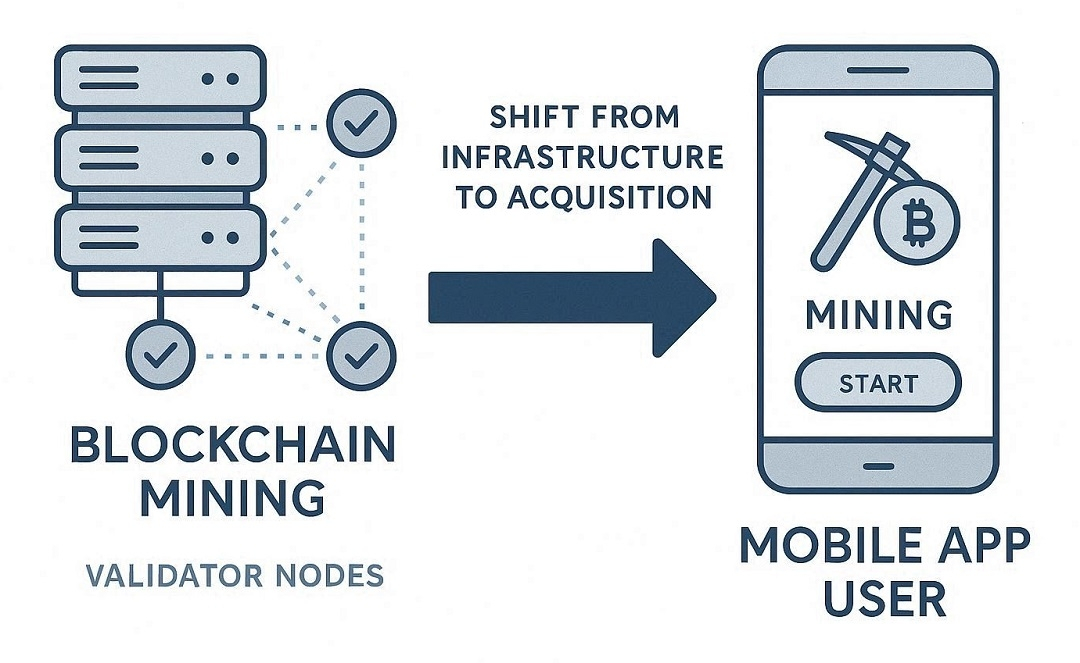
Mira Network introduces a model where mining appears to function as something different: a large-scale user acquisition engine.
That distinction changes how we evaluate its architecture.
Mining Beyond Proof-of-Work
Traditional mining models — like those pioneered by Bitcoin — exist to secure consensus. Validators or miners expend resources to protect the network.
In Mira’s case, mining through its application seems less about consensus mechanics and more about ecosystem onboarding.
This is not necessarily a flaw.
It is a structural choice.
Instead of asking users to understand tokenomics first, the system invites participation through a simplified mining interface.
Participation precedes comprehension.
That sequence is psychologically powerful.
Behavioral Economics at Scale
Mining in this context behaves more like a gamified distribution model.
It lowers entry barriers.
It creates routine engagement.
It introduces token exposure gradually.
From a behavioral standpoint, this reduces friction dramatically compared to asking users to buy tokens directly on exchanges.
Instead of “invest first,” the system encourages “participate first.”
That psychological inversion may explain the reported rapid growth in user numbers.
However, engagement volume is not equivalent to long-term commitment.
Retention metrics matter more than initial onboarding.
The Conversion Question
Here lies the structural pivot.
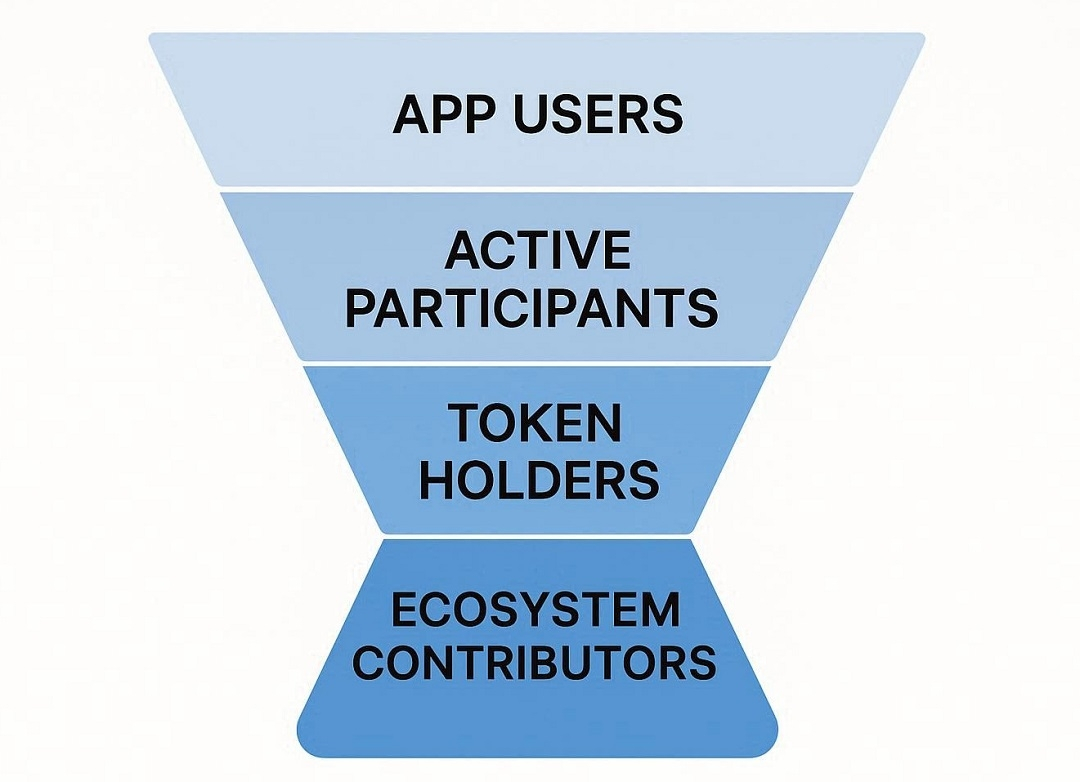
If mining functions as acquisition, then the true test is conversion:
How many users transition from passive mining to active ecosystem participation?
How many understand the token mechanics?
How many remain once speculative expectations stabilize?
Acquisition without conversion creates inflated surface metrics.
Acquisition with conversion creates network depth.
That distinction will define whether the mining model evolves into sustainable infrastructure — or remains a distribution layer.
Strategic Implications
Using mining as a user acquisition engine is unconventional but not irrational.
It borrows from Web2 growth logic — onboarding first, monetization later — while wrapping it in Web3 token mechanics.
The risk is obvious: surface growth can mask structural weakness.
The opportunity is equally clear: if even a fraction of the user base converts into informed participants, the network begins with scale most early-stage projects lack.
The outcome depends less on the mining interface itself and more on what follows after the first click.
Conclusion
Mining in Mira Network should not be evaluated through the lens of classical consensus models alone.
It is functioning as an engagement gateway.
Whether that gateway leads to a resilient token economy or to short-term participation cycles will depend on execution discipline and economic clarity.
But strategically, treating mining as acquisition rather than infrastructure is a bold architectural decision.
And bold decisions tend to define long-term trajectories.
@Mira - Trust Layer of AI $MIRA #Mira
