

@Fabric Foundation $ROBO #ROBO
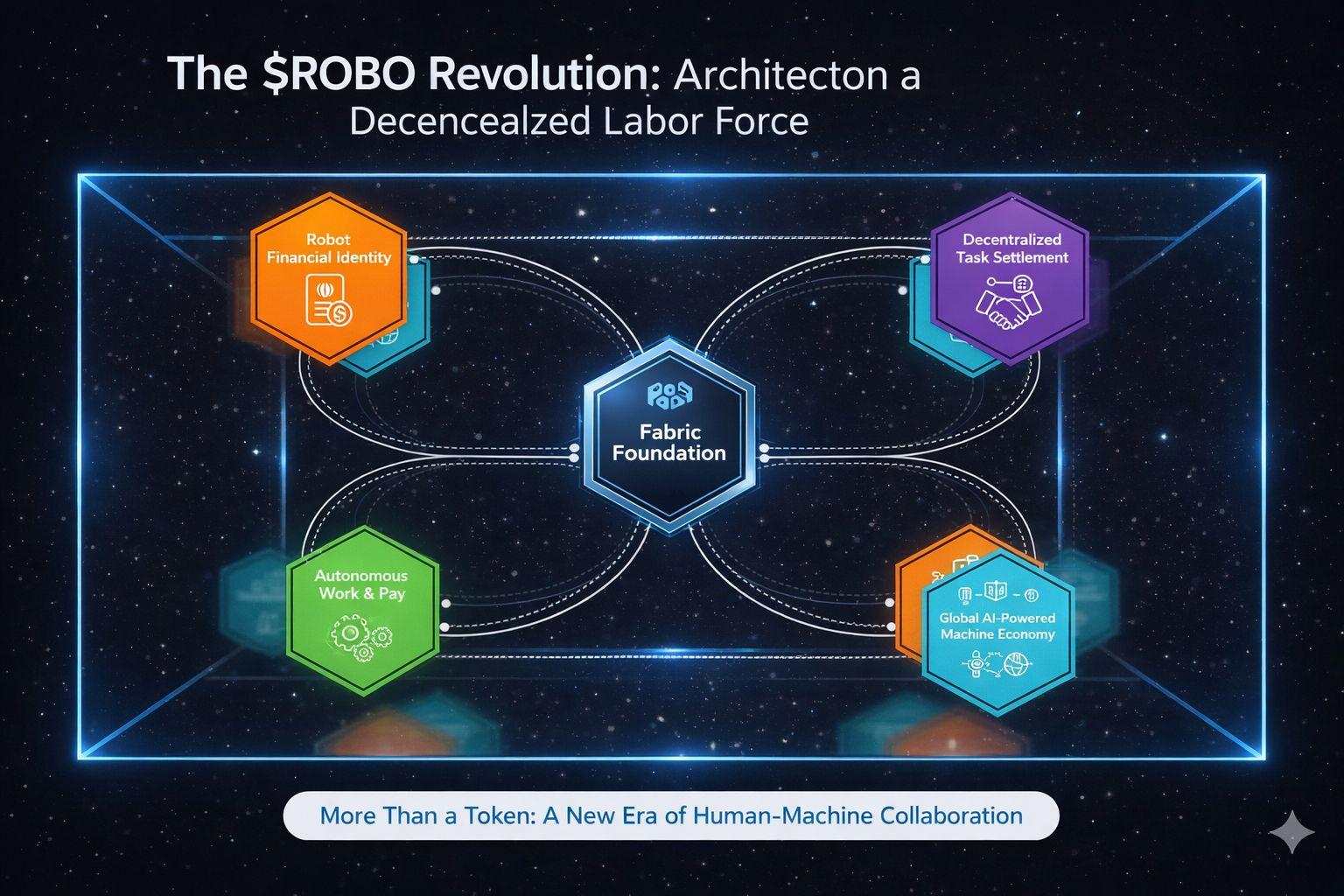
#robo I’ve spent the last few days really digging into where we are headed, and if you think the launch of ROBO was the finish line, you’re missing the bigger picture. We aren't just looking at a new token listing; we are witnessing the construction of a global, decentralized labor force.
The Fabric Foundation isn’t just "planning" for the future—they are architecting a world where machines have their own financial identities and the ability to work, pay, and settle tasks without a human middleman. I want to walk you through the four key phases of the 2026 roadmap that are going to change everything for the ROBO ecosystem.
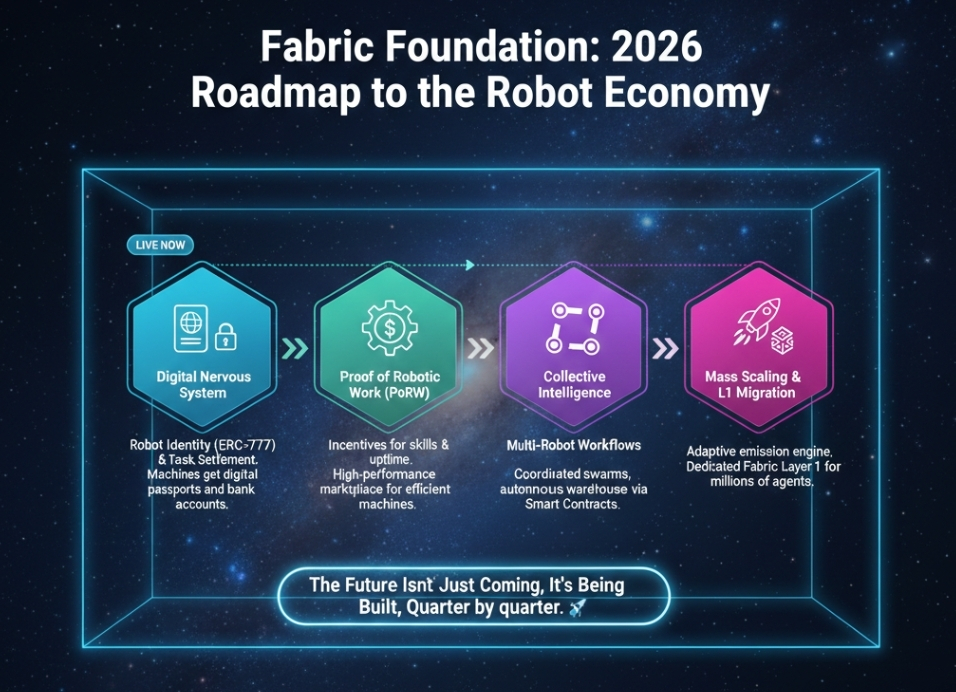
Q1 2026: Establishing the Digital Nervous System
The first quarter of 2026 is all about the "Foundational Layer." Before a robot can do a job, it needs to know who it is and how to get paid. The Foundation is currently deploying the initial Robot Identity (ERC-7777) and Task Settlement components.
Think of this as giving every machine its own digital passport and a high-speed bank account. By the end of March, we’re going to see the first wave of hardware registration. Robot operators are already posting their ROBO work bonds to get their machines onto the network queue. This isn't theoretical; it's the infrastructure that ensures when a robot "says" it did a job, the blockchain can verify it instantly.
Q2 2026: The "Proof of Robotic Work" Explosion
Moving into the second quarter, the focus shifts to Incentivization. This is where things get interesting for the community. The Foundation is rolling out the full Proof of Robotic Work (PoRW) rewards system.
Unlike traditional staking where you just park your tokens and wait, ROBO utility is driven by action. In Q2, we’ll see the launch of contribution-based incentives. Developers who provide better "skills" for the robots, and operators who maintain high uptime and accuracy, will see the lion’s share of rewards. This creates a high-performance marketplace where the most efficient machines—and the people who run them—win.
Q3 2026: Multi-Robot Workflows and Collective Intelligence
By the time we hit the third quarter, the individual robots will start talking to each other. The roadmap for Q3 introduces Multi-Robot Workflows. We aren't just talking about one arm on a factory floor anymore. We’re looking at coordinated swarms where Robot A handles logistics, Robot B handles sorting, and Robot C handles final delivery—all settled through a single sequence of ROBO smart contracts. This is the "Collective Intelligence" phase. It expands the Fabric protocol from simple task-matching to complex, industrial-grade automation that can run entire warehouses autonomously.
Q4 2026: Large-Scale Deployment and Global Refinement
Finally, as we close out the year, the goal is Massive Scalability. Q4 is all about refining the incentive mechanisms to handle millions of concurrent robot agents.
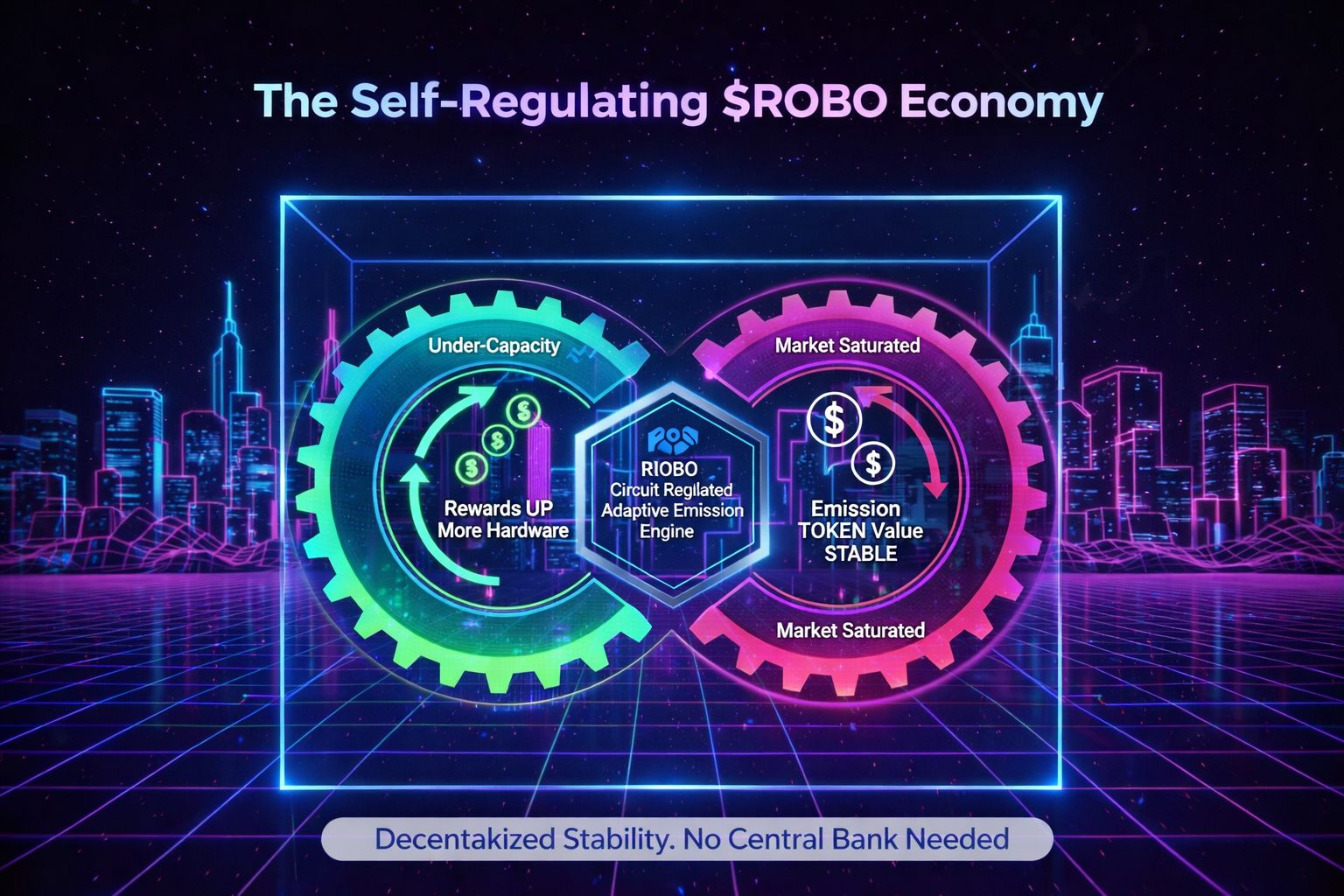
By this point, the Foundation plans to have integrated its "Circuit Breaker" adaptive emission engine fully. If the network is under-capacity, ROBO rewards increase to pull in more hardware. If the market is saturated, the system tightens up to maintain token value. It’s a self-regulating, machine-driven economy that doesn't need a central bank to stay stable.
I’m looking at this roadmap and I see a clear path from "token" to "utility." We are moving toward a world where the "Fabric" isn't just a protocol—it’s the actual backbone of the physical economy. I'm curious: which of these milestones do you think will be the biggest catalyst for $ROBO's mass adoption? The individual identities in Q1, or the swarm coordination in Q3? Let’s chat in the comments! 👍🤗