
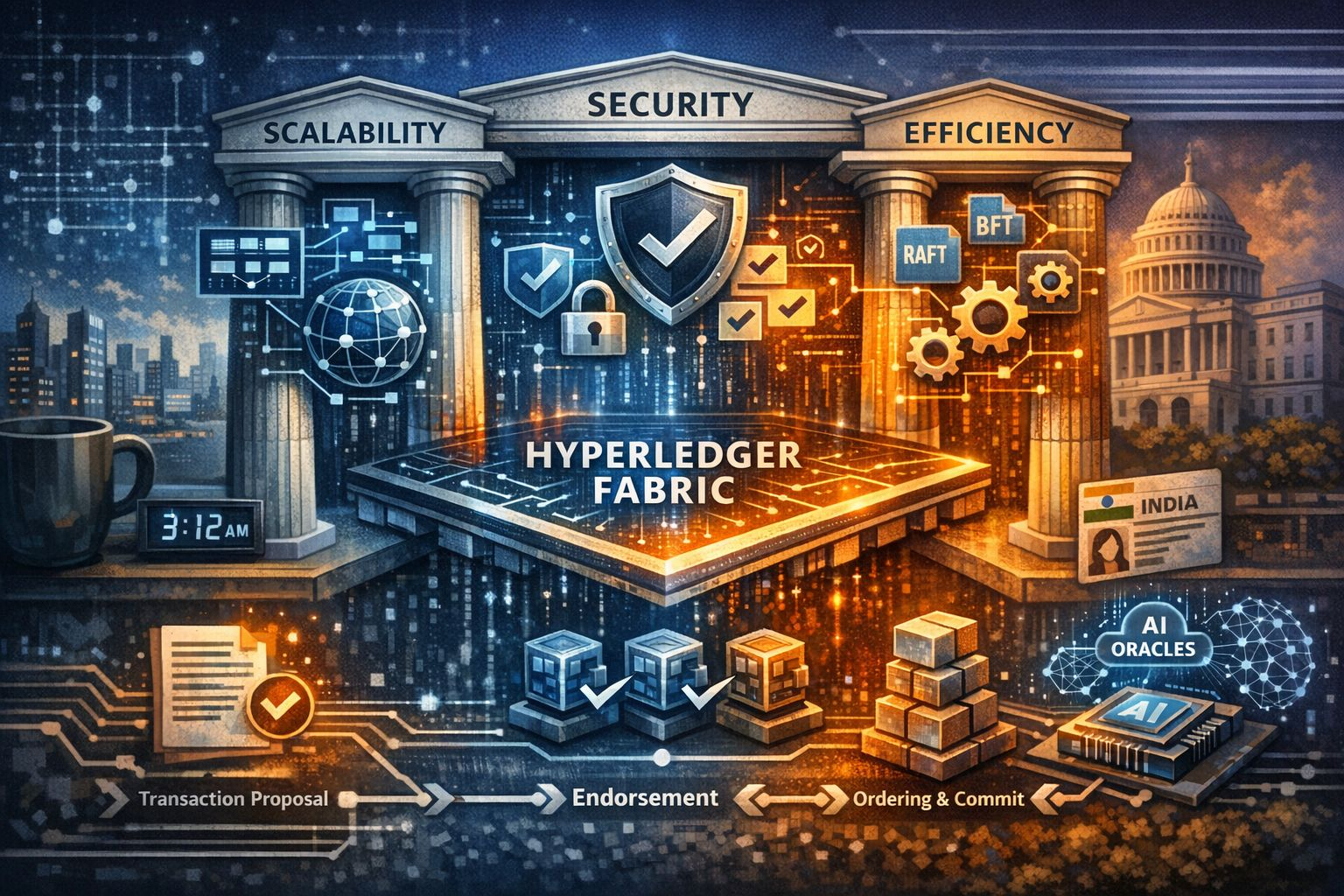
It was around 3:12 AM when I finally closed a position on a sidechain and leaned back from the terminal. The coffee beside me had already gone cold. But my thoughts drifted somewhere else — back to Hyperledger Fabric, a framework that rarely gets hype but quietly powers many enterprise blockchain systems.
Recently, the Hyperledger Foundation pushed updates that fixed issues like gossip shutdown hangs and improved compatibility with newer Docker versions. It may sound minor, but in distributed systems these details matter.
When peers exchange state through gossip protocols across channels, even a small shutdown bug can cascade into downtime. I’ve seen it happen: one unstable node can stall an entire endorsement flow. Fixes like this keep the network efficient and stable as it scales.
If you’re running Fabric peers, upgrading is worth considering. Testing first on a development channel helps prevent state provider shutdown errors. It’s also a good moment to review gossip configurations since the shift toward direct block pulls improves scalability for high-throughput deployments.
What makes Fabric interesting is how its architecture quietly balances three critical pillars:
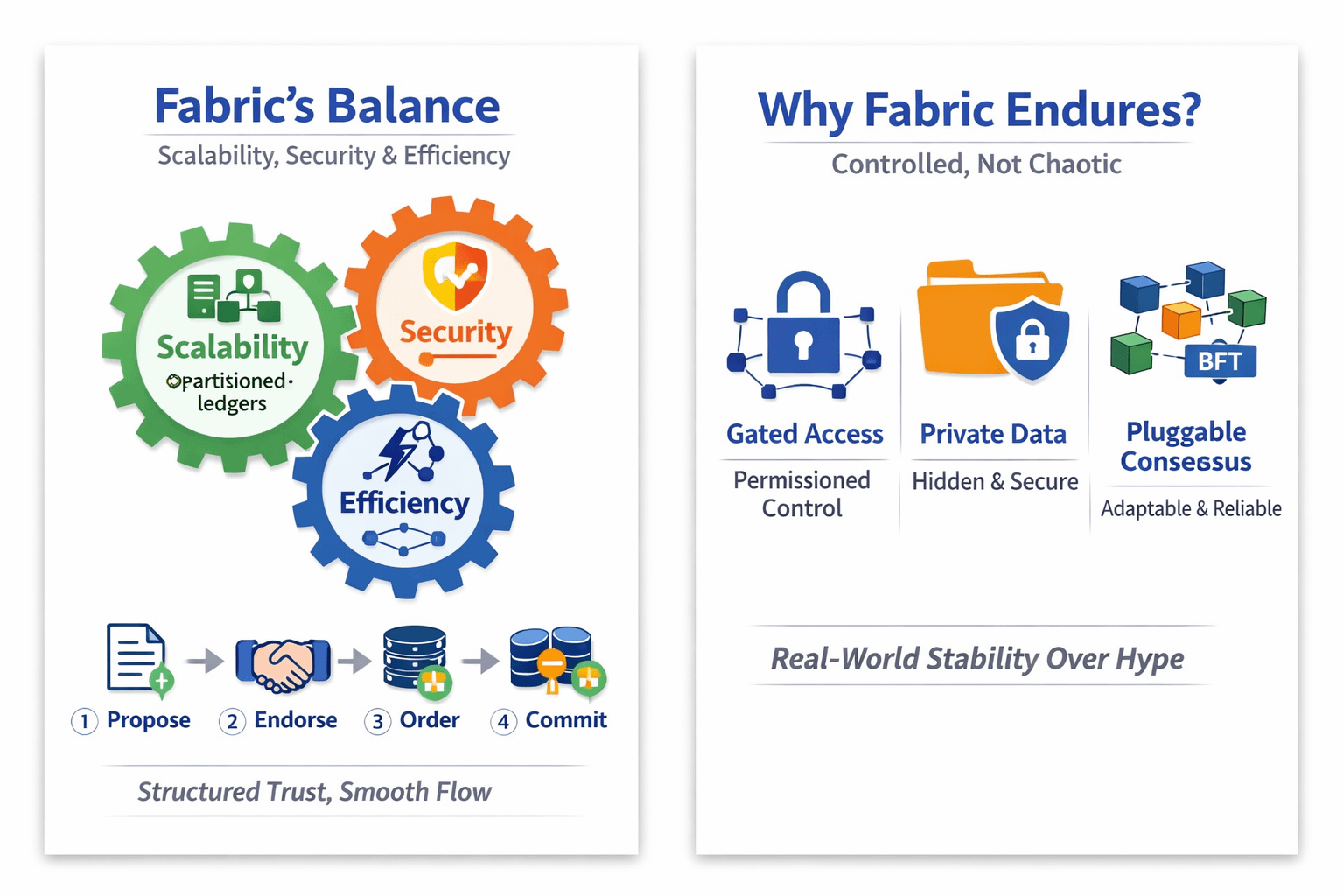
Scalability – Channels allow transaction sharding so organizations only process the data relevant to them, preventing ledger bloat.
Security – Endorsement policies require multiple organizations to approve transactions before they are ordered and committed.

Efficiency – Pluggable consensus mechanisms like Raft or BFT-style ordering allow networks to tune performance based on their trust model.
The flow is simple but powerful:
a transaction proposal → endorsement from peers → ordering → atomic commit to the ledger.
No partial states, no ambiguity.
Even small improvements—like fixing a gossip ticker that previously kept running after channel shutdown—reduce wasted cycles and improve network efficiency in dynamic environments where channels appear and disappear frequently.
We’re also seeing Fabric used in large-scale national systems. India has integrated Fabric into its National Blockchain Framework, supporting permissioned infrastructure for digital services. Cities like San Juan have experimented with blockchain-based government services, processing administrative workflows more efficiently.
Still, Fabric raises an important question.
Because it’s permissioned, access is controlled. That limits openness compared to public chains—but it also reduces chaos. After watching countless permissionless systems struggle with bad actors and exploits, I’m starting to think that structured trust models may be the smarter design for real-world infrastructure.

Fabric doesn’t promise infinite scalability or revolutionary hype cycles. Instead, it delivers something quieter but more valuable: balance.
Channels control data growth.
Private data collections protect sensitive information.
Pluggable consensus lets networks adapt to different risk models.
After years watching blockchain systems come and go, that balance might be exactly why Fabric continues to endure.
And looking ahead, the next phase could be interesting. Imagine chaincode integrating AI-driven oracles or predictive systems to assist in transaction validation and governance.
Not hype — just infrastructure evolving.
Sometimes the strongest systems aren’t the loudest ones.
