
In today’s fast-moving digital world, innovation often appears loud, fast, and attention-driven. New platforms, new technologies, and new ideas constantly compete for visibility. But the truth is that the strongest systems are rarely the loudest ones. The infrastructure that truly shapes the future usually works quietly in the background, proving its value through reliability rather than noise. 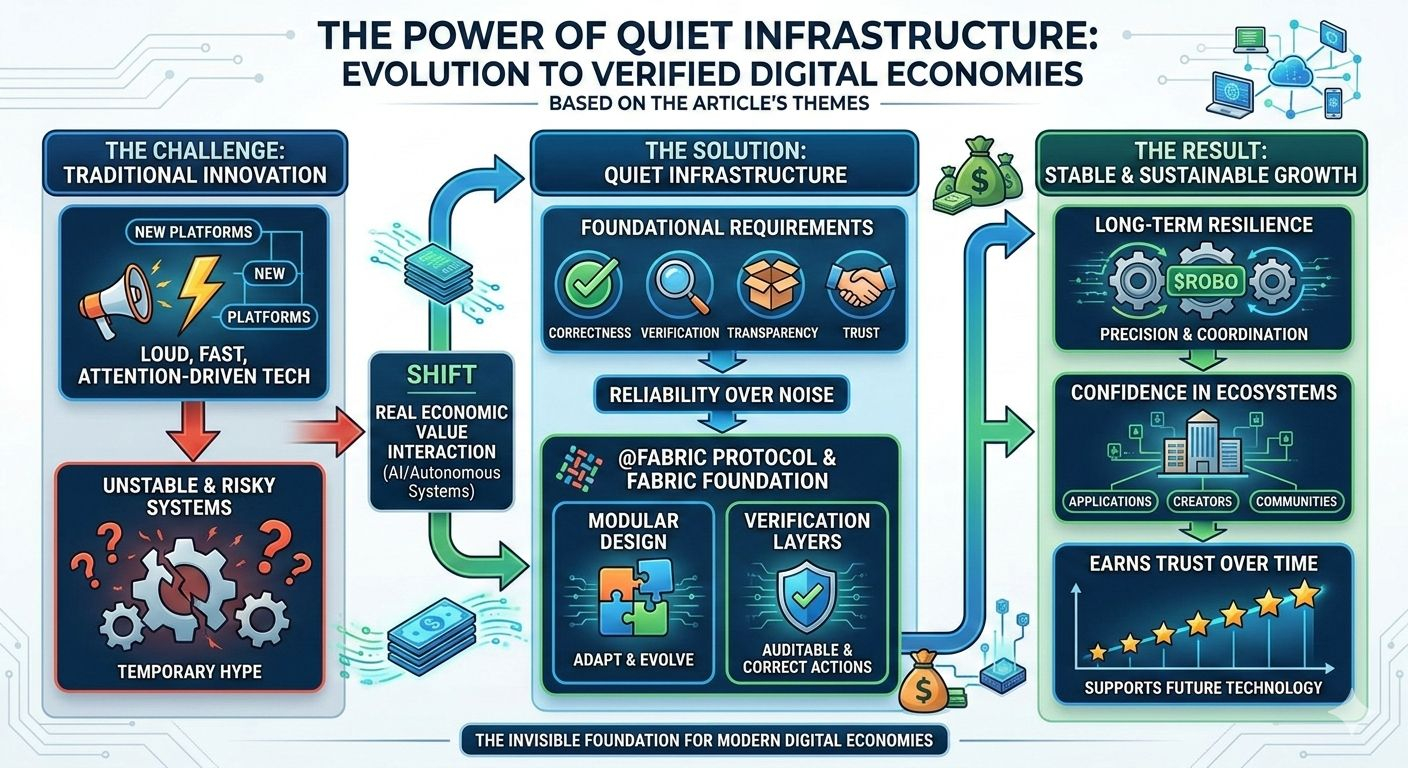
As artificial intelligence and autonomous systems continue to evolve, they are beginning to interact with real economic value. This shift changes everything. Speed alone is no longer enough. Systems must now prioritize correctness, verification, transparency, and trust. Without these foundations, even the fastest technology can become unstable or risky.
This is why projects like @Fabric Foundation and the work being done by Fabric Foundation are becoming increasingly important. Their focus on modular, verification-first infrastructure represents a thoughtful approach to building technology that can grow safely with the demands of modern digital economies.
Instead of chasing temporary hype, this approach focuses on building systems that remain reliable as they scale. Modular infrastructure allows networks to evolve and adapt, while verification layers ensure that automated actions remain correct and auditable. In an environment where AI agents may eventually coordinate financial transactions, creator economies, and digital services, these safeguards become essential.
Projects such as $ROBO reflect this philosophy clearly. Rather than emphasizing short-term visibility, they focus on precision, coordination, and long-term resilience. This type of design creates systems that can operate efficiently even as networks become larger and more complex.
In many ways, infrastructure is similar to the foundation of a building. People rarely notice it when everything works perfectly, but without it the entire structure becomes unstable. The same principle applies to digital ecosystems. Reliable infrastructure ensures that applications, creators, and communities can build with confidence.
Another important aspect of strong infrastructure is trust. In the digital age, trust is not built through marketing alone. It is built through systems that consistently perform as expected. When networks remain stable during periods of growth or stress, they demonstrate the kind of reliability that attracts long-term participation.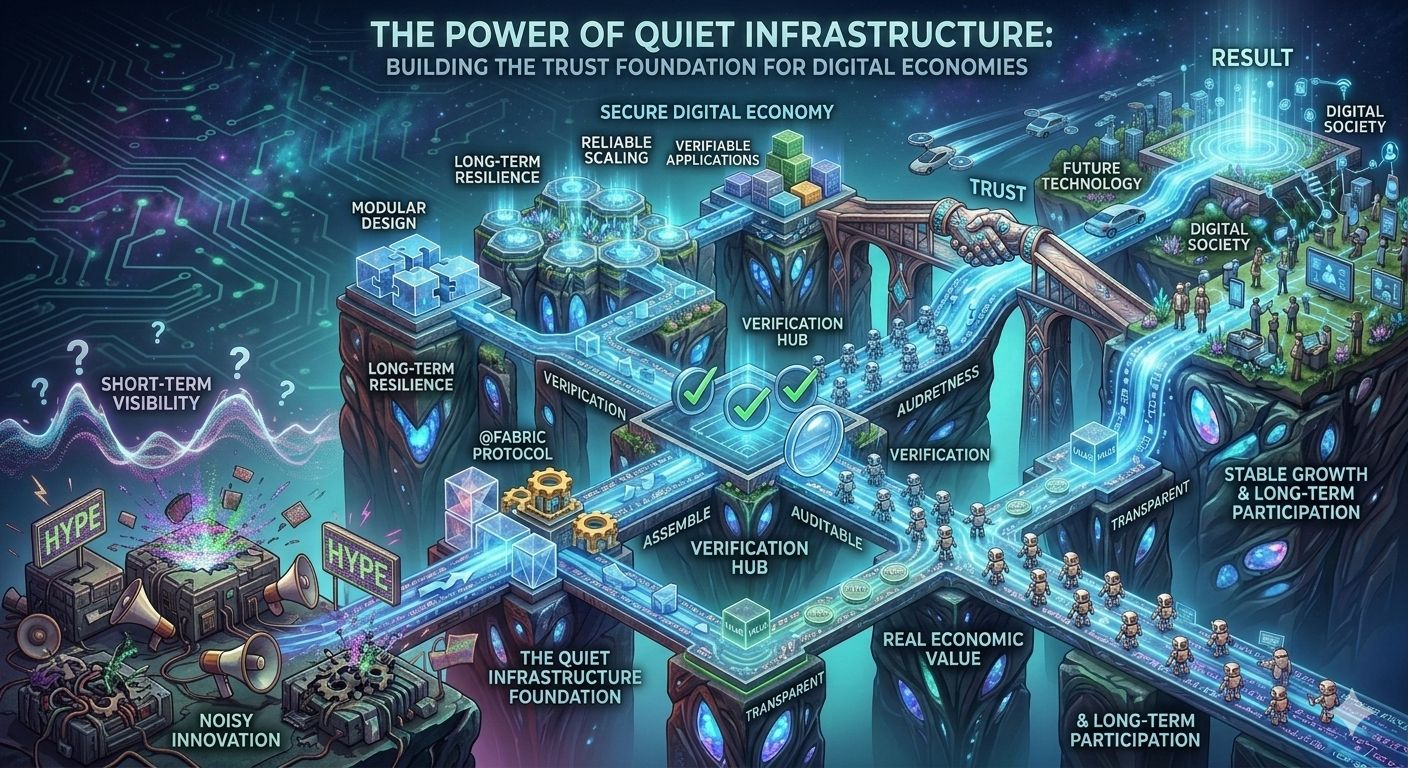
As AI, automation, and Web3 technologies continue expanding, the need for transparent and verifiable systems will only increase. The future will belong to platforms that can coordinate complex activity while maintaining clarity, accountability, and resilience.
Ultimately, the most impactful innovations are not always the ones that trend the fastest. They are the ones that quietly power the systems people depend on every day.
Strong infrastructure doesn’t need to chase attention.
It simply earns trust over time and supports the technology that shapes the Future.#ROBO


