
The first time I came across Fabric Protocol, I paused for a moment and thought, this idea feels bigger than just another tech project. We often hear about artificial intelligence, robots, and automation shaping the future, but something always seems missing from the conversation. From my perspective, it’s not just about building smarter robots—it’s about creating the infrastructure that allows those robots to work together safely, efficiently, and transparently. That’s exactly where Fabric Protocol enters the picture, and the more I explored it, the more interesting it became.
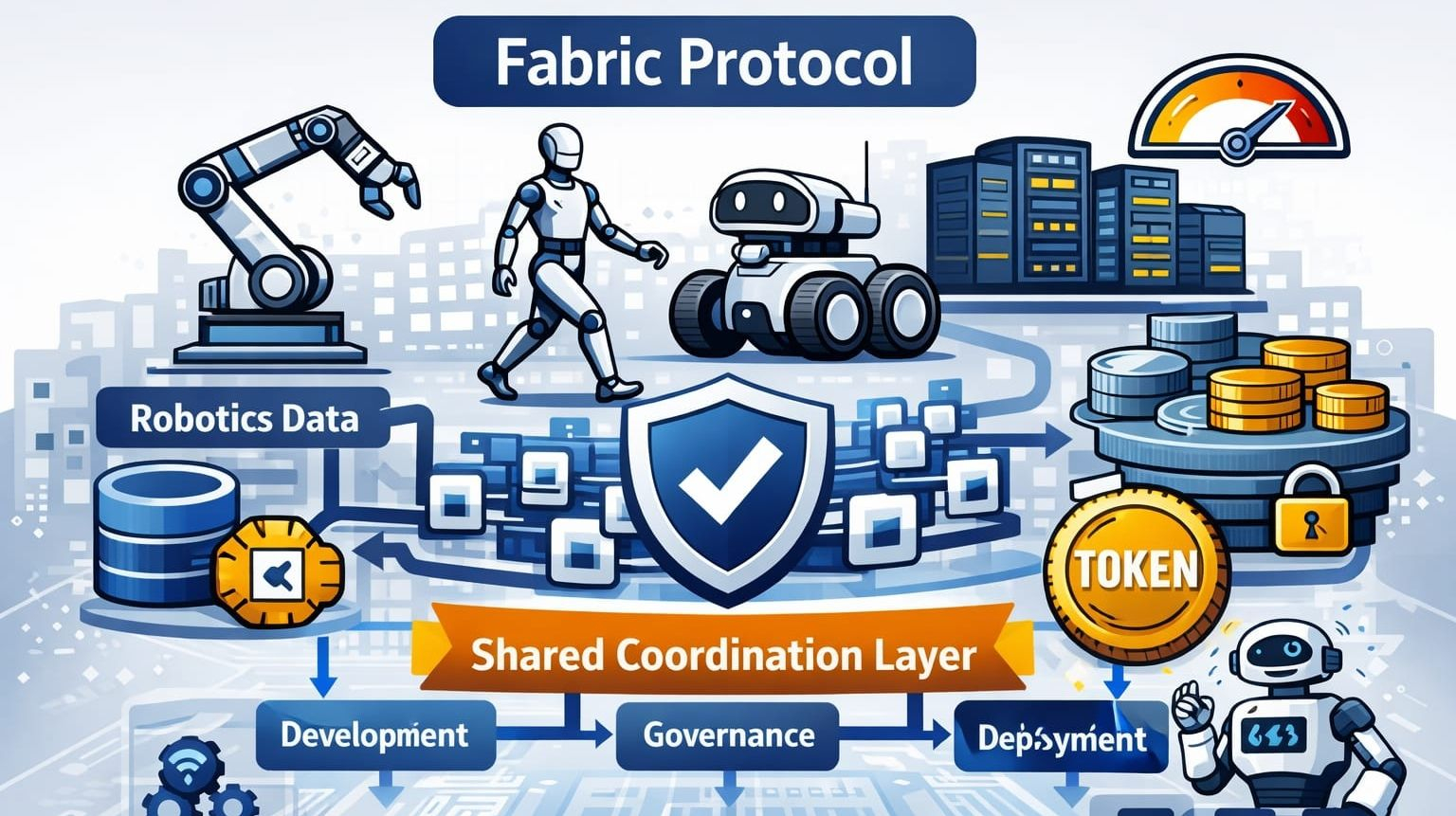
What caught my attention early on was the vision behind the Fabric Foundation. Instead of focusing on a single product or machine, the project aims to build a global open network that supports the creation, coordination, and evolution of general-purpose robots. When I first understood this, it reminded me of how the internet connected millions of computers around the world. In a similar way, Fabric Protocol is trying to create a network where robots, AI agents, and humans can interact through a shared system.
At its core, Fabric Protocol acts as a coordination layer for intelligent machines. From what I noticed, the system uses a public ledger to organize data, computation, and rules that govern how machines operate. This means that robots and AI agents don’t just perform tasks blindly—they operate within a transparent and verifiable system. To me, this feels like an important step toward making robotics more trustworthy and accountable.
One thing that became clear while reading about Fabric is that the robotics industry still faces a major challenge: fragmentation. Different companies build different robots, each with their own software and systems. As a result, these machines often cannot easily work together. Fabric Protocol tries to solve this problem by creating a shared infrastructure where machines and intelligent agents can communicate and collaborate. In simple terms, it’s like giving robots a common language.
Another aspect I found particularly interesting is the idea of verifiable computing. At first, the term sounded complex, but the concept is actually quite practical. It means that the actions or computations performed by robots and AI systems can be verified within the network. From my perspective, this could play a huge role in building trust around automation. If machines are going to perform tasks that affect the real world—whether in logistics, manufacturing, or healthcare—there needs to be a way to confirm that those actions are correct and transparent.
Fabric’s agent-native infrastructure also stood out to me. Today, AI agents are becoming more capable of performing tasks on their own. We already see examples of AI systems managing workflows, analyzing data, or even making decisions. Fabric Protocol seems designed for this new environment, where autonomous agents and robots need a shared system to coordinate their actions. Instead of operating independently, they can interact within a structured network that keeps everything organized and verifiable.
As I looked deeper into the project, I started thinking about the potential real-world applications. Imagine a city where delivery robots coordinate with each other to optimize routes, all while sharing information through a transparent network. Or factories where machines from different manufacturers can collaborate seamlessly because they are connected through a common protocol. Even service robots in hospitals or hotels could benefit from such coordination systems.
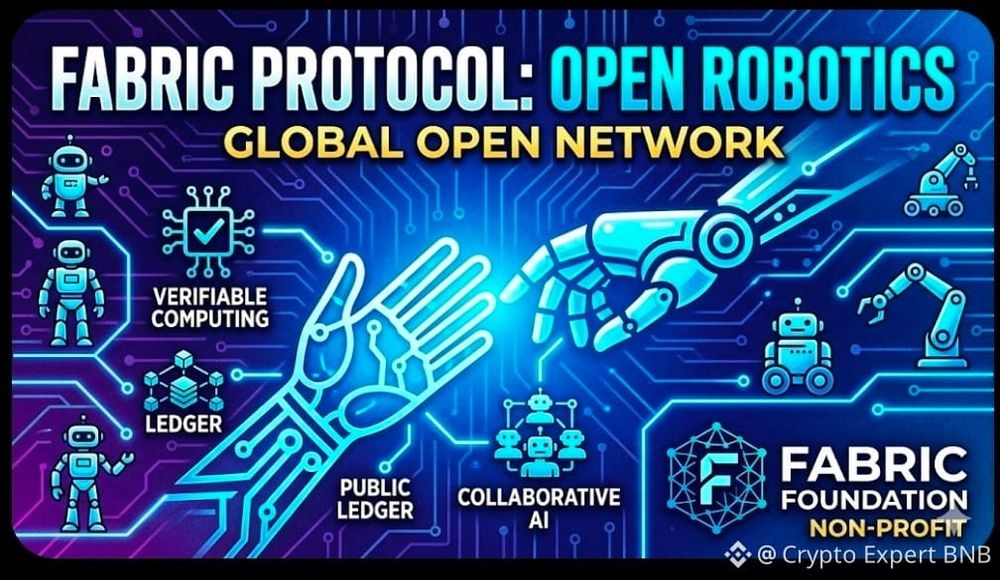
From my perspective, the real value of Fabric lies in enabling human-machine collaboration. For years, discussions about automation have focused on replacing human workers, but the reality is often more complex. The future will likely involve humans and intelligent machines working together. Fabric Protocol seems to recognize this by building infrastructure that supports cooperation rather than competition between people and machines.
Another detail that caught my attention is the modular design of the network. Instead of forcing developers into a rigid system, Fabric provides components that can be combined in different ways. This flexibility could allow developers, robotics companies, and AI researchers to experiment and build new solutions without being restricted by a single platform. In my opinion, this kind of open design often leads to faster innovation.
The role of the Fabric Foundation also adds credibility to the project’s long-term vision. As a non-profit organization supporting the network, its goal appears to be building an open ecosystem rather than a closed commercial platform. Historically, many of the most successful technological networks—from the internet to open-source software—have grown through collaborative communities rather than centralized control. Fabric seems to follow that philosophy.
Recent developments in AI and robotics make the timing of this project particularly interesting. Artificial intelligence models are becoming more powerful every year, while robotics hardware continues to improve rapidly. At the same time, decentralized technologies have shown how networks can coordinate complex systems without relying on a single central authority. When I think about these trends together, Fabric Protocol feels like a natural next step.
Of course, building a global coordination layer for robots is not a simple task. The success of Fabric will depend on adoption from developers, companies, and institutions. New infrastructure only becomes valuable when people start building on top of it. But the concept itself addresses a real need in the robotics world, which is why it continues to attract attention.
What excites me most is the long-term vision behind the project. If robotics continues to expand into industries like logistics, healthcare, agriculture, and manufacturing, the number of machines operating in the world will grow dramatically. Without proper coordination systems, managing those machines could become chaotic. Fabric Protocol offers a possible solution by creating a shared network that organizes how these systems interact.
When I step back and think about it, Fabric Protocol feels like an attempt to build the digital infrastructure for the machine age. Just as the internet connected computers and blockchain networks connected financial systems, Fabric is exploring how robots and AI agents might be connected in the future.
In the end, what stayed with me most after learning about Fabric Protocol is the idea that the future of robotics is not just about smarter machines—it’s about smarter systems. Individual robots may become incredibly capable, but their true potential will only emerge when they can collaborate within a larger network.

From my perspective, Fabric Protocol is trying to build exactly that kind of network. Whether it ultimately becomes a foundational layer for robotics remains to be seen, but the vision is both ambitious and thought-provoking. If projects like this succeed, we may one day live in a world where intelligent machines coordinate seamlessly around us—helping industries run more efficiently and allowing humans to focus on what we do best.And that possibility alone makes Fabric Protocol a project worth watching closely in the years ahead.