

I once spent almost half a day trying to complete an on-chain payment for a contributor. The funds were already in the wallet, but the process stalled when it came time to convert them into fiat. That experience made something clear to me: while blockchain moves value quickly, the actual permission to transact often still sits outside the chain.
Since then, I’ve looked at the idea of robots trading with a more practical mindset. An agent can read data, sign orders, and react instantly, but without a passport or a bank account it still remains outside many parts of the real economy.
This situation is quite familiar in crypto. Simply holding assets in a wallet doesn’t always mean you have a reliable way to use them—especially when it comes to recurring expenses or stable payment flows.
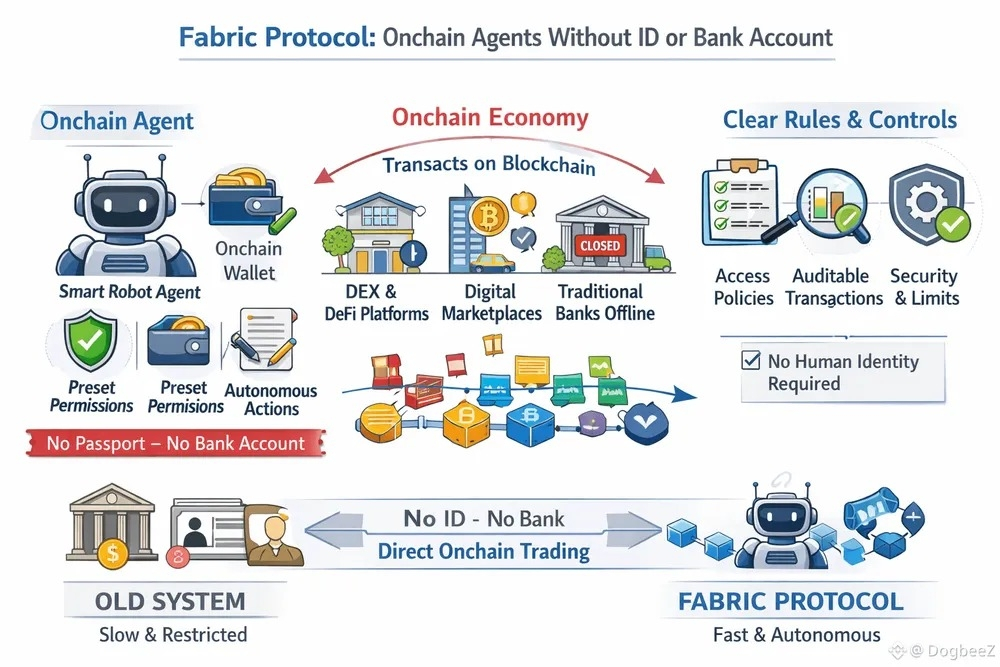
What interested me about Fabric Protocol is that it directly addresses this limitation. Instead of forcing robots to rely on human identity, the protocol allows an agent to exist fully on-chain—with its own wallet, defined permissions, the ability to hold assets, and the capacity to transact within clear boundaries.
I like to think of it as similar to a delivery worker who cannot open a bank account but still needs to collect payments, cover fees, and complete routes every day. If the infrastructure is designed properly, that worker only needs well-defined permissions to perform the job effectively.
Of course, long-term reliability requires more than polished demos. For Fabric Protocol to matter, it must function under real conditions—network congestion, high fees, smart contract failures, and potential misuse of authority—while maintaining a clear separation between signing rights, spending authority, and accountability.
That’s why I see it as something worth paying attention to only if it can enable robots to transact in real conditions, improve transparency through auditing, and maintain operational discipline. Crypto is full of ambitious ideas, but what is far rarer is infrastructure that allows machines to participate in the economy without relying on traditional forms of identity.