
There’s a strange dynamic in crypto that people rarely admit.
The market usually rewards solutions after the pain becomes obvious.
Not before.
Right now, Mira feels like it’s operating slightly ahead of that pain curve. And that’s both interesting… and risky.
Because if you solve a problem the ecosystem already feels, adoption is fast. The need is obvious. Builders integrate quickly because the alternative is inefficient or broken.
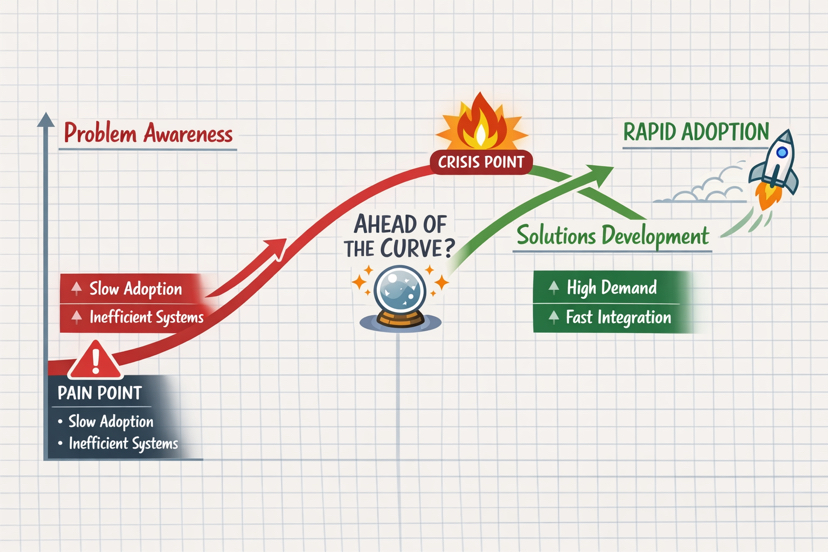
But if you solve a problem the ecosystem hasn’t fully recognized yet, things move slower.
People experiment.
They acknowledge the architecture.
They say it’s “interesting.”
But they don’t restructure around it.
That’s the phase Mira seems to be in.
The design logic suggests it wants to sit in the background of systems — not replace them, not compete directly, but quietly improve how things connect and coordinate. That’s a powerful role if it works.
But the keyword there is if.
Infrastructure layers don’t become valuable because they’re clever. They become valuable when other protocols decide it’s easier to build with them than without them.
That decision point hasn’t clearly happened yet.
Or at least not publicly.
What I find slightly uncomfortable is how easy it is to intellectually appreciate Mira without fully understanding its eventual gravity. The architecture makes sense on paper. The direction feels deliberate. But markets don’t price intentions.
They price necessity.
And necessity only forms when enough builders begin treating a system as part of the default stack.
Maybe Mira is slowly approaching that threshold.
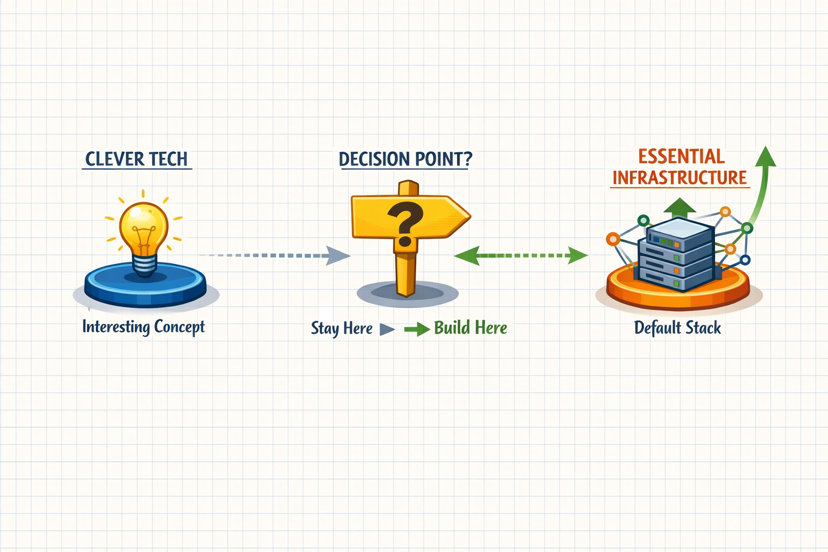
Or maybe it’s still in the experimentation stage where projects try things, test integrations, and then quietly move on if the incentives aren’t strong enough.
That’s the fragile window most infrastructure projects pass through.
I don’t see obvious failure signals. But I also don’t see the moment where the ecosystem collectively realizes, “Okay, this layer actually matters.”
Those realizations usually arrive late.
By the time the dependency becomes visible, it’s already been forming for months in the background.
So I’m left watching small signals — developer activity, subtle integrations, the tone of how other builders reference the system.
Nothing explosive.
Just hints.
And maybe that’s the point. Maybe Mira isn’t trying to win attention right now. Maybe it’s trying to become useful enough that attention eventually becomes unavoidable.
Or maybe I’m reading too much structure into something that’s still figuring itself out.
Either way, it doesn’t feel like a resolved story yet.
It feels like the early chapters of one.
#Mira @Mira - Trust Layer of AI $MIRA
