 Technology history shows that the most influential systems are rarely the loudest ones. Many of the foundational layers that support the internet, modern computing, and digital finance were initially invisible to the broader public. Protocols such as TCP/IP, DNS, and HTTP quietly created the structure that allowed entire industries to develop on top of them. Fabric Protocol has emerged in a similar context. Instead of presenting itself as another speculative narrative in the cryptocurrency market, it attempts to solve a structural problem that will likely become more visible as robotics and artificial intelligence expand into everyday economic activity.
To understand the role Fabric Protocol is trying to play, it helps to look at the technological evolution that preceded it. Robotics began entering industrial environments in the late twentieth century. Automotive factories, electronics manufacturers, and heavy industry gradually adopted automated machinery capable of performing repetitive and precise tasks. These robots were usually built for very specific environments and operated inside tightly controlled systems owned by a single company. Each robot relied on proprietary software, specialized control hardware, and closed communication networks that rarely interacted with external systems.
This design produced reliable industrial automation but created a fragmented ecosystem. Robots produced by different manufacturers could not easily communicate with one another. Software written for one robotics platform often could not run on another. Even within the same company, multiple robot systems could operate independently without sharing information or coordinating tasks.
Meanwhile, distributed computing was evolving in a different direction. Researchers studying networked systems began exploring methods for coordinating machines that did not necessarily trust each other. Distributed consensus algorithms and peer-to-peer networks were developed to maintain shared records across independent computers. These ideas eventually led to blockchain systems such as Bitcoin and Ethereum, which demonstrated that decentralized networks could coordinate economic activity without central authorities.
Early blockchain systems were designed primarily for digital assets and financial transactions. They provided ways for individuals to transfer value and verify ownership without relying on banks or intermediaries. However, they did not initially address the question of how physical machines might participate in such networks.
At the same time, robotics was entering a new phase. Advances in machine learning, sensors, and computing power allowed robots to operate in more complex environments. Autonomous delivery robots began appearing in urban settings. Warehouse automation systems expanded rapidly as e-commerce companies scaled their logistics networks. Agricultural robots started performing tasks such as crop monitoring and harvesting. Cleaning robots, inspection drones, and security patrol machines also became increasingly common.
As robots gained autonomy, a new question began to emerge. If machines could perform labor independently, how would they coordinate tasks, prove the work they had completed, and receive compensation in an open network? Traditional robotics infrastructure was not designed for economic interaction between machines owned by different organizations. A delivery robot owned by one company could not easily negotiate a task with a warehouse robot owned by another company or verify the completion of a service in a decentralized system.
Fabric Protocol attempts to address this gap by creating a coordination layer for robots and AI agents operating in decentralized networks. Rather than focusing on consumer applications or short-term token speculation, the protocol is designed to function as infrastructure. Its objective is to provide the foundational systems that allow autonomous machines to identify themselves, communicate with other machines, and participate in economic transactions.
One of the central ideas behind Fabric is machine identity. In a digital network, humans can prove their identity through cryptographic keys and digital signatures. Blockchains rely on this mechanism to verify transactions and ownership. Robots, however, traditionally lack such identities. A machine performing a task might generate data about its activity, but that data cannot easily be verified by external systems.
Fabric introduces cryptographic identity for machines. Each robot connected to the network can possess a unique on-chain identity that allows it to sign actions, publish operational logs, and interact with other participants in the network. This identity functions similarly to a wallet address in blockchain systems, but it is associated with a physical machine rather than a human user.
With a machine identity layer in place, robots can begin to participate in verifiable workflows. A robot performing a task can record the operation on chain, attach telemetry data, and allow other systems to verify that the task was completed. Over time, this could enable reputation systems where machines accumulate records of reliable performance.
Communication between machines is another component of the protocol. Robotics ecosystems today often operate as isolated networks. Fabric attempts to provide a shared coordination layer where robots can broadcast capabilities, request assistance from other machines, and exchange information about tasks. For example, a warehouse robot might announce that it requires assistance transporting an item to another location. A delivery robot operating nearby could respond to that request and negotiate a service exchange through the network.
Economic coordination is the third pillar of the system. Fabric includes a native token known as ROBO, which functions as both a governance mechanism and an incentive layer. In principle, this token allows machines or their operators to receive payments for completed work. Once a task has been verified through the protocol, compensation can be transferred automatically without manual intervention.
The concept is often described as enabling a machine economy. In such an environment, autonomous systems could perform services and receive payments directly through decentralized networks. A cleaning robot might be paid for maintaining public spaces. Inspection drones could receive compensation for monitoring infrastructure. Delivery robots could coordinate with warehouses and retailers while receiving automated payment for logistics services.
Fabric Protocol is closely associated with a robotics operating environment developed by OpenMind. This operating system attempts to provide a common software framework that can run across different robot types. Historically, robotics developers have struggled with platform fragmentation. Software written for one robot often cannot run on another because each manufacturer uses different control architectures and programming interfaces.
An operating system designed for cross-platform robotics could reduce this fragmentation. If robots from different manufacturers can run the same software environment, they can potentially interact more easily within shared networks. Fabric’s protocol layer would then act as the economic and coordination infrastructure connecting these machines.
From a market perspective, Fabric remains in an early stage of development. The network initially operates within the Base ecosystem, a blockchain environment designed for scalable decentralized applications. Long-term plans include the possibility of developing a dedicated chain optimized for robotic workloads and machine interactions.
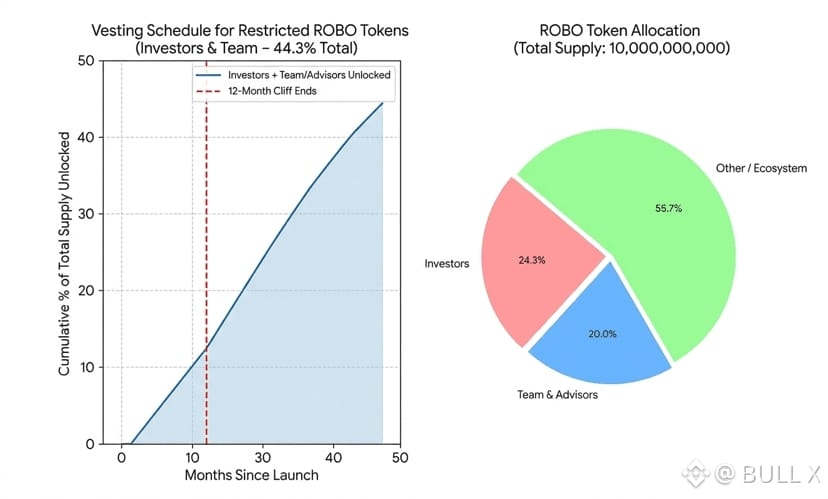
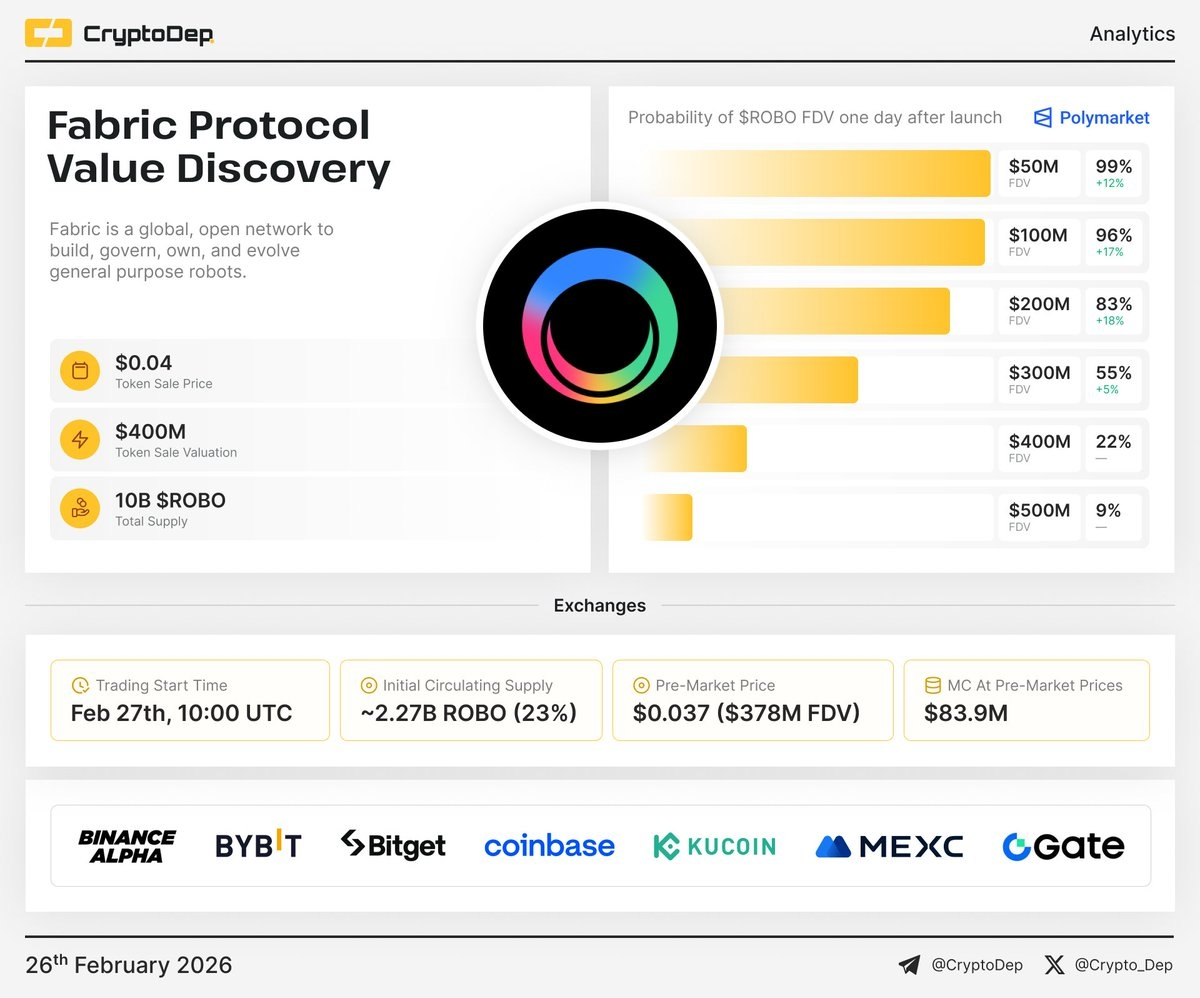
The ROBO token functions as the primary economic instrument within the ecosystem. It can be used for governance decisions, incentive distribution, and network participation. Like many early infrastructure tokens, its market capitalization remains relatively small compared with established blockchain networks. This reflects the experimental stage of the project and the broader uncertainty surrounding robotics-focused blockchain systems.
The project exists within a broader trend sometimes described as decentralized machine networks. Several emerging protocols are exploring ways to integrate artificial intelligence agents, autonomous systems, and blockchain infrastructure. The idea is that decentralized networks could coordinate the activities of machines in a way that is transparent, verifiable, and resistant to centralized control.
However, building such infrastructure presents substantial technical challenges. One of the most significant obstacles is hardware fragmentation. Robotics platforms vary widely in design, capability, and operating environment. A protocol that attempts to coordinate robots across industries must accommodate these differences while maintaining reliable communication and verification mechanisms.
Verification of physical actions is another complex issue. Blockchain systems are excellent at verifying digital transactions but cannot directly observe real-world events. If a robot claims to have completed a task, the network must rely on sensor data, telemetry records, and possibly third-party verification systems to confirm the claim. Designing secure mechanisms for verifying machine labor remains an open research problem.
Security also becomes more complicated when physical machines participate in decentralized networks. A compromised robot could potentially submit false data, interfere with tasks, or disrupt coordination processes. Protecting the integrity of machine identities and ensuring that only legitimate devices participate in the network will require robust cryptographic and hardware security systems.
Regulatory questions will also play a role in the development of machine economies. Autonomous robots performing economic activities raise issues related to liability, insurance, and governance. If a robot causes damage while performing a paid service, determining responsibility may involve both the machine operator and the network infrastructure that facilitated the transaction.
Despite these challenges, the broader technological environment continues to move toward greater automation. Logistics companies are deploying fleets of autonomous warehouse robots. Agriculture is adopting machine systems for planting, monitoring, and harvesting crops. Cities are experimenting with delivery robots and inspection drones. Healthcare providers are exploring robotic assistance for medical procedures and hospital logistics.
As these machines become more capable, their ability to coordinate across organizational boundaries will become increasingly important. Infrastructure layers that enable secure communication, identity verification, and economic interaction may become essential components of the robotics ecosystem.
Fabric Protocol represents one attempt to build such an infrastructure layer. Its approach combines elements from distributed systems, robotics software, and blockchain economics. Whether it ultimately becomes a widely adopted platform remains uncertain. Many early infrastructure projects face long development cycles and must adapt to rapidly evolving technologies.
What distinguishes Fabric from many other blockchain initiatives is its focus on a long-term structural problem rather than a short-term market narrative. Instead of emphasizing rapid token growth or speculative applications, the protocol attempts to address how machines might participate in decentralized economic systems.
If robotics continues to expand across industries, networks that coordinate machine activity may become as important as the protocols that coordinate information across the internet. The transition from isolated robots to interconnected machine networks would represent a significant shift in how automation interacts with the global economy.
Fabric Protocol is still at an early stage of that transition. Its significance will depend on whether the concept of decentralized machine infrastructure proves practical and whether developers adopt the tools necessary to integrate robots into such networks. The outcome will likely be determined not only by blockchain innovation but also by advances in robotics hardware, artificial intelligence, and real-world automation systems.
In that sense, Fabric Protocol is less about a single cryptocurrency project and more about an experiment in building economic rails for autonomous machines. Whether those rails become part of the future technological landscape remains an open question, but the problem the protocol is trying to solve is real and likely to grow in importance as machines increasingly participate in the activities that drive modern economies.