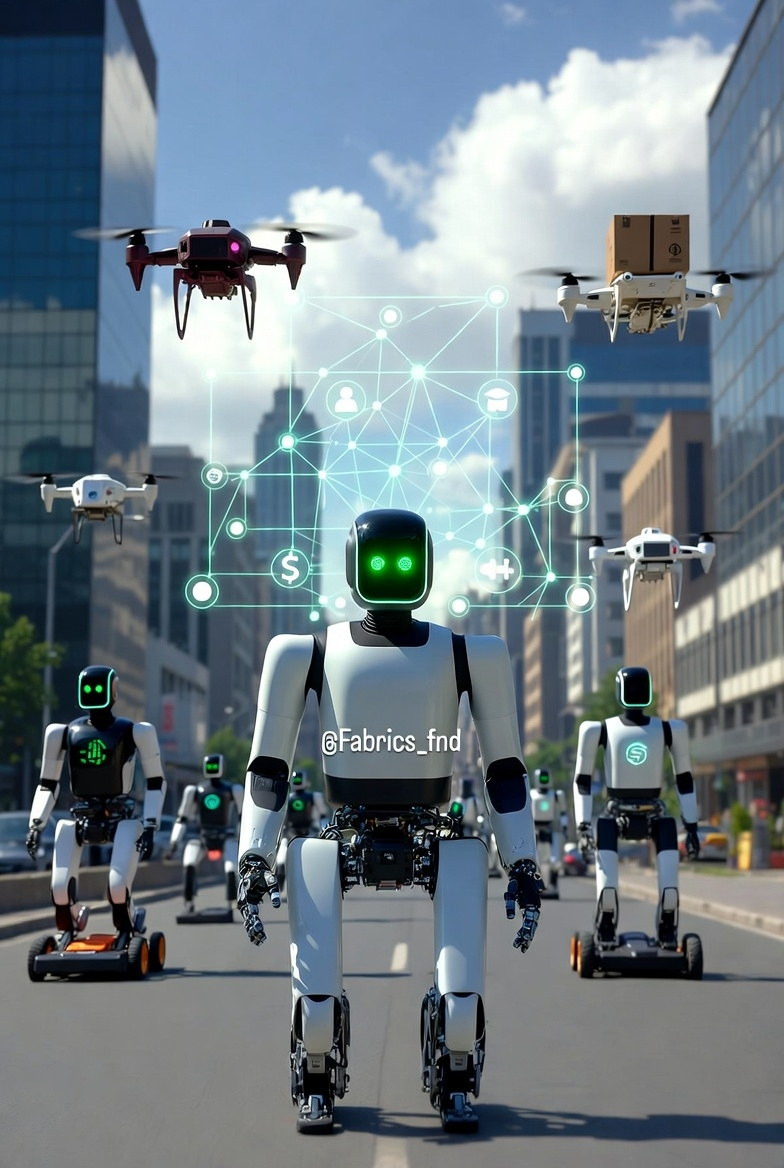
I've always been fascinated by how tech evolves from hype to real utility, and lately, I've been diving deep into the world of autonomous machines.
Picture this: last year, I watched a demo of a robot vacuum mapping my messy living room without a single bump impressive, right? But then it hit me: what if that robot could earn its keep, like getting paid for cleaning gigs or even negotiating its own energy top-ups? That's where @Fabric Foundation comes in, flipping the script on how we think about robots in our economy. It's not just another buzzword project; it's crafting the backbone for machines to thrive independently.
At its core, the Fabric Protocol is all about giving robots and AI agents a solid foundation to operate like economic players. We're talking verifiable identities on the blockchain, so a drone delivering packages isn't just a gadget it's an entity with a track record. Imagine a world where your home robot builds a reputation for reliability, pulling in jobs from apps without you micromanaging every payment. That's the infrastructure they're building: seamless coordination, task verification, and value exchange that keeps everything transparent and trustable.
Now, let's talk $ROBO the token that's the lifeblood here. It's not some meme coin riding trends; it's practical fuel for the network. Use cases? Plenty. $Robo handles transaction fees when machines swap data or services, rewards contributors for validating robot tasks (like staking to ensure honesty), and even powers governance votes on protocol upgrades.
In real life, think logistics: a fleet of delivery bots in a city like Lagos could use $Robo to pay for charging stations autonomously, building credit histories on-chain that insurers reference to cover risks. Or in manufacturing, robots trade computational power or skills in a marketplace, earning $Robo based on performance metrics logged immutably.
From my own tinkering with smart home setups, I see the pain points devices are siloed, payments clunky. Fabric changes that by letting machines "exist" economically without human intermediaries. No more relying on a company's server that could vanish; blockchain identities mean persistence and openness. Sure, it's early days the mainnet's post-2026, and real-world robots aren't everywhere yet but that's the thrill. It's like betting on the internet in the '90s: patient builders win.
What excites me most is the shift from tools to participants. Robots get smarter daily, but without this layer, they're stuck. @Fabric Foundation is pioneering that verifiable identity unlock, making machine economies viable. If you're into long-term plays over quick flips, keep an eye on $ROBO it's infrastructure in the making.