I’ve been covering technology long enough to see the pattern. A new idea shows up, the pitch decks get flashy, the buzzwords multiply, and suddenly everyone’s promising the future.
Then you actually try the thing.
Half the time it’s smoke.
The other half… it’s interesting, but for reasons the marketing team didn’t even mention.
Fabric Protocol sits somewhere in that second category. And to understand why, you have to ignore the fancy description for a minute and ask a simpler question:
Why should anyone outside the crypto or robotics bubble care?
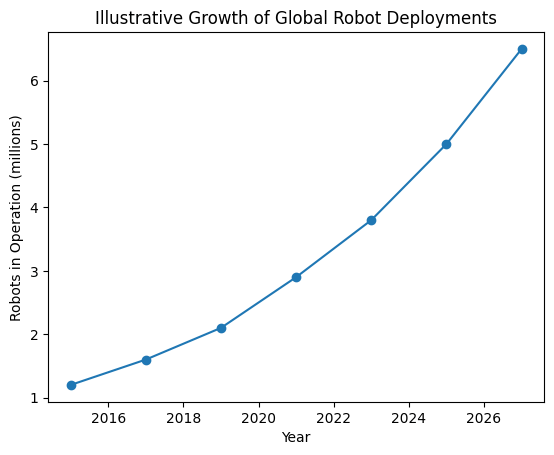
Here’s the real problem. Robots are getting smarter, cheaper, and more common. Warehouses run on them. Farms use them. Factories rely on them. Cities are slowly experimenting with them.
But behind the scenes, most of these machines live in isolated worlds.
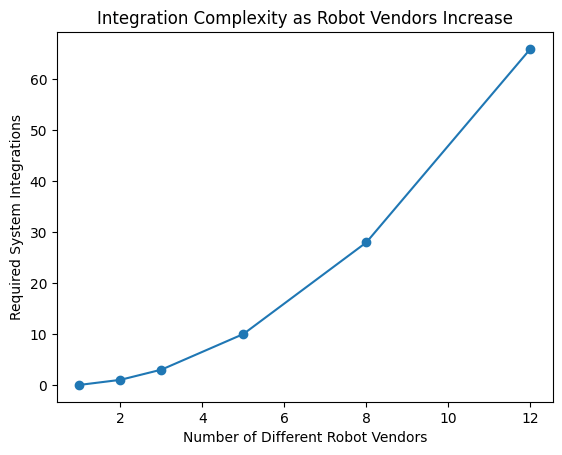
One company’s robots talk to their own software. Another company’s robots talk to something completely different. Data gets locked away in private systems. Coordination between machines built by different teams is surprisingly difficult.
It’s messy.
Imagine if every smartphone brand could only call other phones from the same company. That’s roughly where robotics still is.
Fabric Protocol is trying to fix that. Not by building another robot. Not by inventing some futuristic AI assistant.
Instead, they’re building infrastructure.
And yes, infrastructure is boring.
That’s actually the point.
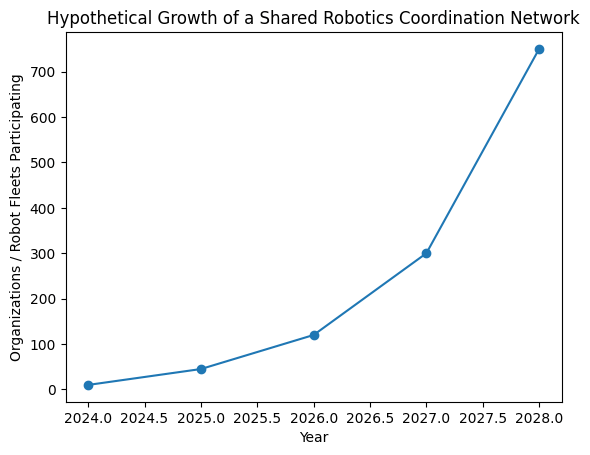
The idea is pretty straightforward once you strip away the technical packaging. Fabric creates a shared network where robots, software agents, and organizations can coordinate tasks, exchange data, and prove what they’ve done.
Think of it like a public record system for machines.
If a robot inspects a bridge, the result can be verified.
If a warehouse robot moves inventory, the action can be logged.
If a drone gathers data, other parties can confirm the data is real.
No central authority controlling everything. Just shared verification.
Now, I’ve seen plenty of blockchain projects claim they’re building “infrastructure.” Most of them are just complicated ways to move tokens around.
This one at least starts with a real-world problem.
Trust.
Robots are starting to operate in environments where mistakes matter. Deliveries, medical logistics, infrastructure inspections. When machines are making decisions or collecting data that other organizations rely on, someone eventually asks a simple question:
Can we prove what actually happened?
Fabric’s answer is a public ledger that records activity in a way multiple parties can verify.
That’s the “blockchain” part. But honestly, that’s not the interesting part.
The interesting part is the idea of machines becoming participants in a network.
Most digital systems were designed for humans. Machines just execute commands.
Fabric flips that around a little. Robots and AI agents can have identities on the network. They can request computing resources. They can submit proof that they completed a task.
It’s basically giving machines a shared coordination layer.
Picture a large warehouse run by different companies. One fleet of robots handles inventory. Another manages sorting. Autonomous forklifts move pallets around. Drones scan shelves from above.
Today, coordinating all of that usually requires one giant proprietary system.
Fabric imagines something more open. Different machines, different manufacturers, all able to interact through common infrastructure.
In theory.
And yes, theory is where most of these projects look best.
Execution is where things usually collapse.
I’ve watched dozens of ambitious blockchain infrastructure projects promise to transform entire industries. Most didn’t survive contact with the real world. Hardware companies move slowly. Enterprises don’t like changing systems. And integrating new infrastructure into existing robotics stacks is harder than writing a whitepaper.
Vision is easy. Deployment is hard.
Fabric also includes a token called ROBO that helps coordinate incentives in the network. Participants can stake it, contribute resources, and vote on governance decisions.
Now, I know what some readers are thinking.
Another token?
Fair question.
The crypto industry has trained people to expect speculative nonsense whenever a token appears. But incentive systems do serve a practical purpose in shared networks. Someone has to provide compute. Someone has to validate actions. Someone has to contribute data.
Tokens can help coordinate that.
Whether ROBO ends up being useful or just another tradable asset will depend entirely on one thing: real activity.
If robots are actually using the network, the economics make sense.
If they aren’t, none of it matters.
That brings us to the bigger picture. Robotics is entering a strange phase. Machines are leaving controlled factory floors and entering messy real-world environments. Farms. Cities. Infrastructure networks. Supply chains.
The number of autonomous systems in the world is about to explode.
When that happens, coordination becomes a serious problem.
Who owns the data?
Who verifies the work?
How do different systems interact?
These aren’t futuristic questions anymore. They’re operational ones.
Fabric Protocol is essentially betting that robotics will eventually need a neutral infrastructure layer the same way the internet needed open communication protocols.
Maybe they’re right.
Maybe they’re early.
Or maybe big companies will simply build closed systems and ignore open networks entirely.
That’s always the risk.
Still, the core idea behind Fabric touches on something people in tech often forget: the best technology isn’t flashy.
It’s invisible.
Nobody wakes up excited about TCP/IP. Nobody posts about the DNS system on social media. These systems quietly run the internet because they solved a coordination problem well enough that everyone forgot they existed.
That’s the real goal.
Not hype.
Not complexity.
Just something that works so reliably it fades into the background.
If Fabric Protocol ever reaches that point—if robots start using it without anyone needing to talk about it—then it will have succeeded.
And ironically, the moment it succeeds is the moment it becomes boring.
Which, in infrastructure, is the highest compliment you can give.
#ROBO @Fabric Foundation $ROBO