

I still remember the last cycle when i learned this lesson the hard way. A project looked unstoppable on the surface. the dashboards were glowing, wallets were growing, volume looked healthy, and every influencer thread was celebrating network growth. Then the incentives faded. liquidity mining stopped. A few months later the chain looked like a ghost town. The users were never real users. They were just temporary passengers chasing rewards.That experience made me suspicious of almost every metric i see now. Surface growth is easy to manufacture. Retention is the real test. If a network survives after incentives fade, then maybe something real is happening. If activity disappears the moment rewards slow down, then the system was never solving a real coordination problem.
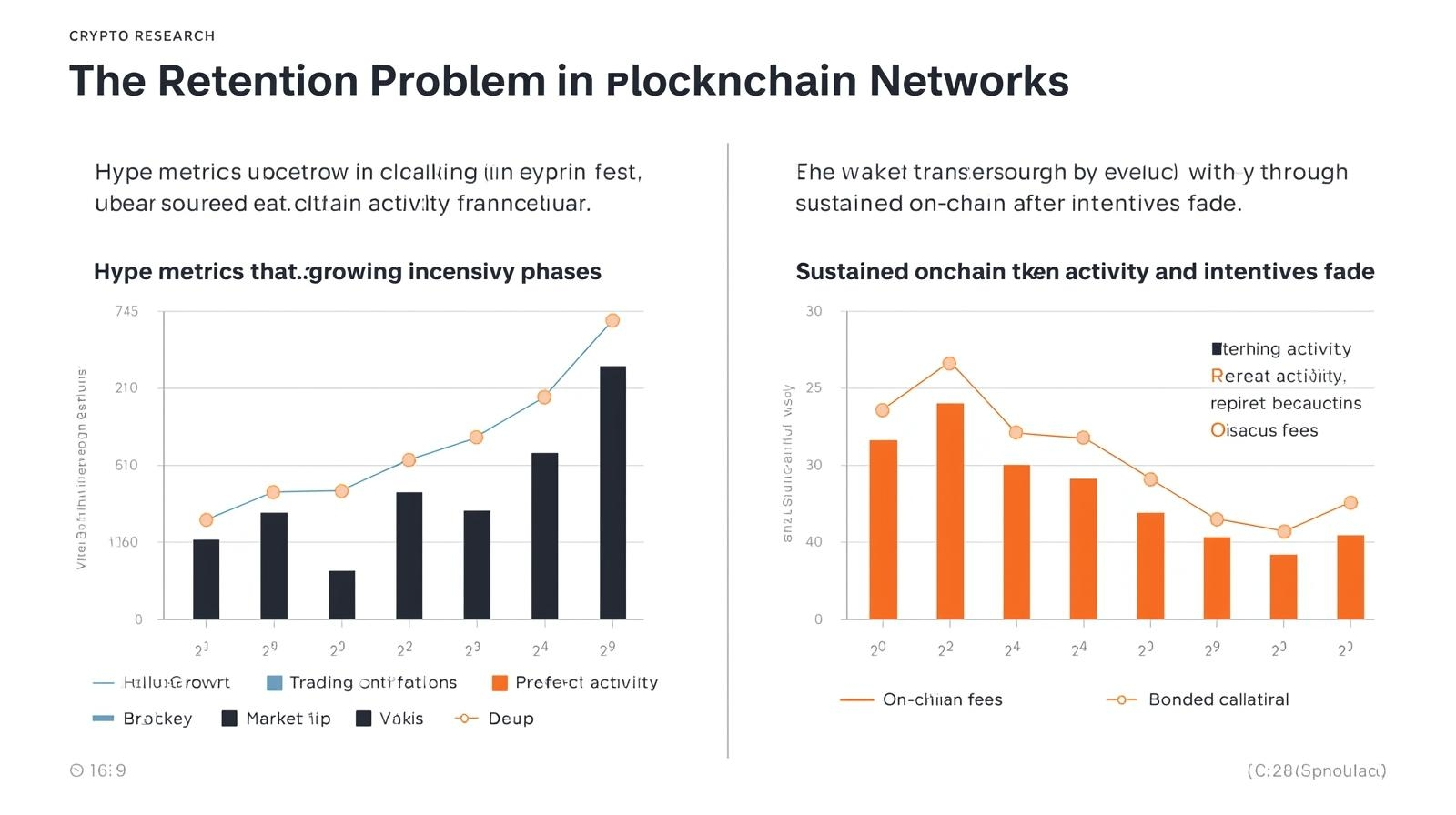
That’s the lens i’ve been using when looking at fabric and the robo token. The interesting idea here isn’t just robotics hype or another ai narrative. The project is trying to connect three different layers that usually live in separate worlds: data, compute, and robotics infrastructure. The idea is simple if you strip away the marketing. Robots perform tasks in the real world, compute systems process instructions and intelligence, and data records the outcomes. fabric tries to connect all three with a blockchain layer that verifies what actually happened.In theory that creates something closer to an economic coordination layer for machines. a robot performs work, the network records it, the system verifies it, and rewards flow through the robo token. instead of a centralized database saying a task was completed, the record becomes part of an open network. that sounds abstract, but if machine economies ever become real, verification becomes the boring but essential infrastructure.This is also where the retention problem starts to matter. It’s easy to attract early activity in crypto. Launch incentives, list on exchanges, watch wallets spike. But real usage only shows up when systems continue operating after the initial excitement fades. Verifiable usage matters more than temporary metrics. If robots, developers, and operators actually keep interacting with the network week after week, then you start seeing real on chain activity rather than short lived speculation.
The early market data around ROBO is still forming, but some signals are already visible. circulating supply sits around 2.23 billion tokens with a maximum supply near 10 billion. Market capitalization has been floating roughly in the eighty million dollar range depending on price movement, with daily trading volume sometimes reaching tens of millions across exchanges.Price levels have hovered around a few cents recently, though like most new listings the volatility is still high.Holder counts on explorers are still relatively small in the early stage, which usually means the distribution phase hasn’t matured yet.None of these numbers tell the real story yet. market cap and trading volume mostly measure trader attention. They don’t measure whether a robot somewhere is actually doing work that depends on this network.And that brings up the risks, because there are quite a few.First is the classic incentive distortion problem. If early activity is driven mostly by token rewards rather than real machine usage, the network could look busy without solving anything meaningful. We’ve seen that pattern too many times in crypto infrastructure projects.Second is the hardware adoption challenge. building blockchain infrastructure is hard but deploying robotics infrastructure in the real world is even harder. Warehouses, logistics networks, and industrial environments move slowly compared to crypto cycles. If robot participation doesn’t scale, the network might remain theoretical.
Third is verification complexity. Proving that a smart contract executed correctly is easy. Proving that a physical robot completed a real world task correctly is much harder. The reliability of that verification layer will probably determine whether fabric becomes useful or just another experiment.Fourth is governance and token concentration. with a max supply of ten billion tokens, distribution mechanics and unlock schedules could influence long term incentives and voting power across the network.So when i watch a project like this, i mostly ignore the loud signals and focus on the boring ones. Network fees being paid without promotional campaigns. Repeat transactions from the same participants. quiet weeks where activity doesn’t collapse. Developers building integrations that nobody is tweeting about yet.
Those are the signals that slowly reveal whether retention exists.For traders the temptation is always to chase narratives. Ai plus robotics plus blockchain sounds like the perfect narrative cocktail for a bull market. But narratives don’t build infrastructure. Engineers do. Adoption does. Verifiable usage does.So personally i treat something like fabric as an engineering bet rather than a hype trade. Maybe it becomes a coordination layer for machine economies. Maybe it stays a small research experiment that never leaves the lab.The interesting question isn’t the price right now.The real question is much simpler.A year from now, will robots still be sending transactions to this network when nobody is paying them extra to do it?
And if the incentives fade tomorrow, would Anything meaningful keep running?
@Fabric Foundation #ROBO $ROBO #crypto #Blockchain #Robotics #Web3
