
Artificial intelligence has taken off fast. It is hard to ignore how much it is changing the way we do things writing articles coding digging through data answering questions that used to stump people. Large Language Models, in particular, are flipping how we interact with information. But here’s the thing for all their flash, these systems don’t always get it right.
AI models work by guessing the next word or phrase based on patterns they have soaked up from massive piles of data. That is why they sound so convincing. But sometimes they spit out answers that look right on the surface but are just plain wrong. People call these mistakes “AI hallucinations.” The answers come out sounding so confident, it’s easy to believe them even when they’re off base.
And as AI starts showing up everywhere hospitals, banks, law offices, classrooms the stakes get a lot higher. A botched answer could mess up a financial decision, throw off a research project, or feed students the wrong facts. This is why people are starting to talk about an “AI trust crisis.”

To tackle this, new tech is on the horizon AI verification networks. One project leading the charge is Mira Network.
Mira (@Mira - Trust Layer of AI ) is not trying to build another chatbot. Instead, it’s all about checking whether AI-generated stuff actually holds up. Think of it as a decentralized “truth layer” for AI. Basically, Mira is designed so anyone can double check what the AI spits out before trusting it.
Here’s how it works: When an AI model cranks out some content, Mira breaks it down into smaller factual claims. Each claim gets sent out to a network of independent AI models. These act as a verifier nodes double checking the facts with different data sets & reasoning the tricks. Then through a consensus process the network decides if the claim is true or not. If the most of nodes agree so the claim is confirmed & locked in with cryptographic proof.
It’s a lot like how blockchain works for financial transactions. Instead of trusting a single authority you have got a bunch of independent players all checking the facts together. $MIRA wants to bring that same spirit to AI so you don’t have to just take the machine’s word for it.
Some people see this as a kind of showdown: on one side powerful generative AI models churning out mountains of content on the other verification systems determined to slow things down and check what is actually true.
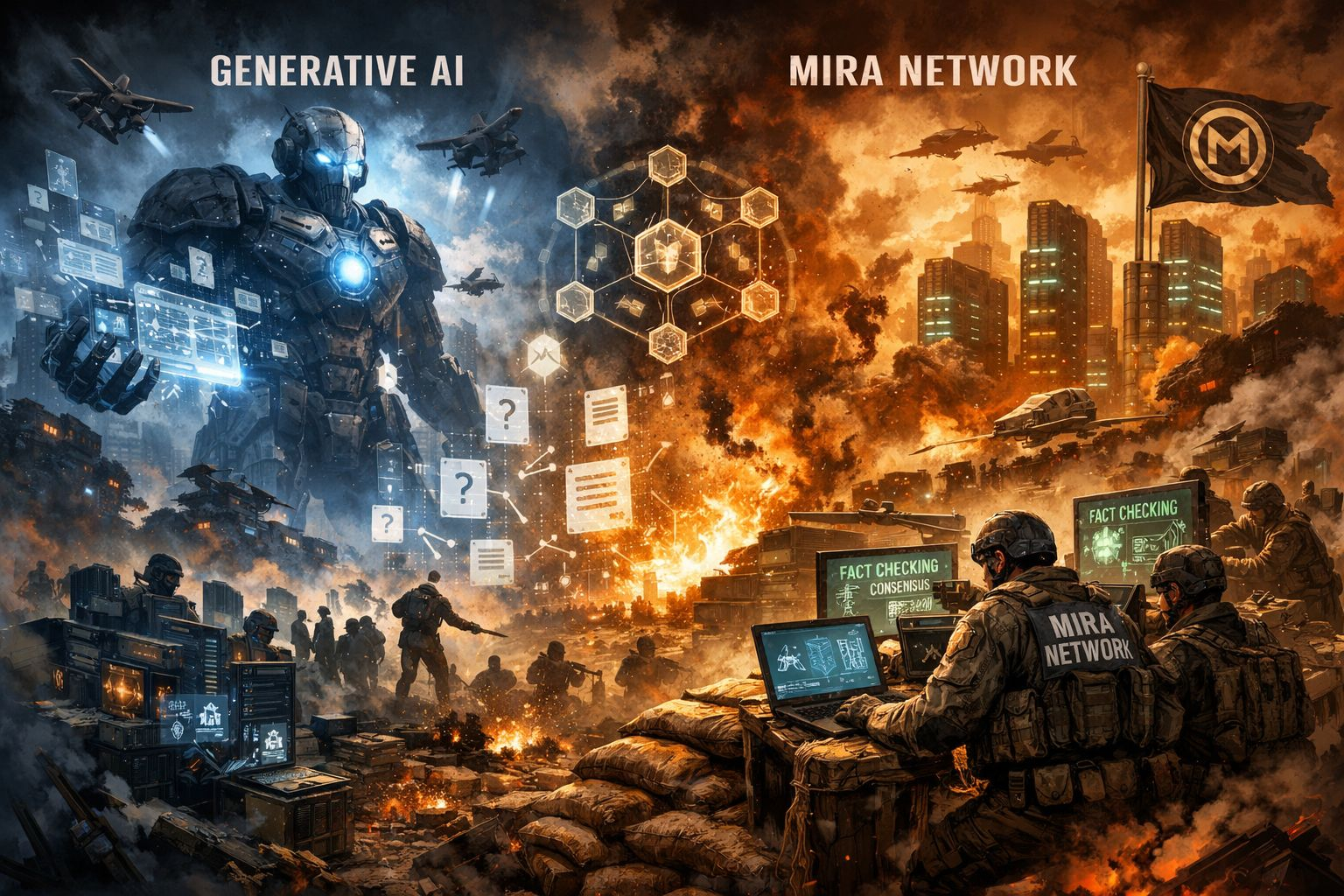
But maybe these two are not really enemies. Generative AI is great at coming up with ideas and info fast. Verification networks like Mira step in to make sure what is produced actually checks out.
Looking ahead the internet might split into two layers. First AI generates knowledge. Then, decentralized networks verify it.
If that happens projects like #Mira Network could be a Big part of the next chapter in AI. The focus is not just to be on making AI smarter or faster but making it trustworthy. In a world swimming in machine made information being able to verify the truth could matter just as much as generating it in the first place.
#mira || #Mira || @Mira - Trust Layer of AI

#TrumpSaysIranWarWillEndVerySoon #USIranWarEscalation #Trump'sCyberStrategy