


Mira Network went live on September 26 2025. The launch was quiet. There was no big hype no flashy countdown no token giveaways. The post simply said Mira is the trust layer for AI has arrived and shared links to register claim tokens stake and check the explorer. At the same time the stats were already impressive. Over seven million queries had been done on testnet more than four and a half million users had tried apps connected to the network and the system was already processing more than three billion tokens every day. Dozens of integrations with compute storage models and autonomous agents were running at launch. The message seemed clear the team had built it now use it.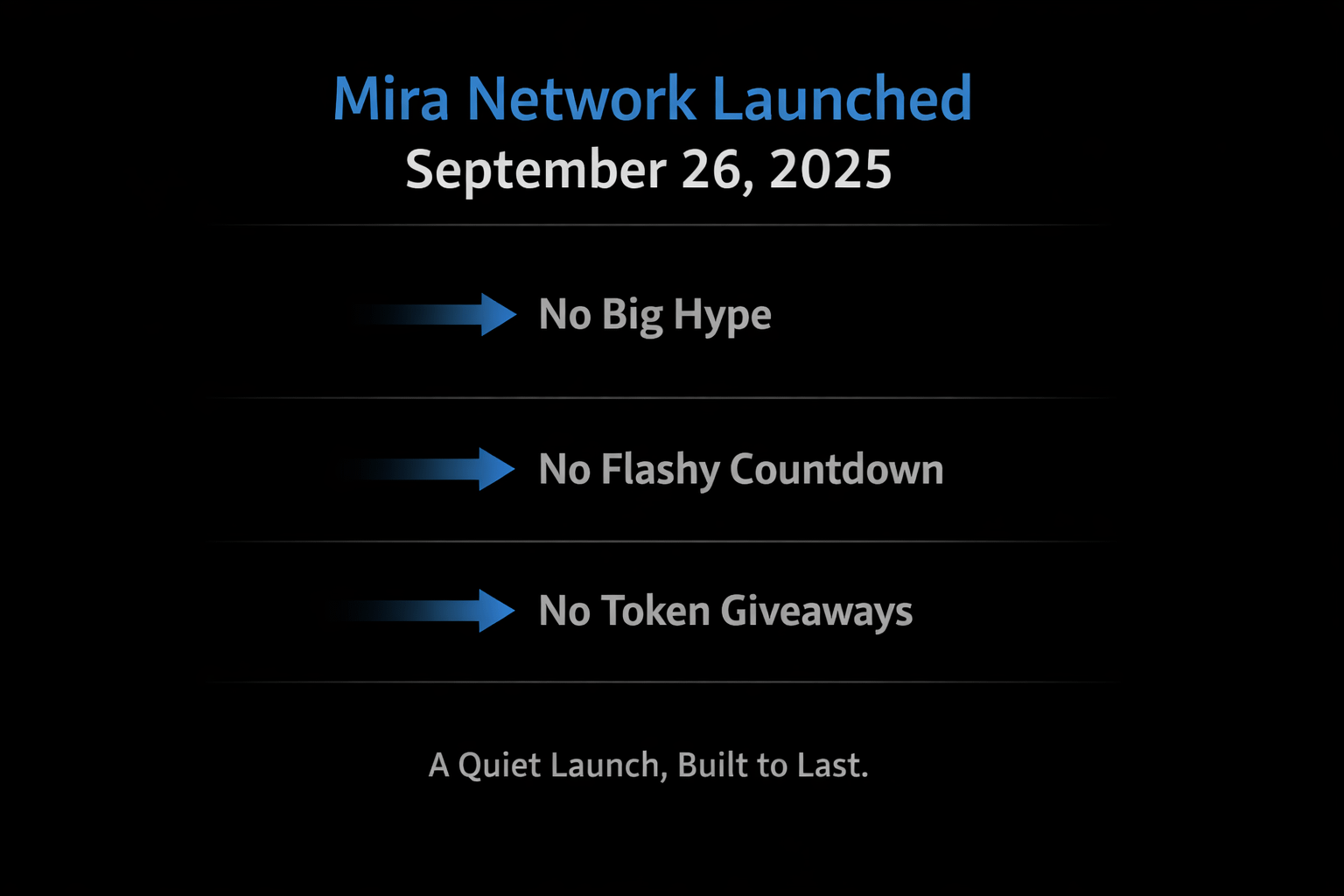
Six months later on March 10 2026 the network is still running strong. Daily activity is still in the billions of tokens processed. Verifiers are earning rewards as they check AI outputs and Plume’s real world asset verification is live. Tokenized assets now get prices checked by multiple models and results are locked on chain with no single point of failure. It is not flashy but it is reliable.
One important change that most people do not talk about is how verifier rewards shifted after launch. On testnet rewards were broad and easy. Anyone who participated got something. On mainnet the system became competitive. Harder queries that need more models and tighter consensus pay more. Simple chat queries earn little. Complex finance tasks and real world asset valuations give noticeably higher returns. Lazy nodes that do not perform well are slashed quickly. The system naturally filters for quality over quantity.
This is already showing up in the real world. Autonomous agents are handling actual funds. Small hedge funds family offices and other users are using them for portfolio rebalancing yield farming and other tasks. If an agent makes a mistake like sending money to a wrong address it is gone. Mira’s certificates make these agents safe enough for regulated money or high net worth users. Plume shows that lenders trust tokenized credit scores more when verified by multiple models and auditable on chain. This reduces friction for RWAI lending and collateral. It is not a promise for the future this is happening in small volumes today.
The team behind Mira has stayed disciplined. Founders like Ninad Naik with a background at Google AI and other vets from Polygon and Solana focused on building infrastructure first. No early VC dumps no hype cycles. Community grants funded key integrations like Eliza and SendAI. The team hardened the system before launch which is why mainnet felt seamless.
$MIRA also got its purpose sharpened post launch. It is used to stake and earn by verifying AI outputs to pay for premium verification or checks and to govern network upgrades. In 2026 with markets less fearful it is not hype it is infrastructure ready for when autonomous agents move trillions without blind trust.
The launch itself was understated. No flashy marketing just clear stats showing the network already had millions of queries and millions of users. Dozens of integrations were running including compute providers storage systems model frameworks and agents. This showed the network was ready from day one not just talking about future promises.
The first six months have confirmed that. The system has not imploded. Daily activity remains in the billions. Verifiers continue to earn. Plume RWA verification is live providing tokenized assets with model verified prices recorded on chain. There is no central point of failure. Simple queries earn small rewards harder tasks pay more. Low effort nodes get slashed fast creating a natural incentive for high quality verification.
Autonomous agents are using Mira to safely handle real money. Small funds and family offices are already running them for yield farming rebalancing or other financial strategies. Mira’s certificates ensure these agents can operate in regulated environments reducing risk for users. Multi model verification makes tokenized credit scores more trustworthy. This reduces friction for lending or using collateral. Small scale but real adoption is already visible.
The team maintained a strong focus on infrastructure over hype. Ninad Naik and other ex Google AI and Polygon Solana team members built Mira to be reliable first then promoted it later. No early VC dumps all integrations funded by community grants. Projects like Eliza and SendAI connected to Mira during this time. The system hardened first and launched seamlessly.
$MIRA serves multiple roles. It is used to stake and earn rewards as a verifier. It is used to pay for premium verification checks and it is a governance token for network upgrades. This makes the token integral to the ecosystem and not just speculation.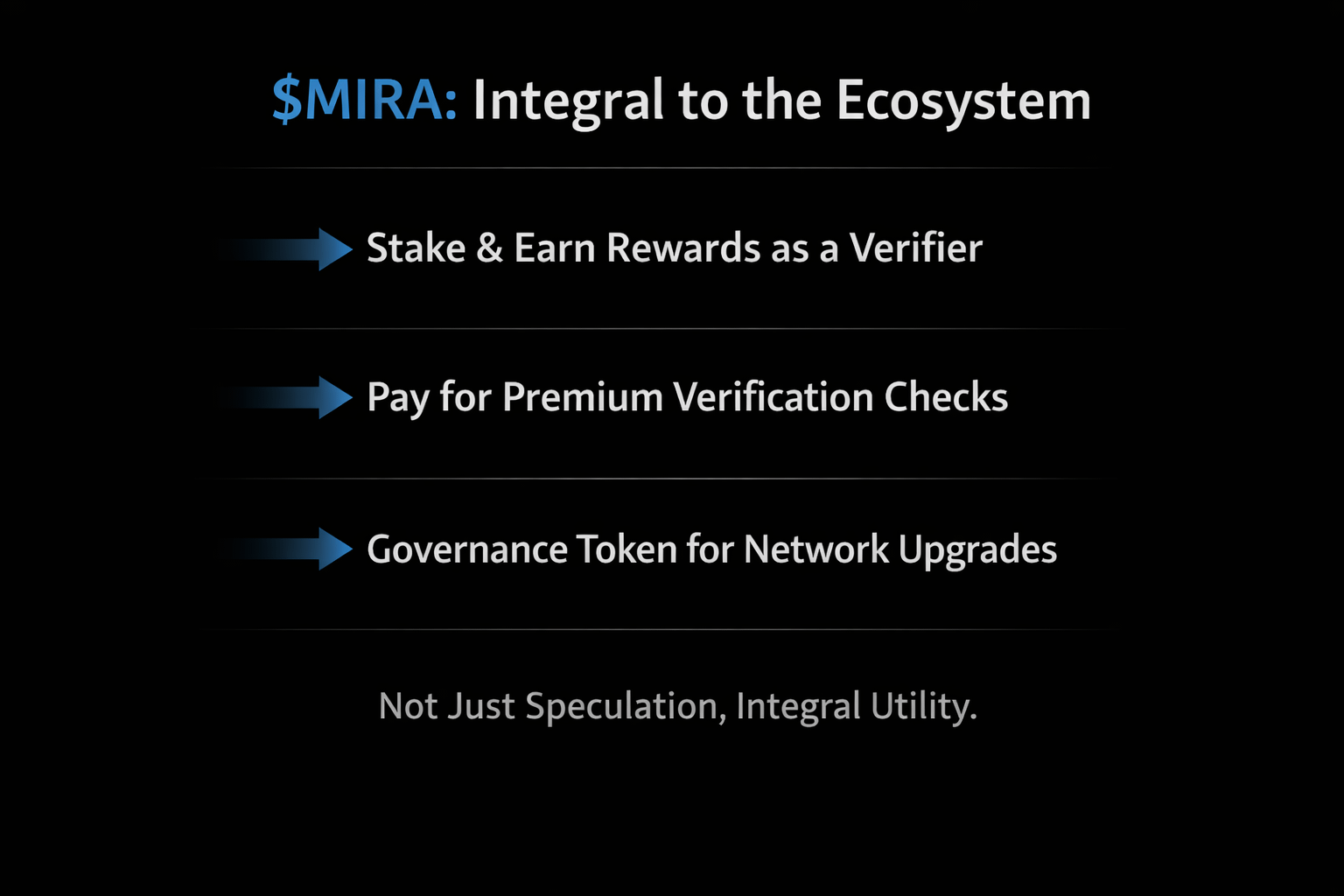
Verifier rewards changed significantly after mainnet. Testnet rewarded everyone broadly. Mainnet made it competitive. Harder queries like DeFi safety checks or RWA valuations pay more. This naturally filters for high quality nodes. Lazy or low performing nodes are quickly slashed. The system rewards quality over quantity.
Daily network activity remains high in the billions of tokens processed. Applications continue to integrate and run verifications. Plume and other RWA integrations show that the network is being used for real world financial use cases. Autonomous agents safely manage money with verification from Mira reducing risks for users.
The network continues quietly in the background doing the work other projects hype about. Its focus is reliability and trust. In a future where AI agents handle trillions of dollars Mira provides a verification backbone ensuring no one blindly trusts machine outputs.
Six months after mainnet Mira Network shows that sometimes the most important projects are the ones quietly running in the background. The system has not crashed daily activity is strong verifiers earn rewards and autonomous agents are already using it safely. The team focused on building robust infrastructure first. MIRA token supports staking verification and governance. Multi model verification ensures trustworthy outputs. Real world asset pricing and autonomous agent safety prove the network works today not just in theory. Mira may not make headlines but it is quietly building the foundation for a future where AI work can be trusted and measured.