

The idea of robots participating in a decentralized economy used to sound like science fiction. Today, projects like Fabric Foundation are pushing that conversation into reality. The vision is simple but ambitious: create an open network where robots can operate, earn, and coordinate tasks autonomously. For developers and investors watching the convergence of AI, robotics, and crypto, the concept is exciting. But like many emerging technologies, it comes with real risks and trade-offs that deserve careful attention.
Fabric Foundation is essentially trying to build infrastructure for what some call the “robot economy.” Instead of robots operating in closed corporate systems, the project aims to create an open coordination layer where machines can interact, perform work, and settle payments using blockchain technology. In this model, robots can have on-chain identities and even execute payments for services like energy, maintenance, or compute resources. The goal is to transform robots from isolated tools into economic participants inside a decentralized network. 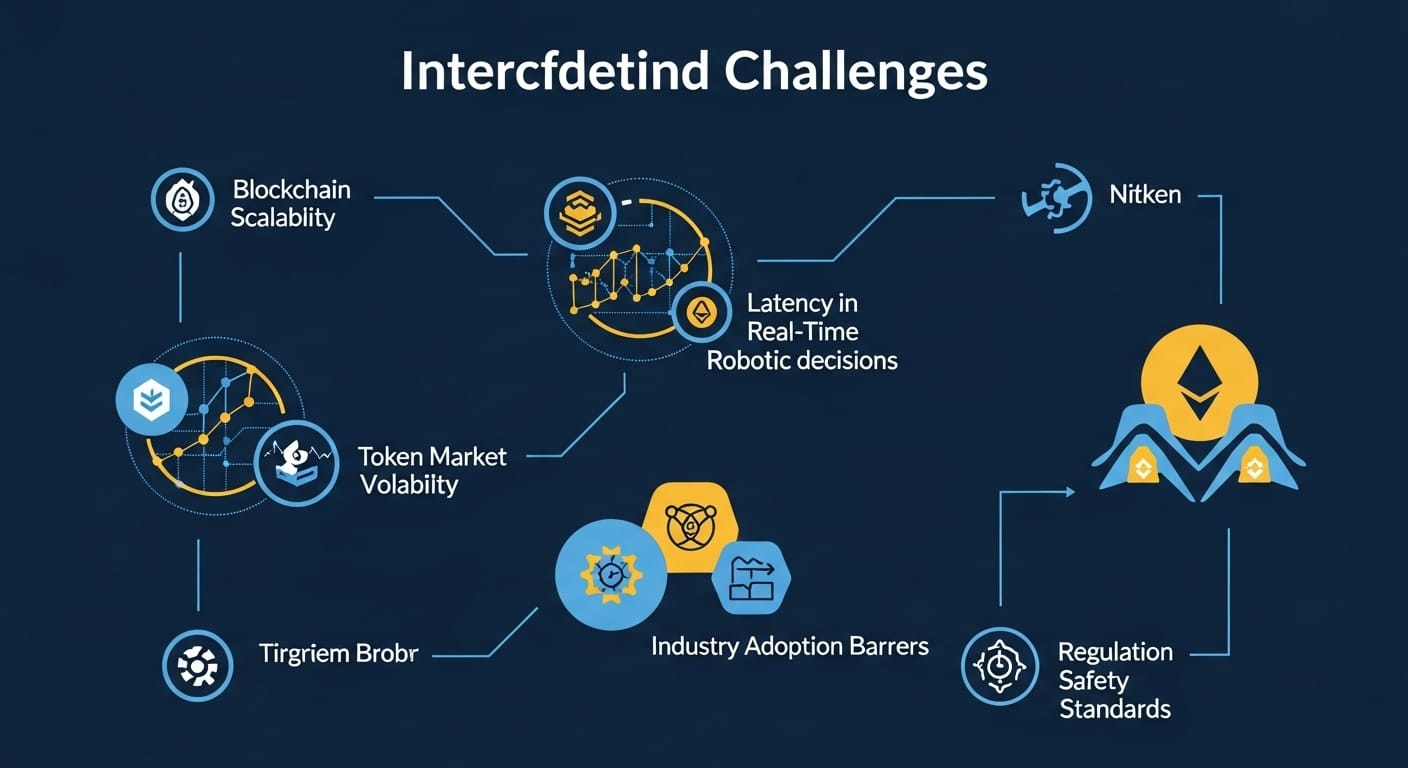
For developers, the appeal is obvious. Anyone who has worked with robotics stacks knows the biggest headache isn’t just hardware—it’s fragmentation. Different manufacturers, operating systems, and control environments rarely communicate smoothly. Fabric tries to solve this by creating a shared coordination layer and a universal environment where robots from different vendors can operate together. By linking robotics with blockchain primitives such as identity, payments, and verifiable contributions, the platform attempts to remove friction that slows development today.
But that’s where the conversation becomes interesting from a risk perspective.
Speed and simplicity are the selling points of decentralized infrastructure. Ironically, those same goals introduce technical and economic uncertainties. Blockchain systems still struggle with scalability, latency, and real-time processing. Robotics, on the other hand, often requires near-instant decisions. If a robot in a warehouse or factory needs confirmation from a distributed ledger before executing an action, even small delays could become a problem.
This isn’t just theory. Researchers exploring blockchain-based robotic coordination have already pointed out that throughput limits and transaction costs can slow adoption. Systems that rely heavily on blockchain transactions may struggle to handle large numbers of robots interacting simultaneously.
Another risk lies in economic design.
Fabric’s ecosystem revolves around a token model that helps coordinate incentives, governance, and payments between machines and network participants. Tokens can make decentralized systems self-sustaining, but they also introduce market volatility. For traders and investors, that volatility is familiar territory. For robotics developers building real-world systems, it adds a new variable. Imagine a logistics network of robots whose operational costs suddenly fluctuate because of token price swings.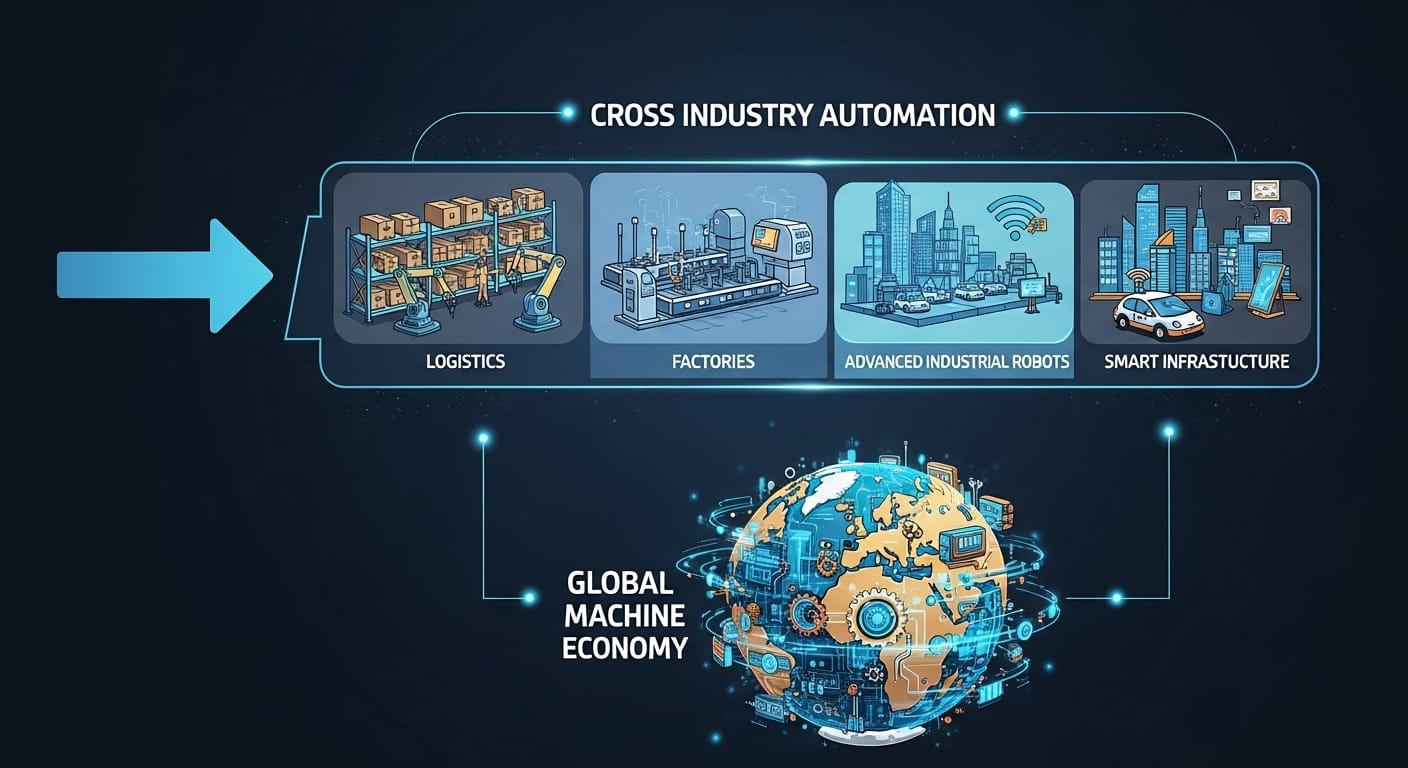
There’s also the issue of adoption.
For decentralized robotics to work at scale, manufacturers, developers, and operators all need to participate. Fabric is attempting to attract robot makers and integrate multiple hardware ecosystems, which is a good start. Early efforts have already demonstrated interoperability and cross-protocol payments between robotic systems. But widespread industry adoption takes time. Robotics companies tend to be conservative when it comes to infrastructure changes, especially when safety and reliability are involved.
Still, it’s easy to see why the topic is trending in 2026.
AI has already transformed software. The next frontier is physical AI-machines that interact with the real world. As that shift accelerates, the economic layer that coordinates those machines becomes just as important as the hardware itself. Fabric Foundation is one of the first serious attempts to build that coordination layer using decentralized technology.
From a trader’s perspective, this is similar to watching the early days of DeFi or DePIN. The concept sounds futuristic at first, then suddenly you start seeing real prototypes, early integrations, and small networks forming around the idea. The difference here is that the infrastructure isn’t just digital it’s tied to physical machines performing real tasks.
Personally, I think decentralized robotics will eventually become part of the broader machine economy. But the path won’t be smooth. Technical complexity, regulatory questions, and economic design challenges will all shape how these systems evolve.
Fabric Foundation represents an early attempt to reduce development friction and open robotics infrastructure to a global network of builders. Whether it succeeds or not, it’s forcing the industry to confront an important question: if millions of intelligent machines start working alongside us, who coordinates them and what kind of system do we trust to run that economy
@Fabric Foundation #ROBO $ROBO
