
A few months ago I watched a short clip of a warehouse robot moving shelves late at night. Nothing unusual about that. Warehouses have been quietly filling with machines for years. What caught my attention wasn’t the robot itself though. It was the comment section under the video. Someone asked a simple question: what happens when that robot leaves the warehouse and starts interacting with other systems outside the company?
The question stuck with me longer than the video.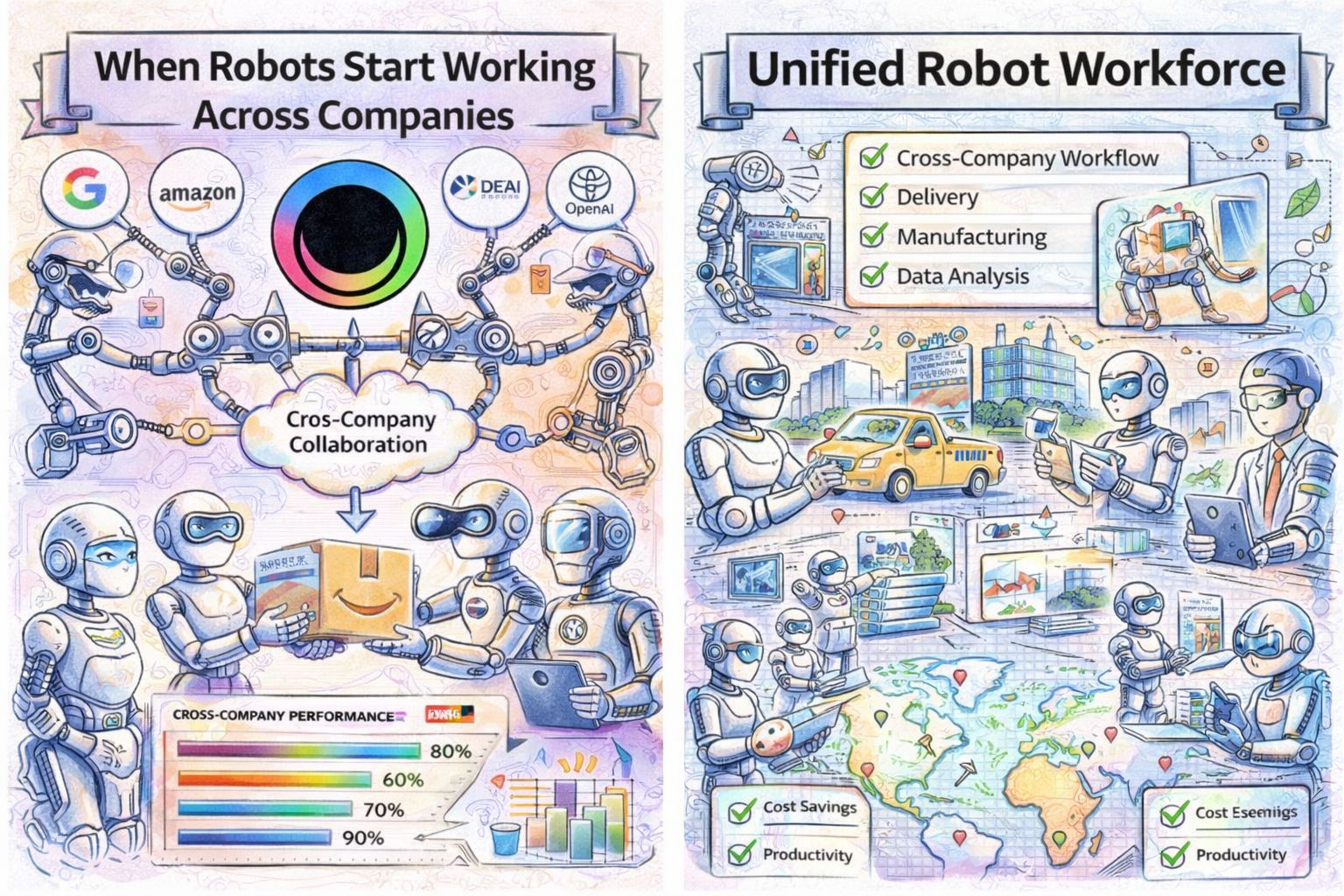
Inside one company things are usually neat and controlled. The same organization owns the robot, the software, and the database where every action is recorded. If something breaks, engineers just open the logs and trace what happened. Time stamps, system records, maybe some sensor data. It’s not glamorous but it works.
The picture changes a bit once machines move across different environments.
Imagine a delivery robot leaving one warehouse, transferring a package into another logistics network, and later interacting with city infrastructure like traffic sensors or charging stations. Every step produces information. Location updates. Task confirmations. Environmental readings. But those records sit in separate systems owned by different organizations. When something goes wrong, nobody really holds the full story.
That kind of coordination gap is where projects like Fabric Protocol begin to make more sense.
Fabric is supported by the non-profit Fabric Foundation and tries to build a shared infrastructure for robots and autonomous agents. The idea is not particularly flashy on the surface. Instead of every company storing robotic activity in its own private database, certain events can be written to a public ledger that multiple participants can verify.
A ledger in this context is simply a shared record. Anyone in the network can check it. No single company owns it.
At first that sounds like a typical blockchain explanation, but the interesting part is how Fabric treats machines inside the system. Robots and software agents are given identities on the network. When a robot completes a task – maybe delivering a parcel or scanning an environment – a small proof of that action can be published to the ledger. Other agents can read the record and respond automatically.
In theory, coordination starts happening through shared data rather than private integrations.
I keep picturing something simple. A robot finishes a delivery and the confirmation appears on a network record. Another service reads it and triggers the next step. A charging station unlocks. A logistics platform schedules the next route. Nobody needs to manually reconcile databases because the record already exists in a place everyone can see.
Of course, describing the system is easier than building it.
Fabric combines several technical pieces to make this possible. Verifiable computing helps prove that a task was actually completed. Agent-native infrastructure allows AI systems or robots to interact with the protocol directly. The ledger acts as the coordination layer where these pieces connect.
It’s part of a wider trend that has been forming quietly over the last two years. More blockchain projects are starting to focus on machine coordination rather than just financial transactions. Networks experimenting with decentralized AI, agent economies, and autonomous infrastructure keep appearing. Fabric sits somewhere inside that cluster.
The token economy follows a familiar logic as well. Tokens may be used to pay for computation, reward participants who verify robotic tasks, or help govern upgrades to the protocol. Whether that model works depends heavily on real activity. Infrastructure tokens tend to struggle if the network they represent stays mostly theoretical.
And robotics adds another layer of complexity. Verifying digital events is relatively easy. Verifying something that happened in the physical world is not. Sensors fail. Machines behave unpredictably. Even defining what counts as proof can be tricky.
Still, the direction feels interesting.
Automation is expanding into logistics, manufacturing, agriculture, and even city infrastructure. Machines are starting to interact across organizational boundaries more often. When that happens, coordination becomes less about controlling a single system and more about agreeing on shared records.
Fabric Protocol seems to be exploring that idea early.
Whether it turns into a widely used network is still uncertain. But the underlying question it raises is difficult to ignore. If robots are eventually going to collaborate across companies, cities, and digital platforms, someone has to maintain the record of what those machines actually did.