
Fabric recently triggered an interesting mental paradox for me. I was sitting at my desk when my computer displayed the familiar message: “Please select all images that contain buses.” I clicked through the CAPTCHA almost absent-mindedly just to prove I wasn’t a robot. Meanwhile, on another screen, I was watching a node generate a Proof of Work to verify its identity on the network in a fraction of a second.
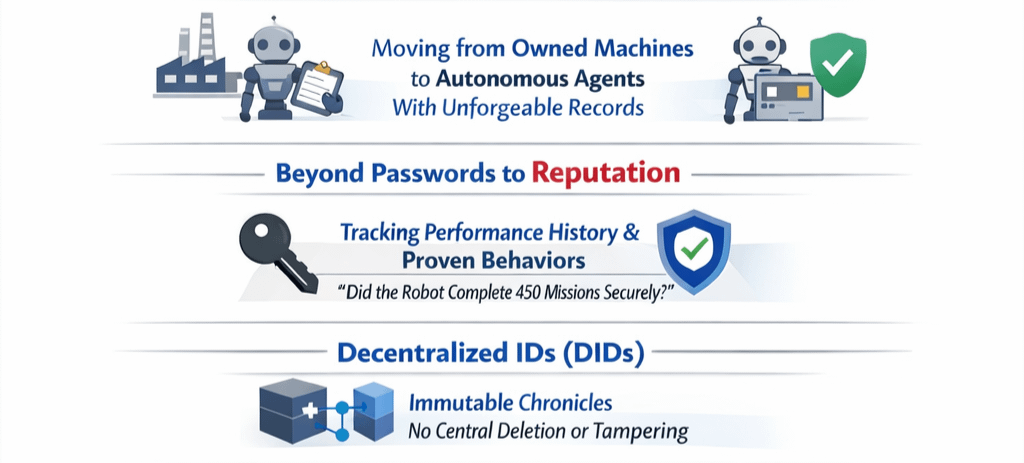 The contrast was striking. Humans still spend time proving their humanity to digital systems, while machines are beginning a much deeper process through the Fabric protocol: proving their independent existence as reliable actors with verifiable records.
Identity in the digital world is evolving beyond simple usernames and passwords. As autonomous agents become more common, we are gradually moving from a world of owned machines to one of accountable machines. Over the past year, regulatory discussions around technological accountability have intensified, highlighting the need for something more sophisticated than basic encryption. It is no longer sufficient to know that a robot has a private key—we also need to understand its reputation.
 Did it follow safety procedures across the last 450 tasks it executed? Are the transactions planned through $ROBO supported by a real performance history, or are they simply isolated pieces of data without context?
This is where the approach taken by @Fabric Foundation becomes interesting. Their model for decentralized identity (DID) does not confine machine identity to the manufacturer’s servers—where records can easily be altered or erased. Instead, Fabric turns identity into a tamper-resistant historical log, something closer to a chronicle of the machine’s activity.
In other words, Fabric is making a structural claim: if a machine is to act independently or participate economically, it must possess a technical identity that enables accountability. The goal is not to grant machines human-like rights, but to establish digital responsibilities that allow their behavior to be audited without relying on a central authority.
What makes this concept particularly compelling is the shift from identity as a label to identity as a reputation system. Rather than assigning machines simple serial identifiers, Fabric aims to attach verifiable performance attestations to them—records that anyone can examine.
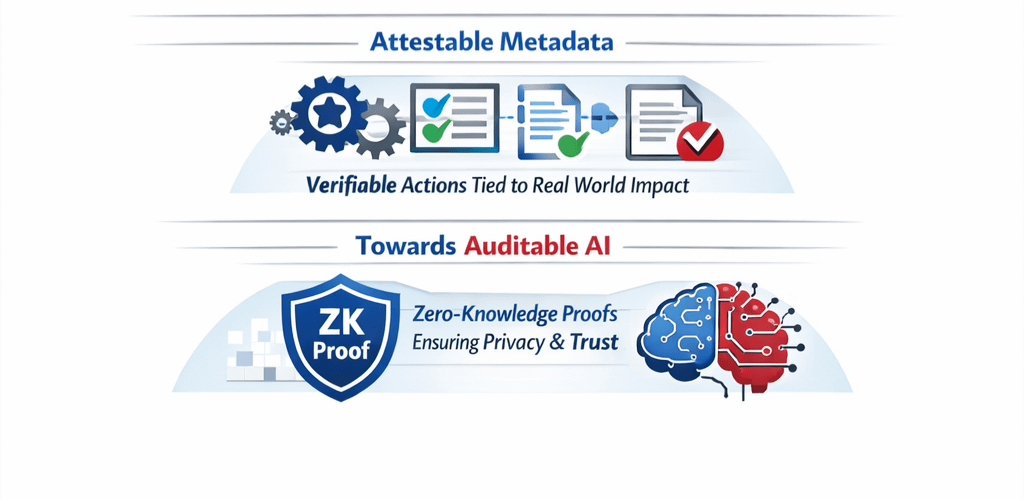
The Fabric roadmap for 2026 hints at building a metadata layer that links digital activity to physical outcomes. When an autonomous system purchases spare parts or pays for energy, it would do so using an encrypted identity that ties its permissions directly to its operational context. This model aligns with the broader movement toward auditable artificial intelligence, where technologies such as zero-knowledge proofs allow privacy to coexist with verifiable correctness.
Another aspect I find noteworthy is how Fabric treats identity as an economic trust mechanism. In an environment filled with thousands of digital agents, reputation effectively becomes a form of currency. The ROBO architecture appears designed to connect identity-based performance records with reward structures, creating incentives for reliable behavior while discouraging anonymity-driven actions.
This approach is not simply about regulatory compliance. It is about constructing an ecosystem where a machine that falsifies its identity risks losing its ability to participate economically within the network.
Of course, the path forward is not without complications. Integrating decentralized identity frameworks into resource-constrained robotic hardware presents real technical challenges. I also do not assume that the implementation will be straightforward. Still, Fabric’s willingness to openly address issues such as identity labeling and auditor selection gives the approach a level of credibility.
At this stage, the industry does not need promises of perfect autonomous machines. What it needs is infrastructure that acknowledges a simple truth: trust in machines must be built on verifiable evidence.
That is the principle that could make the real difference. When accountability evolves from a regulatory obligation into a competitive advantage, identity becomes the bridge connecting machine intelligence with responsibility.