
I learned a painful lesson in an earlier cycle. I was watching a token that looked healthy on every easy metric I could find. Trading activity was busy, social posts were nonstop, and every fresh listing made it feel like momentum was the same thing as traction. It was not. When I looked closer, most of that activity was short stay attention, not long stay conviction. Since then, whenever I study a new network, I keep coming back to one question. Are people here because the product solves a real problem, or because the launch is still new? That is exactly why Roadmap Phase 1 matters when I look at Midnight Network’s privacy layer.
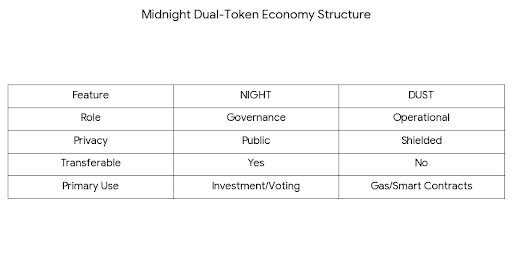
Midnight’s first roadmap phase, Hilo, is not meant to present a fully completed privacy chain. Instead, it focuses on building the economic and technical foundation required for a privacy-focused ecosystem to function effectively. Within this design, NIGHT serves as the public native and governance token, while DUST operates as the shielded, non-transferable resource used for transactions and smart contract execution.
In practical terms, this structure separates the investable asset from the operational fuel used inside applications. That distinction could be meaningful. It allows developers to predict operational costs more easily while letting users interact with applications without constantly spending down the governance token itself.
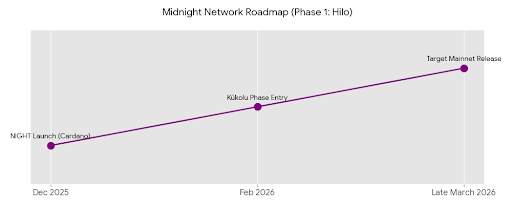
For traders and investors, timing is a key factor. NIGHT first launched on Cardano as a Cardano Native Asset in December 2025, while the Midnight network continues moving toward its mainnet release. According to the project, this phased rollout is deliberate. The token gains liquidity and community access first, while the supply is expected to mirror onto the Midnight ledger once mainnet goes live.
By February 2026, the project reported entering the Kūkolu phase and indicated that mainnet was targeted for late March 2026. In other words, Phase 1 was never intended to be the final form of the network. It functions more as infrastructure preparation before the system moves into full production.
That said, the cautious perspective still matters. A well-designed token structure does not automatically solve the deeper issue of long-term user retention. Midnight has already retired some older testnet reporting tools and indicated that new metrics are still being developed. As a result, the current narrative around the project remains more roadmap-driven than usage-driven.
 The risks are relatively clear. Mainnet timelines could shift. A federated launch may operate smoothly while still raising questions about decentralization. Developers might appreciate the privacy architecture in theory but struggle to produce applications that users actually return to on a weekly basis.
Midnight has announced federated node operators including Google Cloud, Blockdaemon, Shielded Technologies, AlphaTON, Pairpoint by Vodafone, eToro, and MoneyGram. These names strengthen the reliability argument, but institutional participation alone does not guarantee product-market fit. Sustainable networks ultimately grow through consistent user activity, not just partnerships or announcements.
What matters most after launch is behavior. Do builders continue building? Does DUST genuinely simplify user interaction inside applications? And does selective disclosure become a feature that real applications depend on, rather than something investors simply admire from a distance?
The strongest bullish signal would be clear evidence of repeat usage and privacy-focused applications that people rely on long after the novelty fades. The bearish outcome would be a network that keeps expanding its narrative while failing to produce visible user retention.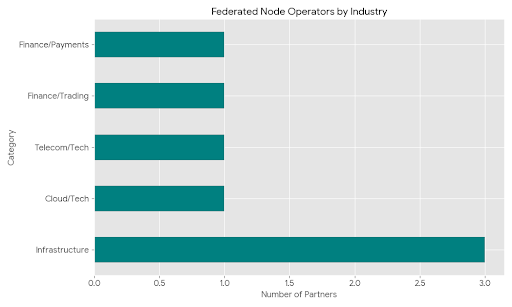
For traders and investors, that is the real metric to follow. Do not just track attention. Track whether Midnight’s privacy layer can convert curiosity into long-term staying power.
@MidnightNetwork #night $NIGHT
