

Crypto promised a more open and inclusive financial system, but along the way, one critical element was repeatedly compromised—trust. From unclear token allocations to sudden rug pulls, the gap between founders and retail participants widened, creating a system where transparency was often optional rather than foundational. As the industry matures, it’s becoming clear that the next phase of growth won’t be driven by hype, but by infrastructure that restores confidence at scale.
This is the problem @SignOfficial is focused on solving.
SIGN, short for Sovereign Infrastructure for Global Nations, is building a framework that goes beyond traditional blockchain use cases. Instead of only enabling transactions, it is rethinking how digital assets are structured, distributed, and governed from the very beginning. At the core of this vision lies a powerful concept: a self-regulatory crypto capital market where fairness and transparency are embedded into the system itself.
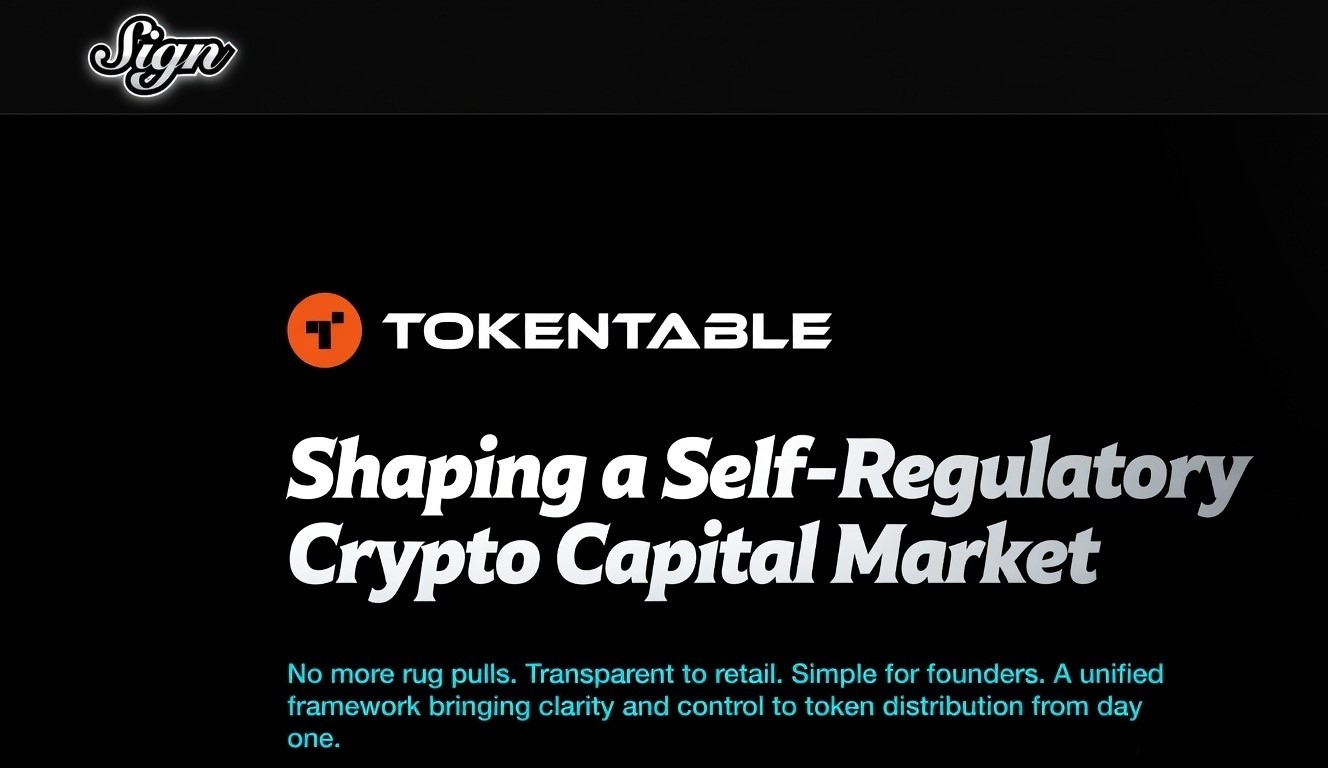
One of SIGN’s key innovations in this space is TokenTable, a suite of on-chain token distribution products designed to bring order to what has historically been a fragmented and opaque process. TokenTable introduces a standardized approach to token ownership registration and distribution using smart contracts, ensuring that allocations, vesting schedules, and investor participation are clearly defined and verifiable on-chain. This removes ambiguity and replaces it with a shared, trustless source of truth.
In today’s environment, token launches often lack consistency. Founders present tokenomics in different formats, critical details are sometimes hidden or difficult to interpret, and both investors and exchanges are left navigating uncertainty. TokenTable addresses this by creating a unified framework that aligns all stakeholders—from project teams to institutional partners--around clear and transparent data.
A standout component of this ecosystem is the TokenTable Standard Spreadsheet, a free tool developed through direct collaboration with exchanges. It reflects what listing platforms actually expect to see when evaluating a project’s token structure. By using this standardized format, founders can communicate their tokenomics more effectively, build credibility earlier, and reduce friction when engaging with investors and exchanges. In a market where perception and trust can define success, this level of clarity becomes a significant advantage.
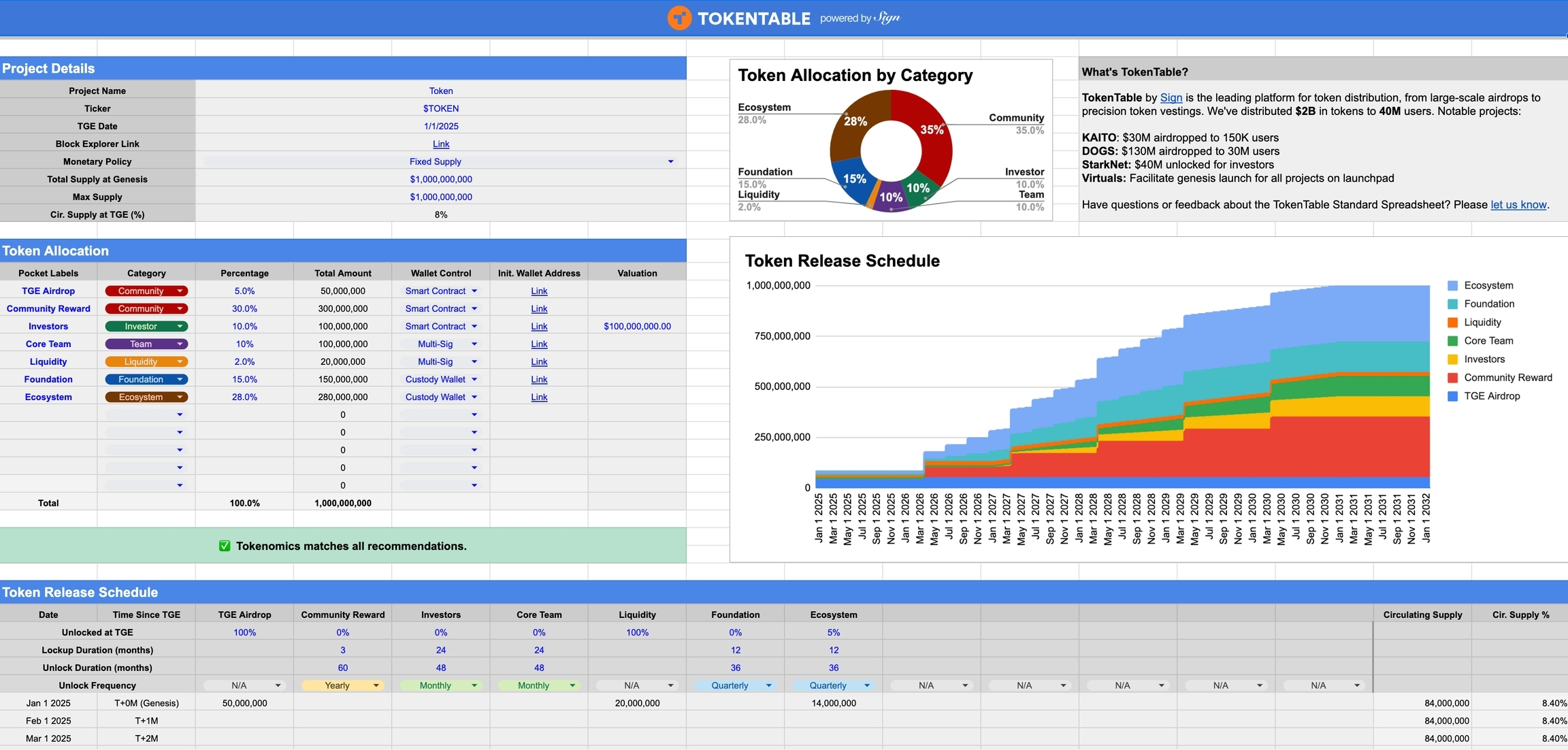
Beyond individual tools, the broader vision of SIGN is to enable a system where the market can regulate itself through transparency and structure rather than relying solely on external enforcement. When token distribution is handled through verifiable smart contracts and standardized frameworks, the opportunities for manipulation decrease significantly. Retail participants gain visibility, founders operate within clearer guidelines, and exchanges can make more informed decisions.
At the center of this ecosystem is SIGN, the native token of SIGN Global. It acts as the underlying layer that powers these systems, aligning incentives across participants and enabling the infrastructure to function efficiently. As adoption grows and more projects integrate TokenTable and related solutions, the role of $SIGN expands alongside the network, reinforcing its position within a more transparent and scalable crypto economy.
The evolution of crypto will not be defined solely by faster chains or larger ecosystems, but by the quality of the systems that govern participation. SIGN is building toward a future where launching a token is no longer a leap of faith for investors, but a structured and transparent process backed by reliable infrastructure.
In that future, trust is no longer assumed---it is built into the system from day one.
#SignDigitalSovereignInfra
