
The other day I was sitting in a quiet corner of the house, scrolling through my phone during a rare moment of no notifications, no urgency, just breathing. It felt almost old-fashioned, like holding a physical letter instead of an email. That small act of disconnection made me realize how rarely I actually own my attention anymore—it's sliced up, pulled in every direction by apps, feeds, alerts that I didn't ask for but somehow agreed to.
That feeling lingered when I opened Binance Square to complete the CreatorPad task for SIGN. I had to write a post explaining digital sovereignty, tag $SIGN, use #SignDigitalSovereignInfra, and mention @SignOfficial, all while hitting the character minimum. As I typed and watched the counter tick up, something shifted. The screen felt less like a tool and more like a script. Here I was, supposedly exploring a concept about control over one's digital life—identity, data, infrastructure—yet the task itself was shaping what I could say, how long I had to say it, and even which phrases needed to appear for it to count. The irony hit quietly: in the name of understanding sovereignty, I was following someone else's precise instructions on a centralized platform.
Digital sovereignty sounds noble—who wouldn't want real control over their data and identity in a world where everything is tracked and monetized? But the more I think about it, the more it seems like a polite rebranding of the same old dependency. We talk about nations or individuals reclaiming power from big tech or foreign systems, yet most of the tools promising that freedom still run on someone else's rails. Whether it's a blockchain protocol pitched to governments or a social platform rewarding content about it, the structure underneath rarely changes hands. Control shifts from one gatekeeper to another, dressed up in terms of security and transparency. SIGN's focus on sovereign infrastructure for nations, with verifiable identities and tokenized systems, might give states more levers, but it doesn't dissolve the fundamental question: who audits the auditors, and who defines what "sovereign" actually means when the code, the nodes, or the incentives still trace back to a few builders?
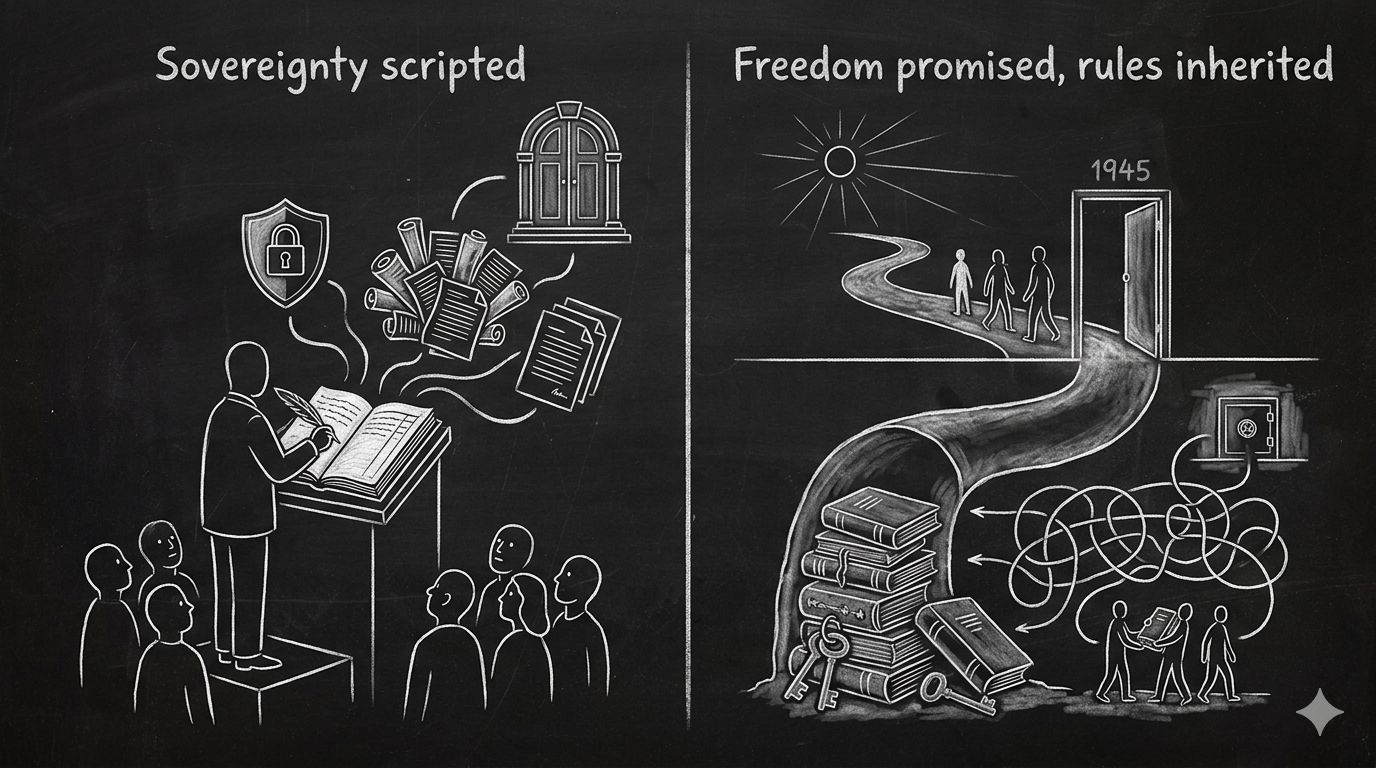
Look at how these ideas play out beyond any single project. Crypto has spent years promising disintermediation, yet we keep recreating hierarchies—validators, foundations, reward campaigns—that mirror the centralized power we claim to escape. Digital sovereignty becomes another narrative layer, useful for adoption, governance proposals, or national policies, but it rarely challenges the underlying architecture of influence. Individuals end up with better tools for signing transactions or proving credentials, perhaps, but the broader ecosystem still funnels decisions through concentrated points. It's not deception; it's just inertia. We want control, so we build systems that feel like control, but the comfort of familiarity keeps the real levers out of reach.
SIGN illustrates this tension cleanly. A protocol aiming at national-scale blockchain adoption, on-chain identity, and programmable finance sounds empowering on paper. Yet participating in its promotion through a leaderboard-driven task on a major exchange platform reminded me that even conversations about independence are mediated by platforms that track engagement, rank contributions, and distribute tokens accordingly. The moment I hit "post" and waited for verification, I felt the gap between the idea and the execution.
So what happens when the tools we use to discuss sovereignty are themselves reminders that we're not quite there yet? Are we building true autonomy, or just more sophisticated ways to simulate it? $SIGN #signDigitalSovereignlnfra @SignOfficial