
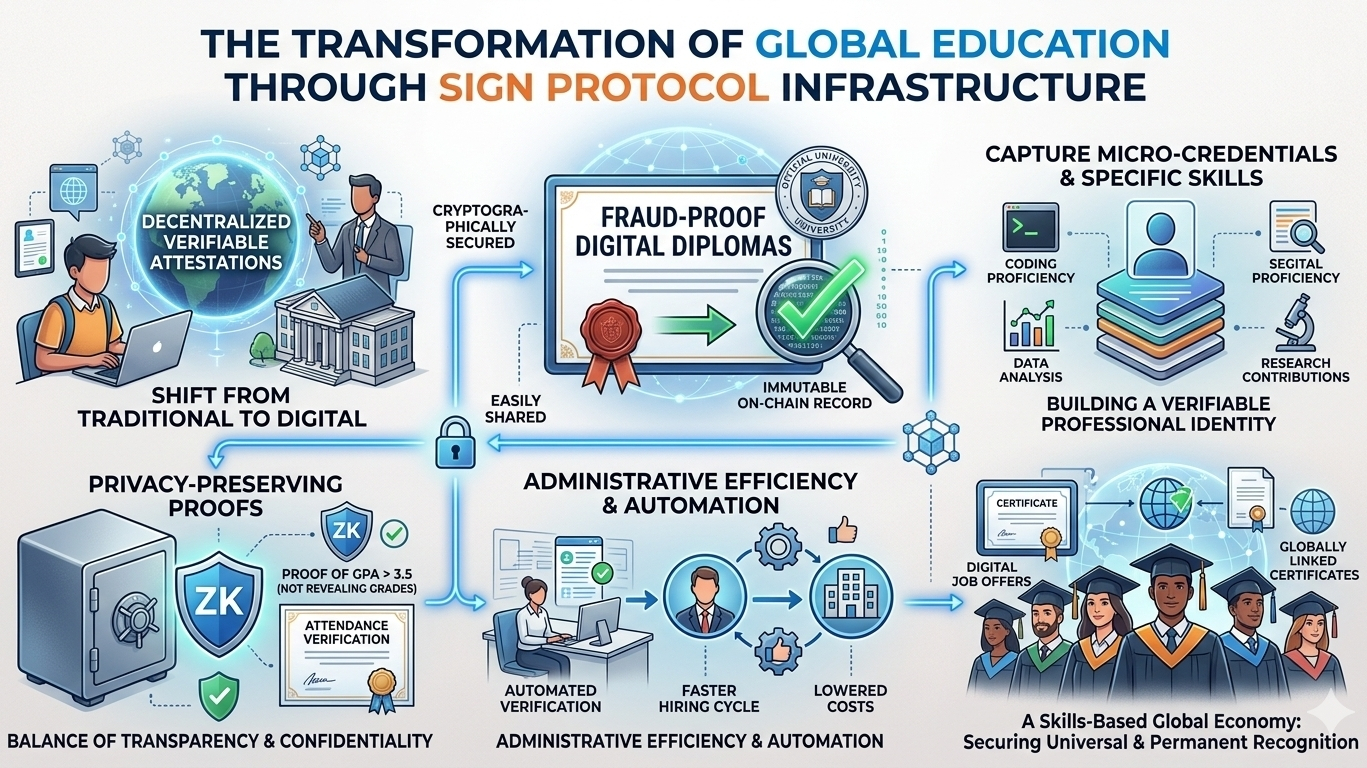
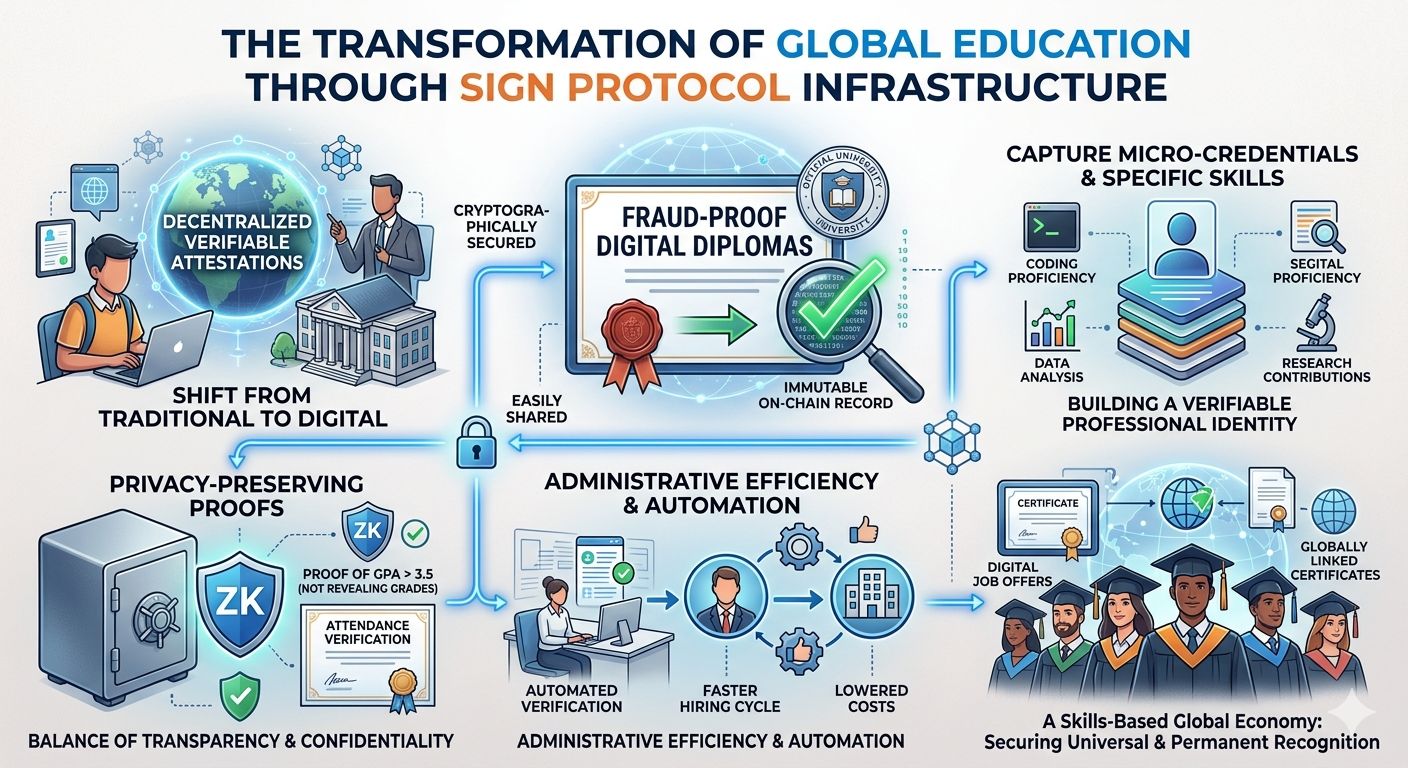
The integration of the @SignOfficial into the educational landscape marks a significant shift, moving from traditional paper-based documentation to a decentralized system of verifiable credentials. This technological framework allows academic institutions to issue digital proof of achievement that is secured by cryptography and easily shareable across various blockchain networks. By moving away from static physical diplomas and manual verification processes, the education sector can adopt a more streamlined and reliable record-keeping method that aligns with the pace of the modern digital economy.
The creation of tamper-proof digital diplomas represents one of the most immediate applications of this protocol within schools and universities. When an institution issues a diploma certificate, it creates an immutable and timestamped record that any third party can instantly verify without needing to contact a registrar's office. This system eliminates the possibility of credential forgery because the issuing school's cryptographic signature is permanently linked to the student's identity on the blockchain.
Beyond traditional degrees, the protocol excels at capturing micro-certifications and specific skills acquired during specialized workshops or bootcamps. This granular approach to data allows students to build a stackable portfolio of professional achievements that they genuinely own and control. Instead of relying on a single overall transcript, a learner can present individually verified evidence for specific skills, such as coding proficiency or contributions to research, providing potential employers with a clearer picture of their abilities.
Confidentiality remains a central concern in the management of educational data, and the protocol addresses this by enabling proofs that do not reveal underlying sensitive information. Through advanced cryptographic techniques, a student can demonstrate that they have achieved a certain grade point average threshold or completed a specific course without exposing their entire academic record. This balance between transparency and confidentiality ensures that personal data remains protected while providing the necessary evidence for eligibility for scholarships or employment opportunities.
The administrative efficiency of educational institutions is also witnessing a spectacular improvement thanks to the automation of verification and enrollment workflows. By using standardized data schemas, schools can reduce the thousands of hours typically devoted to manually processing transcripts and conducting background checks. This streamlined infrastructure benefits all parties involved by lowering costs for students and accelerating the hiring cycle for companies seeking to verify the qualifications of new candidates.
As the global labor market continues to evolve toward a skills-based economy, the need for portable and verifiable educational records will only grow. Sign protocol provides the essential infrastructure to make academic achievements as liquid and accessible as digital assets while maintaining the highest standards of integrity. By adopting these decentralized standards, the world of education can ensure that every step taken by a student is documented in a secure, universal, and permanently recognized manner.