

It didn’t hit me during a big win.
It was a small moment. I finished a routine task, the kind you don’t think about twice, and instead of logging off, I stayed. Not for rewards. Not for progression. Just stayed. Walked around. Watched other players moving through their own loops. Some were grinding, some were talking, some were doing things that didn’t look efficient at all.
That’s usually a bad sign in GameFi.
Or at least, that’s what I thought.
At first, I assumed @Pixels was just another polished farming loop. The structure looked familiar. You put in time, you get output, you optimize until the system flattens out. I’ve seen that curve too many times. Early excitement, mid game efficiency, late game exhaustion. It always ends the same way, when effort stops feeling worth it.
But something didn’t break on schedule.
The repetition was still there, but it didn’t feel hollow. Players weren’t behaving like extractors. Or at least, not entirely. And that’s where the pattern started to shift. Because most GameFi systems don’t collapse due to lack of content. They collapse because incentives quietly train players to leave.
That’s the real divide.
Between systems that reward activity and systems that shape behavior. What #pixel is doing, especially moving into Chapter 3, feels like it leans into the second.
Rewards don’t come across as fixed outputs. They feel adjusted. Not randomly, but contextually. The same action doesn’t always seem to produce the same outcome. And over time, you start to notice that efficiency alone isn’t the dominant strategy. There’s a sense that the system is managing a limited reward budget, allocating more toward behaviors it wants to see repeated, and less toward patterns that look purely extractive.
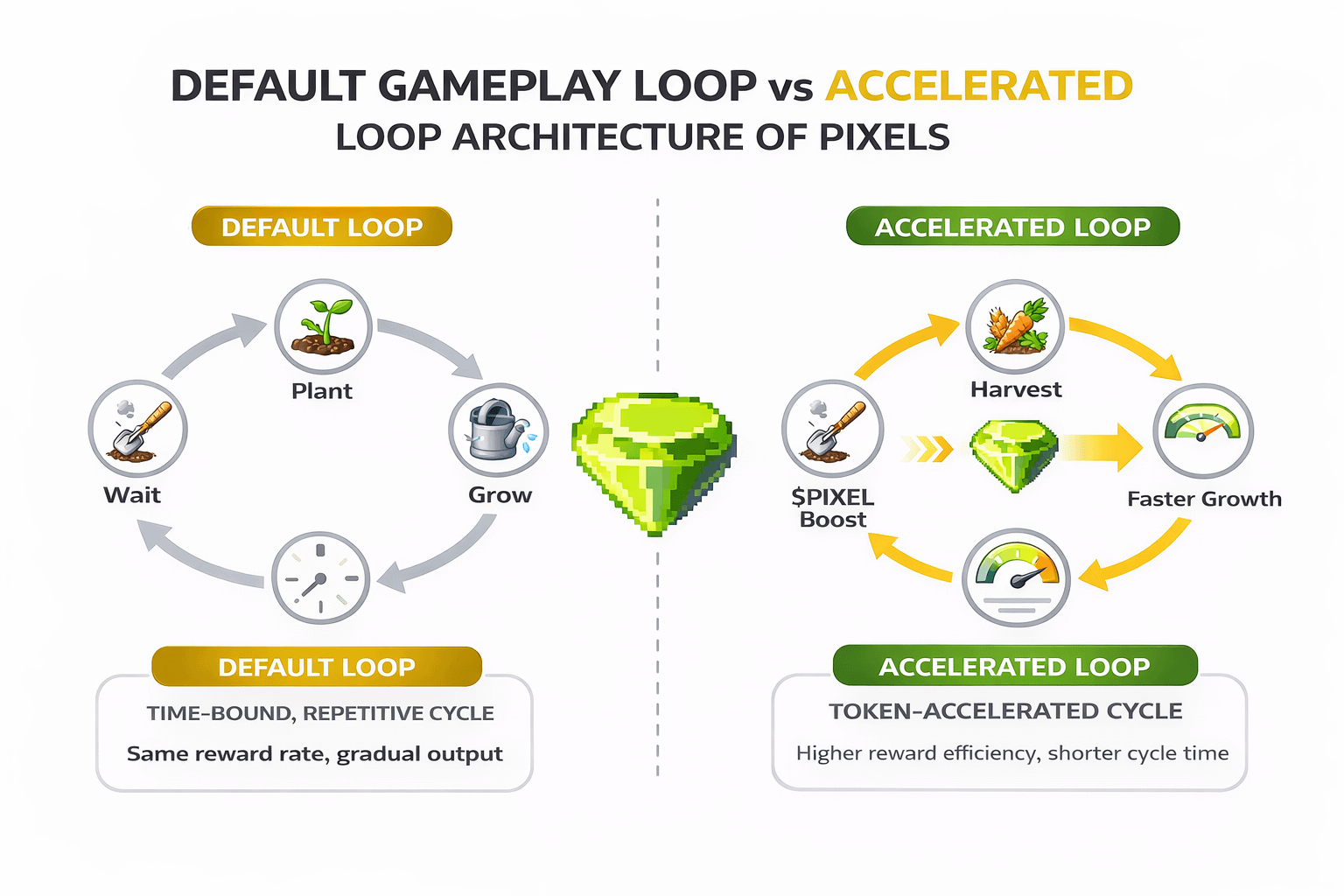
It doesn’t announce this. You just feel it. And once you do, your approach changes.
Chapter 3 builds directly on that foundation by turning late game progression into something more dynamic and social. Exploration Realms introduce procedurally generated islands that players access through Voyage Contracts, purchased with $PIXEL .That’s not just new content layered on top. It’s a structural decision. Progression now requires spending into the system, tying exploration to a real economic loop instead of passive accumulation.
Then there’s the LiveOps layer.
At a glance, they look like timed event, Fishing Frenzy, Harvest Rush, but they function more like an always on control system. They continuously redirect player attention, reshape activity patterns, and create environments where behavior can be observed and adjusted in real time. It’s less about running events and more about steering the ecosystem without forcing it.
The social layer goes even further.
Proximity chat, emotes, referral rewards, share to earn mechanics, they don’t just sit on top as features. They act as distribution channels. Growth starts happening inside the game, through interaction. Players bring in other players, not because they’re told to, but because the system quietly aligns incentives around that behavior.
That’s when the economy stops feeling purely transactional. And the token starts making more sense.
$PIXEL isn’t just something you earn and move off platform. It’s used to access systems like Exploration Realms, making it part of progression itself. You earn, but you also decide when to re enter the loop by spending. That balance between earning and using is what most GameFi economies fail to establish.
Still, there’s a real tension here.
If rewards are being adjusted based on behavior, what stops players from optimizing toward whatever the system favors? At some point, doesn’t optimization just become a more advanced form of extraction? And in the early stages, when data is limited and signals are weak, how accurately can the system even tell the difference?
It doesn’t feel like the system is trying to block that completely. It feels like it’s sorting. Quietly.
Over time, players who engage in ways the system values begin to accumulate small advantages. Better rewards. Better access. Better positioning. Not through hard restrictions, but through alignment. It’s similar to how reputation systems or marketplaces evolve. No one is stopped from participating, but not everyone benefits equally forever.
You’re not buying access. You’re aligning with the system. And those small differences compound. That’s where retention starts to matter more than rewards.
Because rewards only work if players come back. Most systems distribute tokens, but they don’t build habits. They generate activity, but not continuity. And without continuity, the economy has nothing to anchor itself to.
The loop here is simple, but it carries weight.
Players generate data through behavior. That data feeds into how rewards are allocated. Better allocation improves the experience. A better experience keeps players engaged longer. And retention strengthens the entire system over time.
Compare that to the usual pattern.
Players farm efficiently. They extract value. They sell. Price weakens. Incentives fade. Players leave. The system resets, if it survives at all.
Chapter 3 feels like an attempt to move away from that cycle.
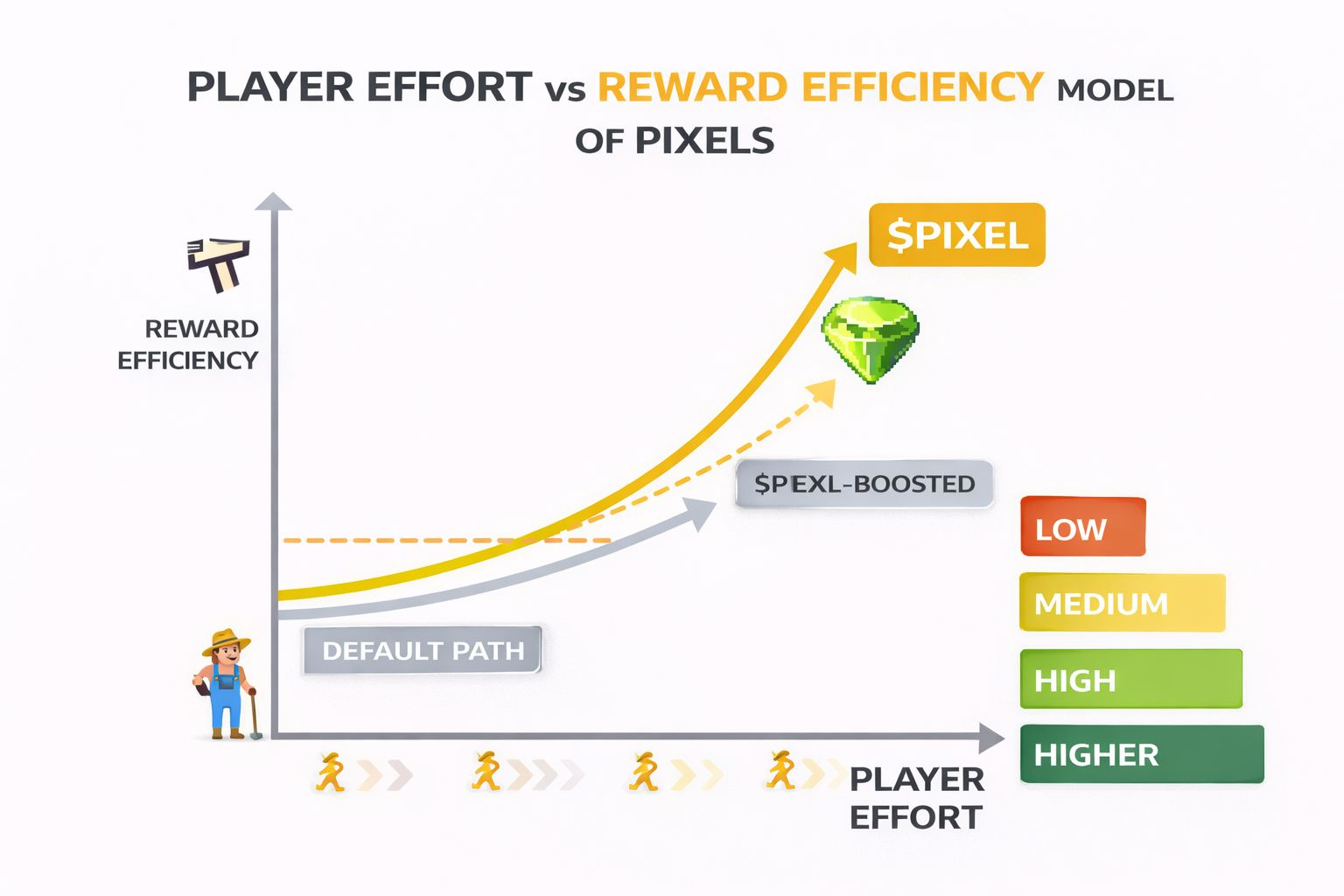
Exploration introduces meaningful sinks tied to discovery. LiveOps continuously adjusts the flow of activity. Social systems turn interaction into growth. All of it feeds into a structure that isn’t just rewarding players, but trying to understand and shape how they behave within the economy.
That doesn’t guarantee success.
Systems like this need scale before they become effective. Early on, the data is incomplete, the signals are noisy, and optimization is imperfect. The system is still learning what matters. And without enough players contributing meaningful behavior, even well designed loops can feel weak.
That’s where distribution becomes critical.
Because even the best designed economy doesn’t work without enough participants to make the signals real. Still, the direction is different.
This isn’t just a game adding rewards. And it’s not just a token searching for utility.
It’s a live system, adjusting in real time, trying to balance incentives, behavior, and growth under real pressure. Whether it holds depends on something simple.
If players stay, the system improves. If they don’t, nothing else has time to matter.