

Has anyone else noticed this, or is it just me? GameFi was once expected to be the future of gaming, yet in reality most projects have turned into “reward-printing machines” rather than actual games.
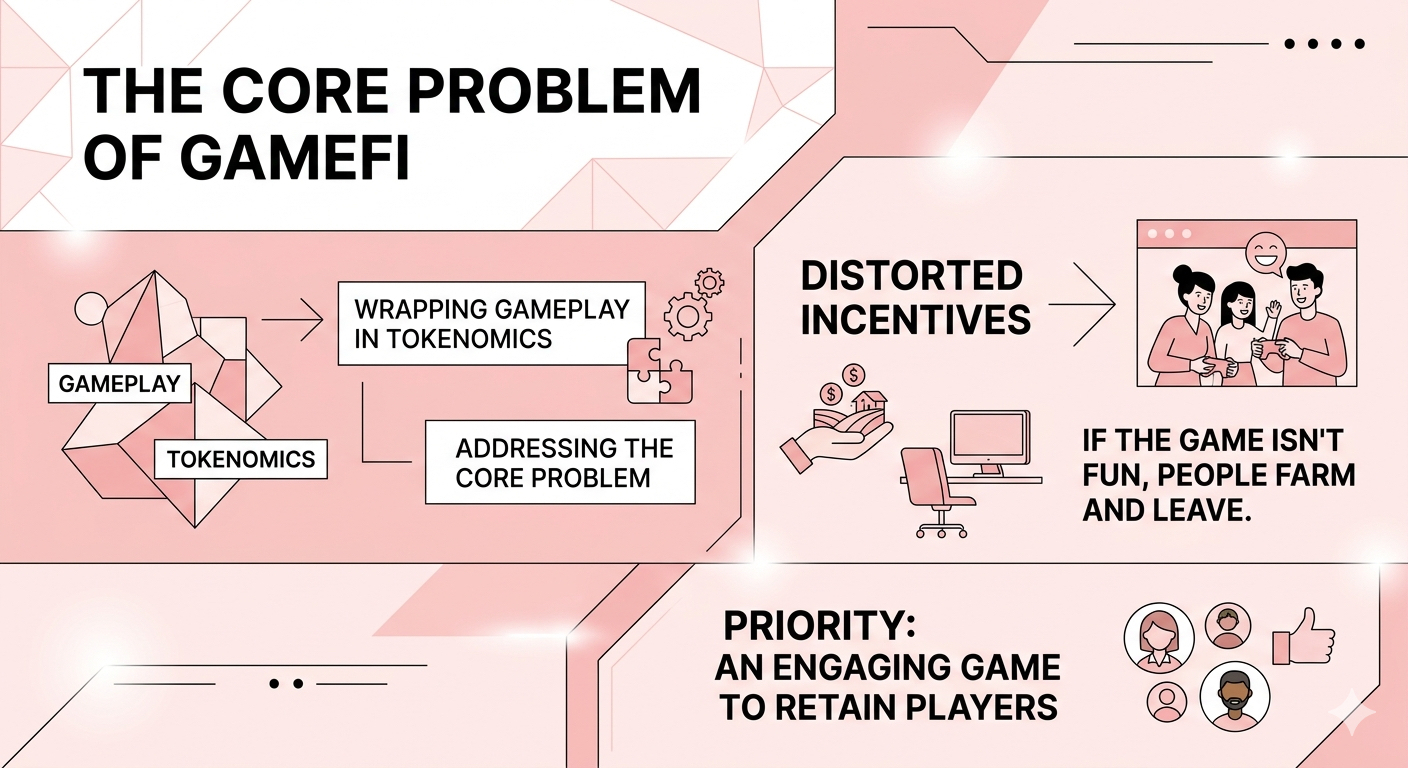
This thought came to me while reading the whitepaper and following updates from Pixels. At first, I assumed it was just another project trying to “wrap gameplay in tokenomics.” But after digging a bit deeper, it seems they’re genuinely attempting to address the core problem of GameFi, not just building around hype.
To be honest, the biggest issue isn’t earning - it’s distorted incentives. Most projects make the same mistake from the start. They assume users come for the money and stay for the game. In reality, it’s the opposite: if the game isn’t fun. people will just farm and leave.
Pixels is taking a slightly different approach. Their first priority sounds basic: the game has to be engaging enough to retain players. Yet ironically, this is the very thing most projects overlook. Right now, much of GameFi no longer feels like gaming - it feels like repetitive work optimized for ROI.
But here’s the problem…
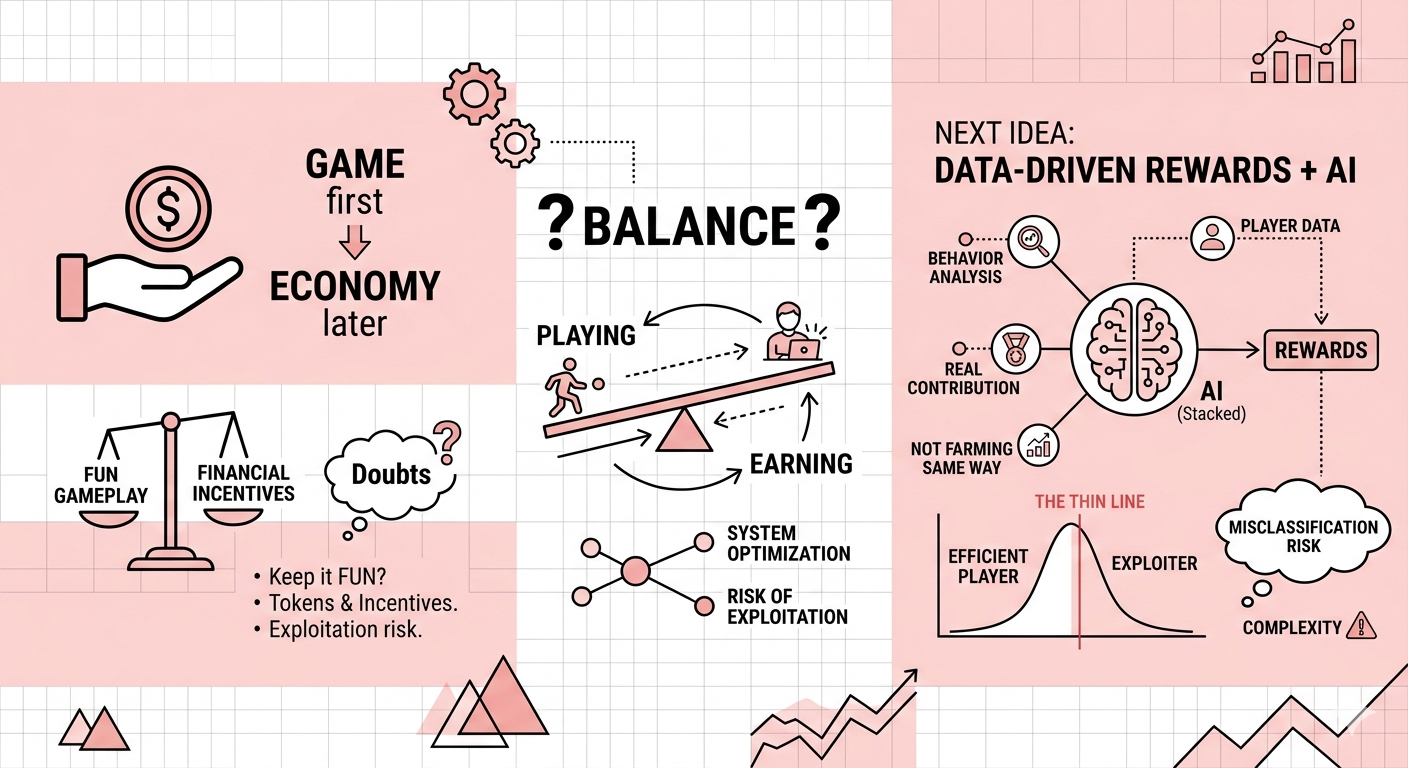
Pixels claims “game first, economy later,” and I was actually surprised to see them openly acknowledge this. I agree with the direction, but I still have some doubts. It’s not easy to keep gameplay fun once real money is involved. As long as tokens and financial incentives exist, the system will eventually be optimized and exploited.
So the real question is: how do you balance playing and earning?
This is where their next idea comes in: data-driven rewards combined with AI (Stacked). In simple terms, they analyze player behavior to reward “real contribution” instead of letting everyone farm the same way. It sounds promising, but the line between an efficient player and an exploiter is extremely thin. If someone plays optimally, are they farming? The more complex the system becomes, the higher the risk of misclassification.
Even so… I still think this is the right direction.
Because the traditional model is essentially a loop: players join → earn rewards → sell tokens → price drops → repeat. If they can truly distribute rewards more intelligently, the sell pressure on the system might be reduced.
Another interesting angle is their multi-game vision and flywheel. They’re not just building a single game, but aiming for a platform, with a loop like: better games → more users → more data → better distribution → even better games. It sounds smooth in theory, but in reality, execution is everything.
The challenge is that attracting enough high-quality games is extremely difficult. Without sufficient content and players, this flywheel simply won’t run. And to make it work, you need scale.
Without enough users and data, it’s hard to generate meaningful insights.
So their real challenge isn’t token design - it’s building an ecosystem large enough to sustain itself. At the very least, Pixels has identified the core issues: boring gameplay, exploitable rewards, and unsustainable tokens. More importantly, they’re trying to address them structurally, not just patch the surface.
The same applies to the $PIXEL token. It can’t survive as just a farming reward. It needs to become a true value capture layer through utility, premium features and effective sinks. Otherwise, the same story repeats: increasing supply, rising sell pressure and declining price.
One thing is clear - Pixels doesn’t want to be just a single game. It’s positioning itself as a platform. And that’s both ambition and risk, because building a platform isn’t just about technology - it’s about community, developers, and long-term trust.
In the end, my view is fairly neutral. The concept is strong and well thought out. Execution carries high risk and uncertainty. There is differentiation, but not enough to guarantee long-term sustainability.
It could become one of the rare success stories in GameFi or just a project that performs better than most, yet still fails to escape the same old loop. Both outcomes are entirely possible in this market.
But one thing is certain…
At least they’re not following the old path. And that alone makes them worth watching.