
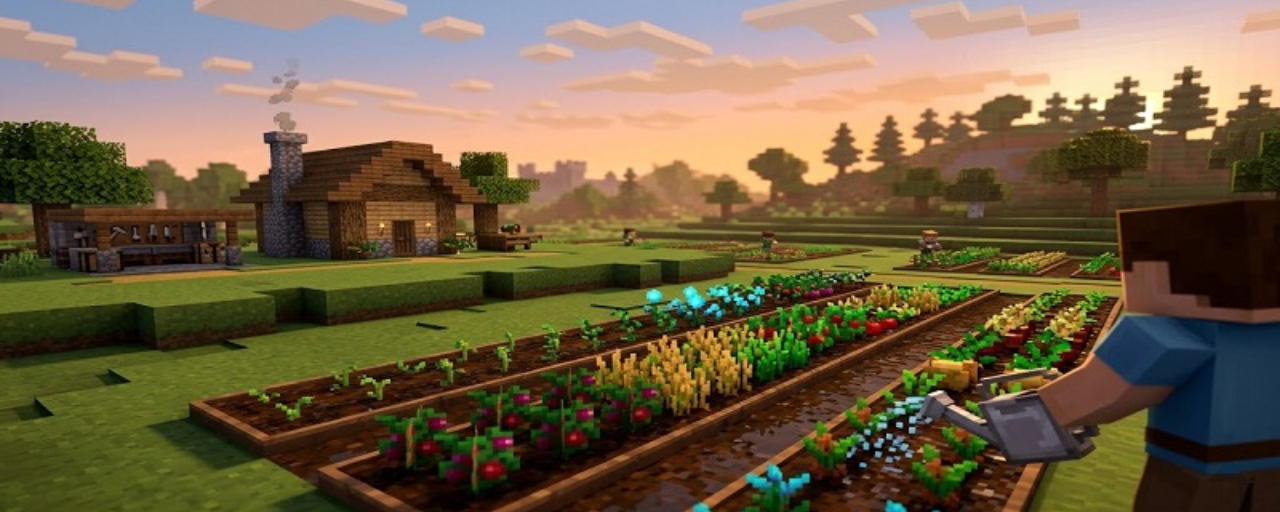
There's something I keep noticing with @Pixels players. The ones who seem frustrated are usually the ones chasing the fastest path. The ones who seem settled, almost calm about the whole thing, are usually playing a completely different game inside the same game.
That gap is interesting to me.
$PIXEL has been around long enough now that the early chaos has settled into something more readable. The economy has patterns. The land has rhythms. And if you spend enough time just watching how things move, you start to see that Pixels isn't really designed for sprinting. It's built more like a slow climb.
I think a lot of players miss that at first.
When you start in Pixels, the instinct is to optimize everything immediately. Which crop gives the best return right now. Which task fills the progress bar fastest. Which path gets you to the next milestone before everyone else. That's a natural way to think about games. But in something like this, where the economy is live and other real people are making the same calculations, that short-term thinking tends to burn itself out pretty quickly.
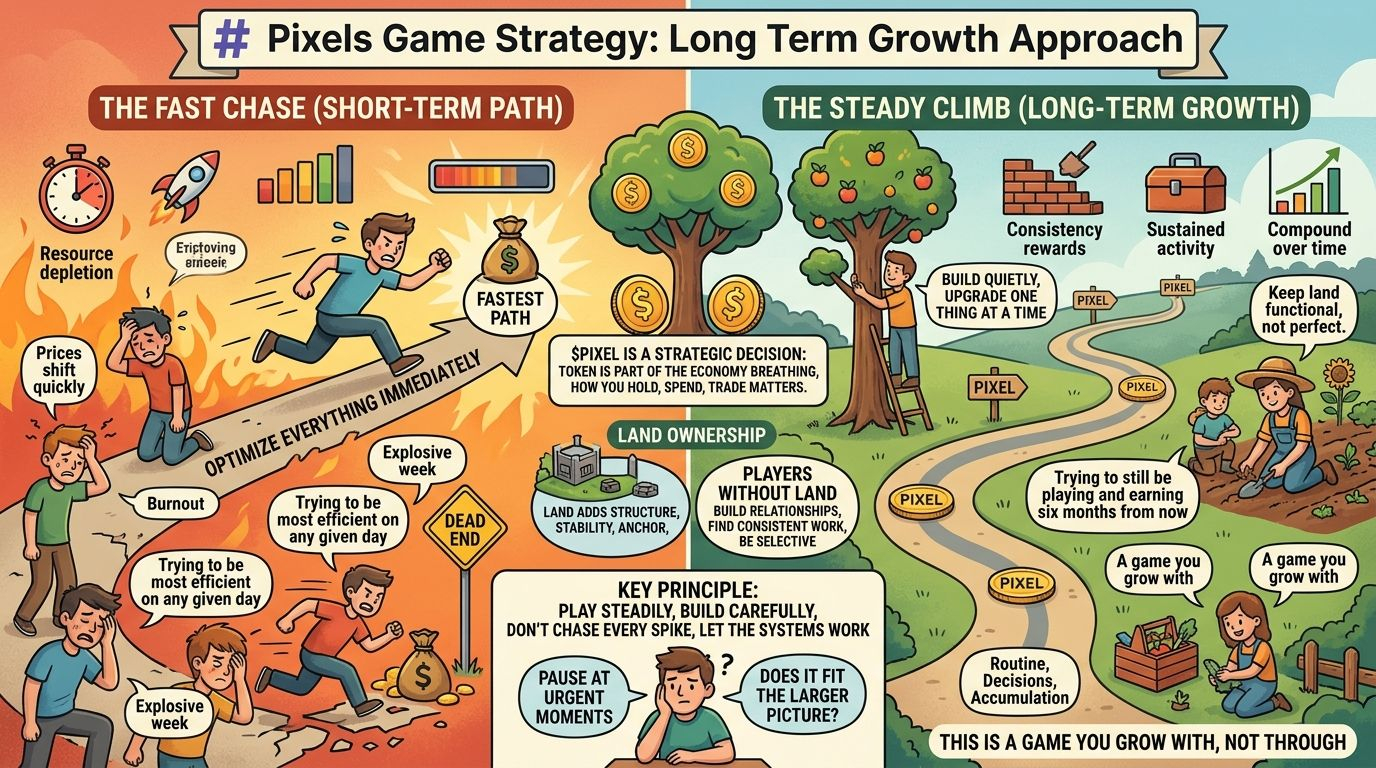
Resources deplete faster when everyone chases the same thing. Prices shift. What was profitable last week becomes crowded this week.
The players I've seen hold their ground over time usually aren't doing anything dramatic. They're building quietly. Upgrading one thing at a time. Keeping their land functional rather than perfect. They're not trying to be the most efficient player on any given day. They're trying to still be playing and earning six months from now.
That's a different mindset entirely.
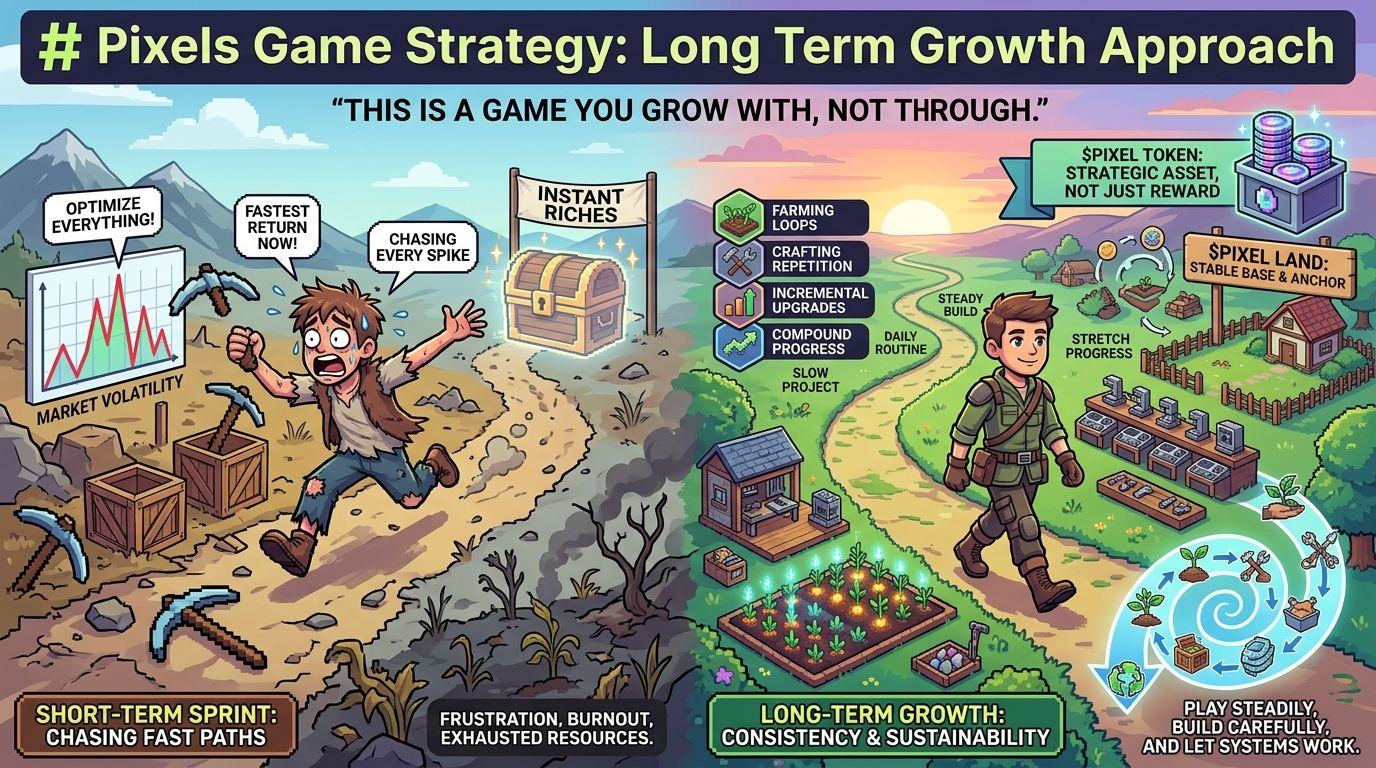
#Pixels rewards consistency in ways that aren't always obvious at first glance. The farming mechanics, the crafting loops, the way progression layers on top of itself, it all seems simple until you realize the depth is in the repetition. Showing up regularly and keeping your operation running steadily tends to compound in ways that one explosive week usually doesn't.
I might be wrong, but I think the game is partly designed that way on purpose. When your growth depends on sustained activity rather than single big moves, it filters out a certain kind of impatience.
There's also something worth thinking about with $PIXEL itself as part of the long game. The token isn't just a reward sitting at the end of a task. It's part of how the economy breathes. How you hold it, spend it, or trade it is actually a strategic decision, not just a logistical one. Players who treat it casually tend to leak value over time without noticing. Players who pay attention to when they're spending and why seem to stretch their progress further.
It's not complicated analysis. It's just awareness.
Land ownership in #pixel adds another layer to this. If you have land, your long-term options are structurally different from someone who doesn't. Not better necessarily in every moment, but more stable over time. You have a base. Something to return to, upgrade, and build around. The game feels different when you have that anchor.
For players without land, the long-term thinking still applies but it looks different. It's more about building relationships with land owners, finding consistent work in the ecosystem, and being selective about where time goes. The game has room for both approaches. They just require different kinds of patience.
What I keep coming back to is this idea that Pixels functions a bit like a slow project rather than a game you beat. There isn't a finish line you cross. There's just your setup, your routine, your decisions, and how they accumulate over time. Some weeks feel more productive than others. Some updates shift priorities. The meta changes.
But the underlying principle stays the same. Play steadily, build carefully, don't chase every spike, and let the systems work the way they're designed to work.
That's easier said than done, honestly. There are moments in any live game economy where the temptation to make a fast move feels real. A resource suddenly spikes in value. An event creates pressure to grind harder. A new feature launches and everyone is rushing toward it.
The long-term player learns to pause at those moments. Not always to avoid them, but to ask whether the move fits the larger picture or just feels urgent in the moment.
@Pixels as a game has more depth than it looks like from the outside. And I think the players who stick with it longest aren't necessarily the most skilled or the most active. They're the ones who figured out earlier that this is a game you grow with, not through.
That realization changes everything about how you play.
