
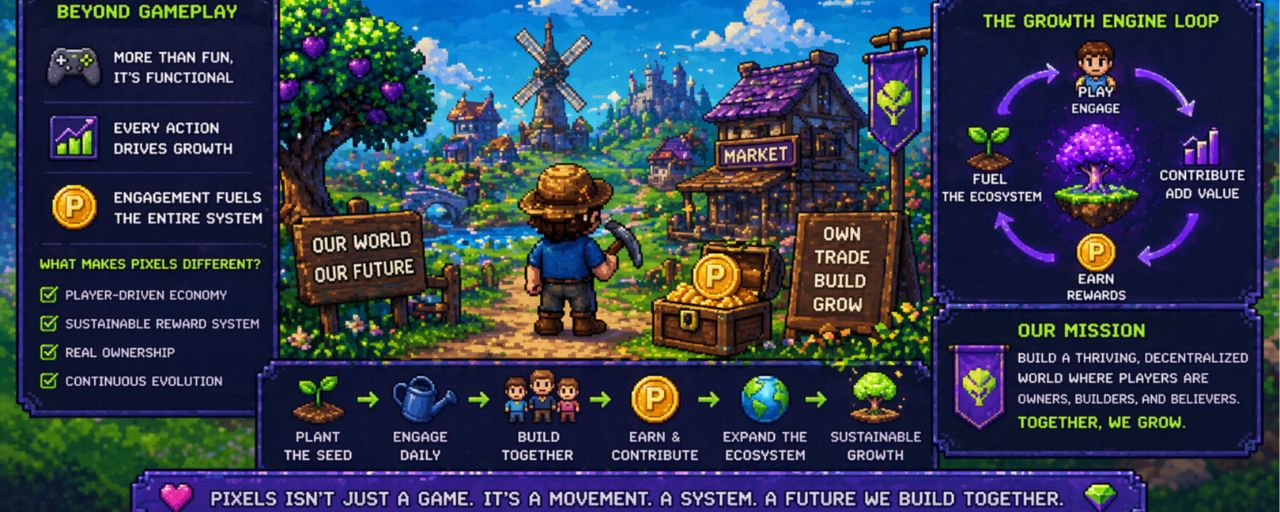

Something about most Web3 games feels like they end too early, not because you quit, but because you understand them. At some point, the loop becomes predictable. You stop exploring and start optimizing. And once that shift happens, it’s hard to go back. It doesn’t feel like you’re playing anymore, it feels like you’ve reduced something dynamic into a fixed pattern, something that was never meant to hold your attention for long.
At first, I assumed $PIXEL would follow the same path. Farming loops, predictable progression, a token layered on top, I’ve seen that structure enough times to know how it ends. You start casually, then slowly drift into optimization mode. Every action becomes a calculation. Eventually, the game fades and what’s left is just a process.
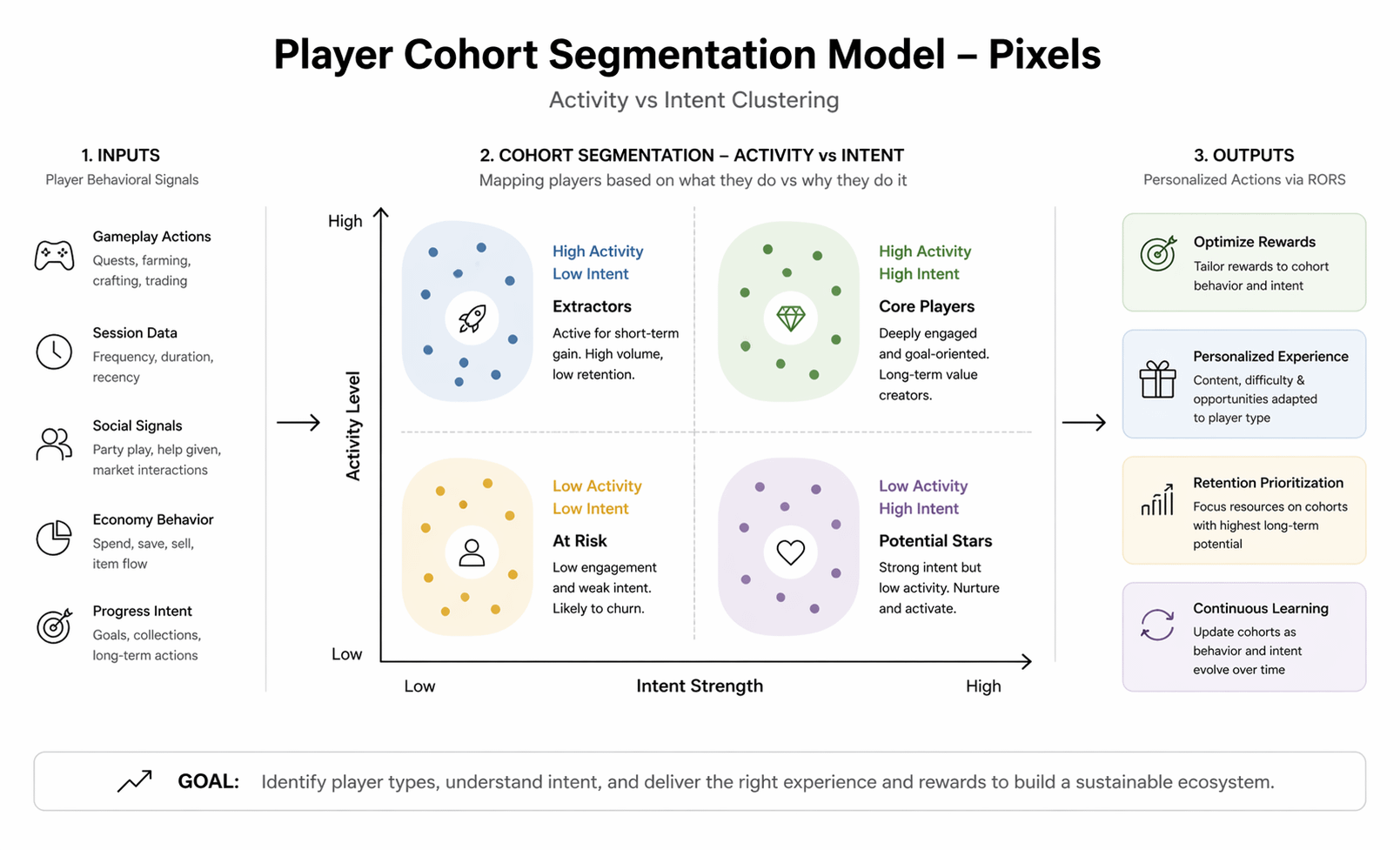
But after spending more time in it, something didn’t fully match that expectation. There were moments where doing more didn’t lead to earning more. Not in a broken way, more like the system was selectively responding. It didn’t feel random either. If anything, it felt like players were being quietly grouped, outcomes shifting based on how they played, not just how much. I think this is where their RORS system actually starts to show up.
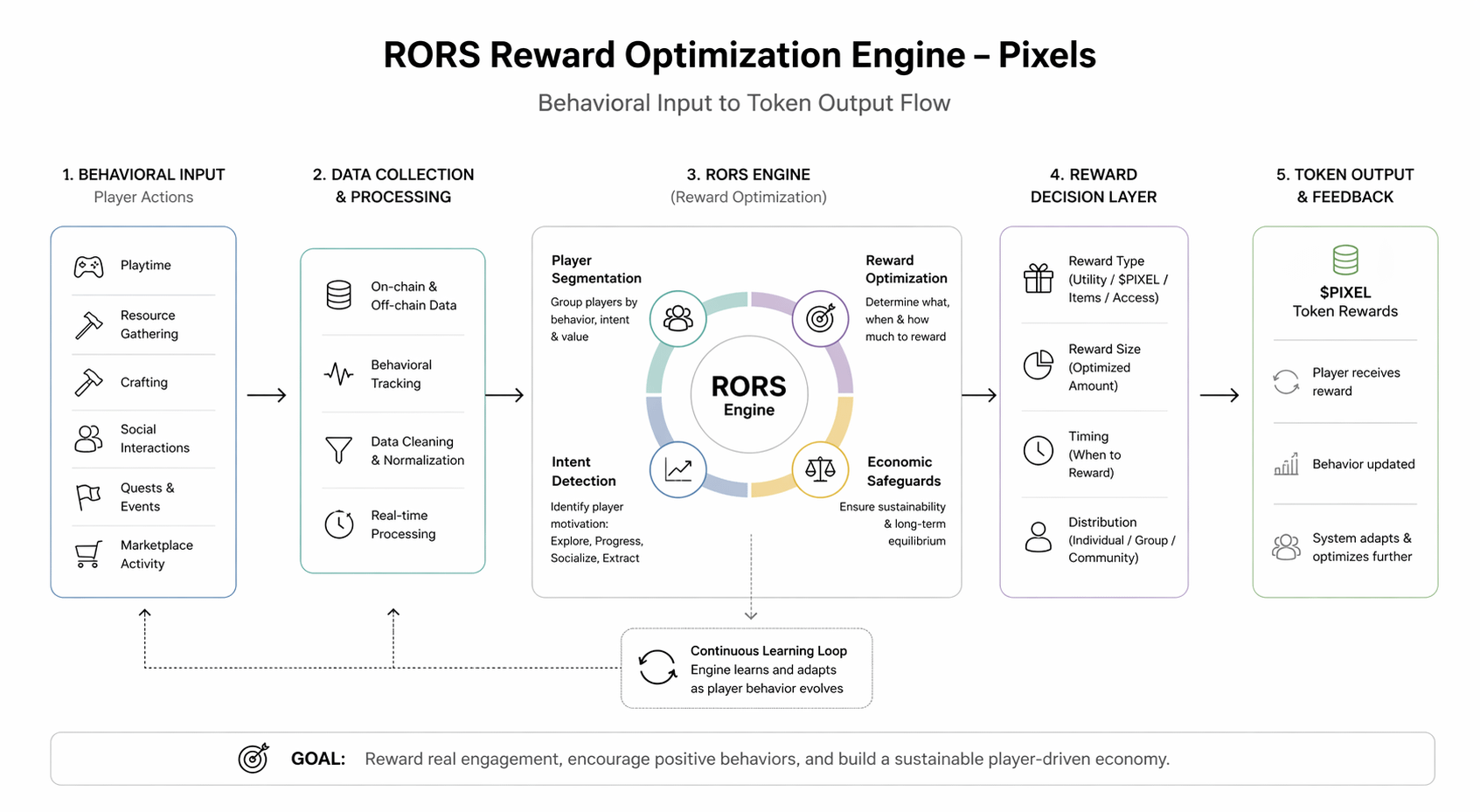
The more I paid attention, the more it felt like rewards weren’t fixed outputs anymore. They were being interpreted. Behavior seemed to matter more than volume. It almost felt like the game was learning, taking what players do, feeding it back into the system, and adjusting how value gets distributed over time. Not perfectly, but enough to notice. That kind of feedback loop changes things in a subtle way.
It made me rethink the core issue with play to earn. The problem was never just inflation, it was incentive design. Players weren’t really playing, they were extracting. And once a system rewards extraction, everything else collapses around it. The fastest, most efficient players win early, value drains out, and eventually there’s no reason for anyone to stay. I’ve seen that cycle repeat too many times.
What @Pixels seems to be doing differently is not removing rewards, but tightening them. Most systems increase emissions to keep people engaged. This one feels like it’s trying to do the opposite, reward less, but better. Not everyone gets the same outcome, and that’s intentional. Over time, the system starts separating players quietly. No hard barriers, no obvious restrictions but the experience diverges. Same game, different trajectories.
I also started noticing that the game leans into being a game first. There’s crafting, progression, small decisions, even social coordination that don’t always resolve into immediate financial outcomes. And it doesn’t feel like a solo loop forever, more like something that gradually starts depending on other players. Not in a forced way, but in a way where your progress begins to intersect with theirs. That shift changes the dynamic, you’re not just optimizing your own output anymore, you’re part of a broader system.
The token layer still anchors everything in reality though. $PIXEL sits in that familiar balance where engagement and sell pressure are always in tension. But instead of expanding rewards to sustain activity, the system seems to rely on precision, using data to decide who should be rewarded, and when. It’s less about distributing tokens widely, and more about distributing them meaningfully. That’s a harder problem to solve.
I keep coming back to this tension. Can a system really prioritize fun while still attaching financial value to it? Because money changes behavior, even in subtle ways. Players will always look for edges. And over time, those small advantages compound. The question isn’t whether optimization happens, it always does. The question is whether the system can keep it from taking over completely.
If I zoom out, it starts to look less like a traditional game and more like a system trying to stabilize a broken loop. The old pattern was simple, players farm, sell, and leave. There’s no continuity in that. But here, it feels like the loop is being rebuilt differently. You play, you return, your behavior feeds into the system, and the system adapts in response. Not instantly, but gradually.
And that’s where retention becomes the real signal. Not rewards, not token price, just whether people come back. Because utility only works if someone comes back tomorrow. Without that, everything else is temporary. The RORS layer, if it works as intended, seems designed to reinforce that exact idea.
At the same time, none of this guarantees success. Systems like this need scale before they start working properly. Early on, data is thin, signals are weak, and behavior hasn’t fully formed. Sometimes distribution matters more than design in those early stages. You can build something intelligent, but without enough activity, it doesn’t have much to learn from.
I don’t think #pixel is trying to be just a game, or just a token. It feels more like an attempt to fix a broken relationship between the two, using data, behavior, and incentives to align them over time.
The idea makes sense. The rest depends on execution.