
Look, I’ve seen this movie before. Different graphics. Same script.
The pitch is clean. Almost too clean. A relaxed farming game where you can earn while you play, own your assets, trade them freely, and participate in a player-driven economy. It sounds tidy. On paper, at least. But when you peel back the marketing, the glue starts to melt.
Start with the problem they claim to fix. Traditional games don’t let you “own” anything. You grind for hours, maybe spend money, and in the end it all stays locked inside the developer’s servers. No resale. No real value. Pixels steps in and says: we’ll fix that. We’ll give you ownership. We’ll make your time worth something.
It’s a compelling story. It’s also slightly misleading.
Because the real problem isn’t ownership. It’s value. And those are not the same thing.
You can own something completely and still have it be worthless. Ask anyone who held gaming tokens through the last cycle.
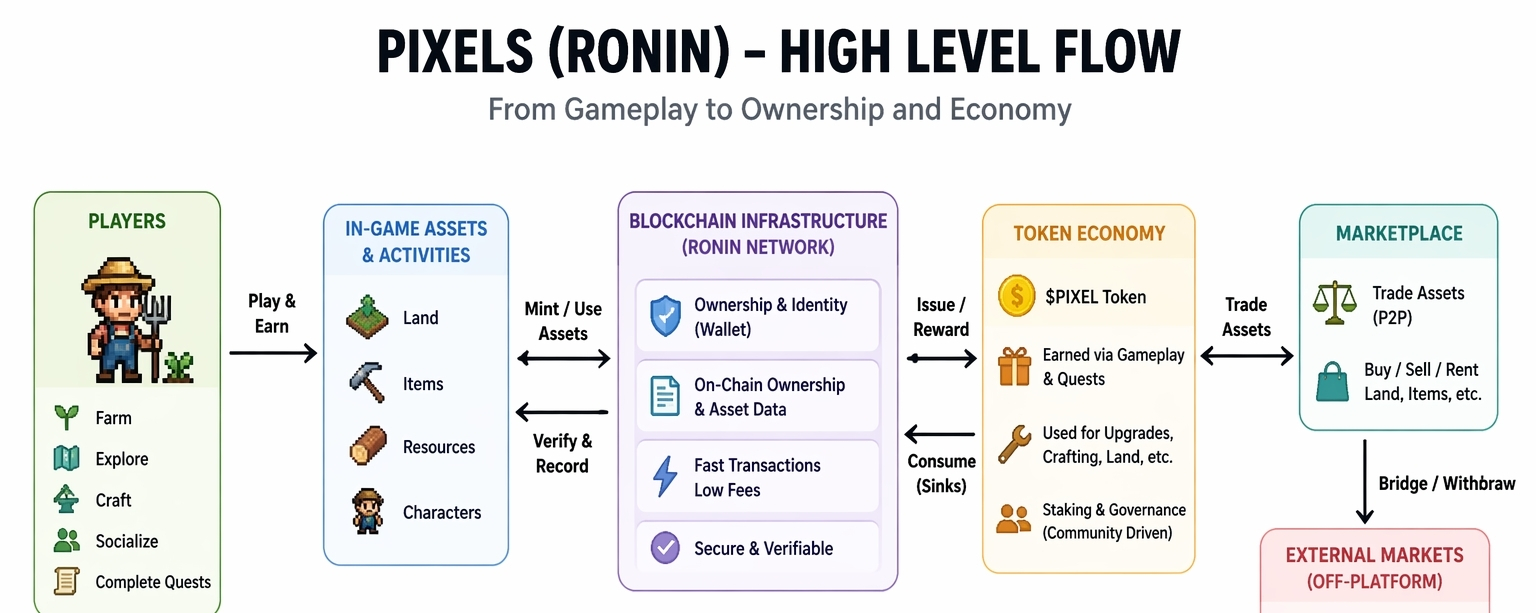
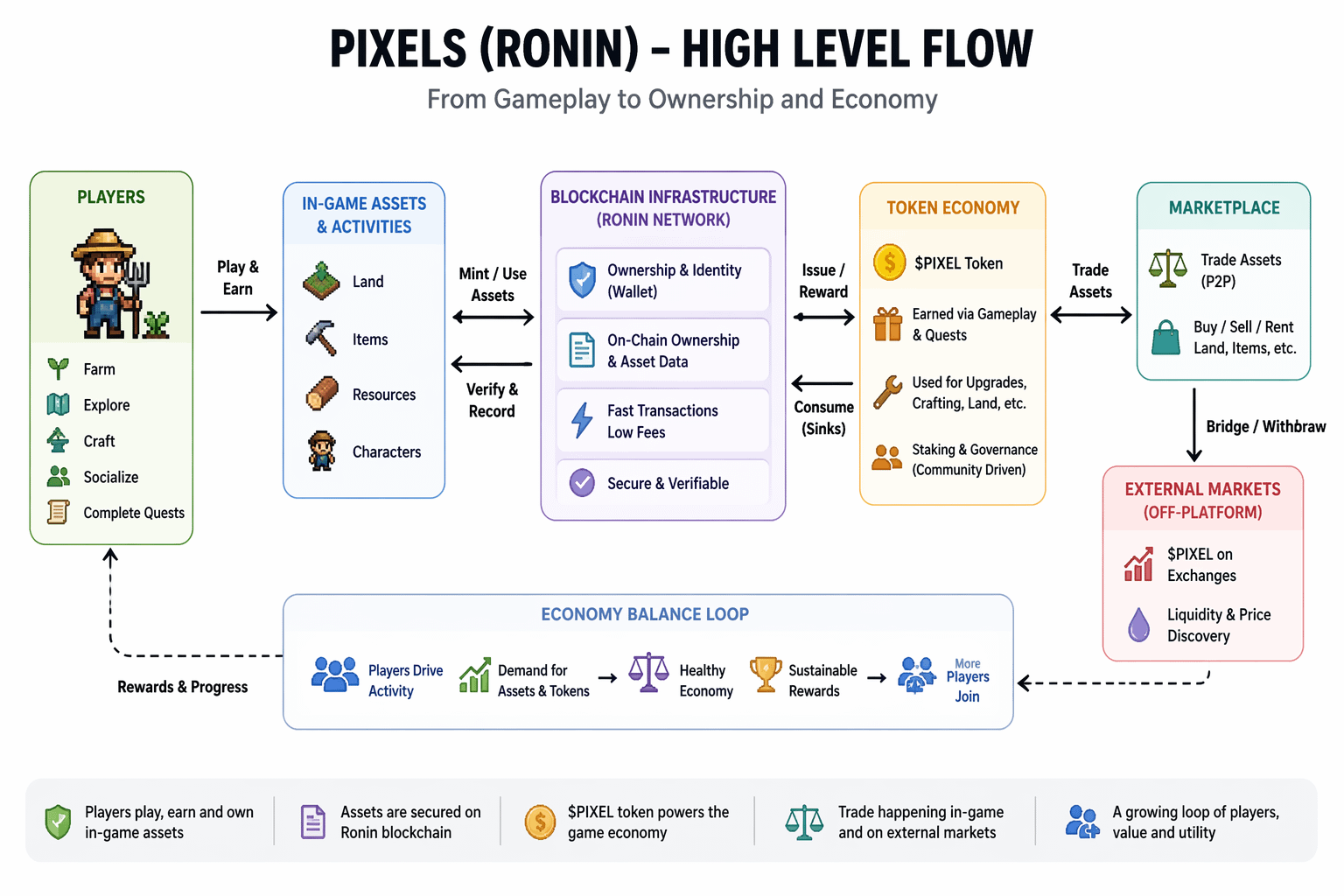
Pixels tries to solve this by attaching everything to a token economy running on the Ronin Network. Assets are tradable. Rewards are tokenized. Markets exist. It feels like progress.
But here’s where things get messy.
Instead of removing friction, they’ve added a new layer of it. Wallets. Keys. Bridges. Token volatility. You’re no longer just playing a game. You’re managing a financial position, whether you like it or not. Every action has an implicit price. Every reward has a fluctuating value. The simplicity of “play and relax” quietly turns into “play and monitor.”
And that changes behavior.
Let’s be honest. The moment you introduce money, people stop acting like players and start acting like traders. They optimize. They farm the system, not the land. They chase yield, not enjoyment. I’ve watched this happen again and again, from early MMO gold markets to full-blown play-to-earn ecosystems.
Pixels isn’t immune. It’s just softer about it.
Now, the part that rarely gets discussed openly: who actually benefits here?
Early entrants, for a start. People who acquire assets or tokens before the crowd shows up. They’re positioned to sell into demand later. That’s not unique to Pixels. That’s how most token economies function. But it does mean the system quietly relies on new participants arriving with fresh capital.
That’s the catch. It’s always the catch.
If new players keep coming, the economy looks healthy. Prices hold. Rewards feel meaningful. But when growth slows—and it always does—the pressure shows up immediately. Token values drop. Rewards shrink. Players leave. Liquidity dries up.
I’ve seen this exact sequence play out before. It’s not hypothetical.
There’s also the question of control. The branding leans heavily on decentralization, but let’s not kid ourselves. The developers still set the rules. They adjust reward rates. They introduce or remove sinks. They shape the economy in real time.
So what do you really own? An asset inside a system someone else can rebalance at any moment.
That’s not full control. That’s conditional ownership.
And when something breaks—and something always breaks—the burden shifts to the user. Lose your wallet, lose everything. Fall for a scam, it’s gone. No customer support line to call. No reset button. The same infrastructure that promises freedom also removes safety nets.
Then there’s the human reality.
Most people don’t want to think about tokenomics while playing a game. They don’t want to track market prices or worry about whether harvesting digital crops is still “profitable.” They want entertainment. Predictability. A sense that their time isn’t tied to a fluctuating chart.
Pixels tries to bridge that gap. It wraps a financial system in something that looks calm and familiar. Farming. Social spaces. Slow progression.
It’s clever. I’ll give it that.
But the underlying mechanics haven’t changed as much as people think. The system still leans on economic incentives to drive engagement. And those incentives are fragile.
So you end up with a strange hybrid. Not quite a game, not quite a market. Something in between. And those in-between systems tend to be the most unstable, because they inherit the downsides of both.
Maybe Pixels lasts longer than its predecessors. Maybe it manages the balance more carefully. But the core tension is still there, quietly sitting under the surface.
You can see it if you look past the crops.
