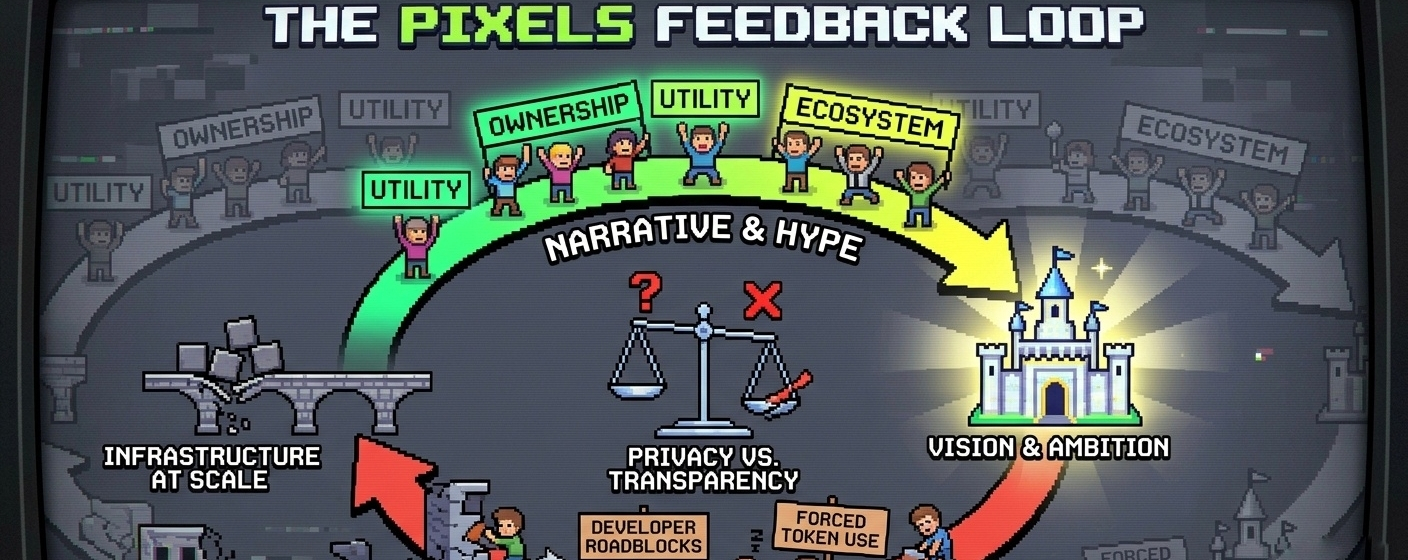
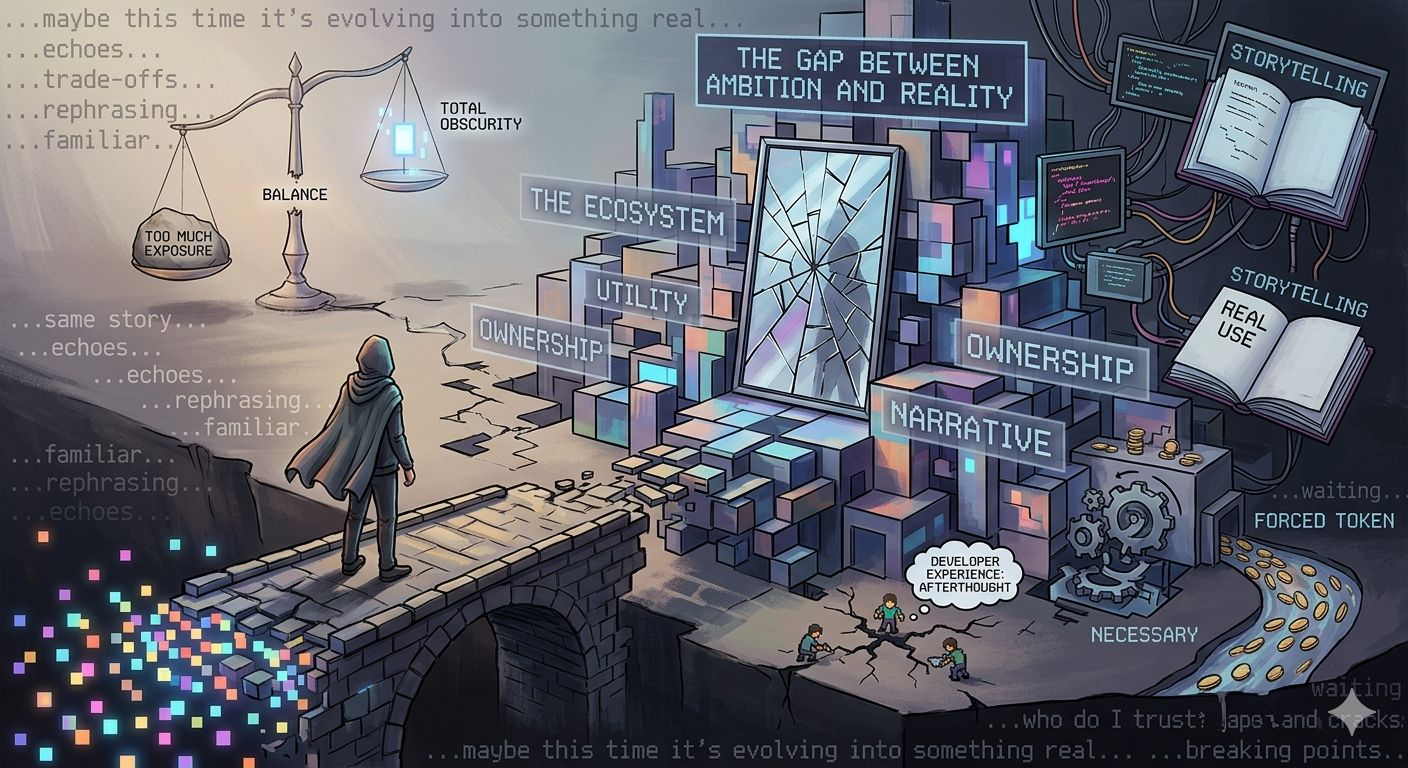
I keep coming back to Pixels, not because I’m convinced by it, but because it feels like a mirror of everything I’ve been watching for years. The same patterns, just rearranged slightly differently each time. I tell myself maybe this time it’s evolving into something real, something that sticks. But then I pause and realize I’ve had that exact same thought before, just with different names, different narratives, different promises wrapped in new language.
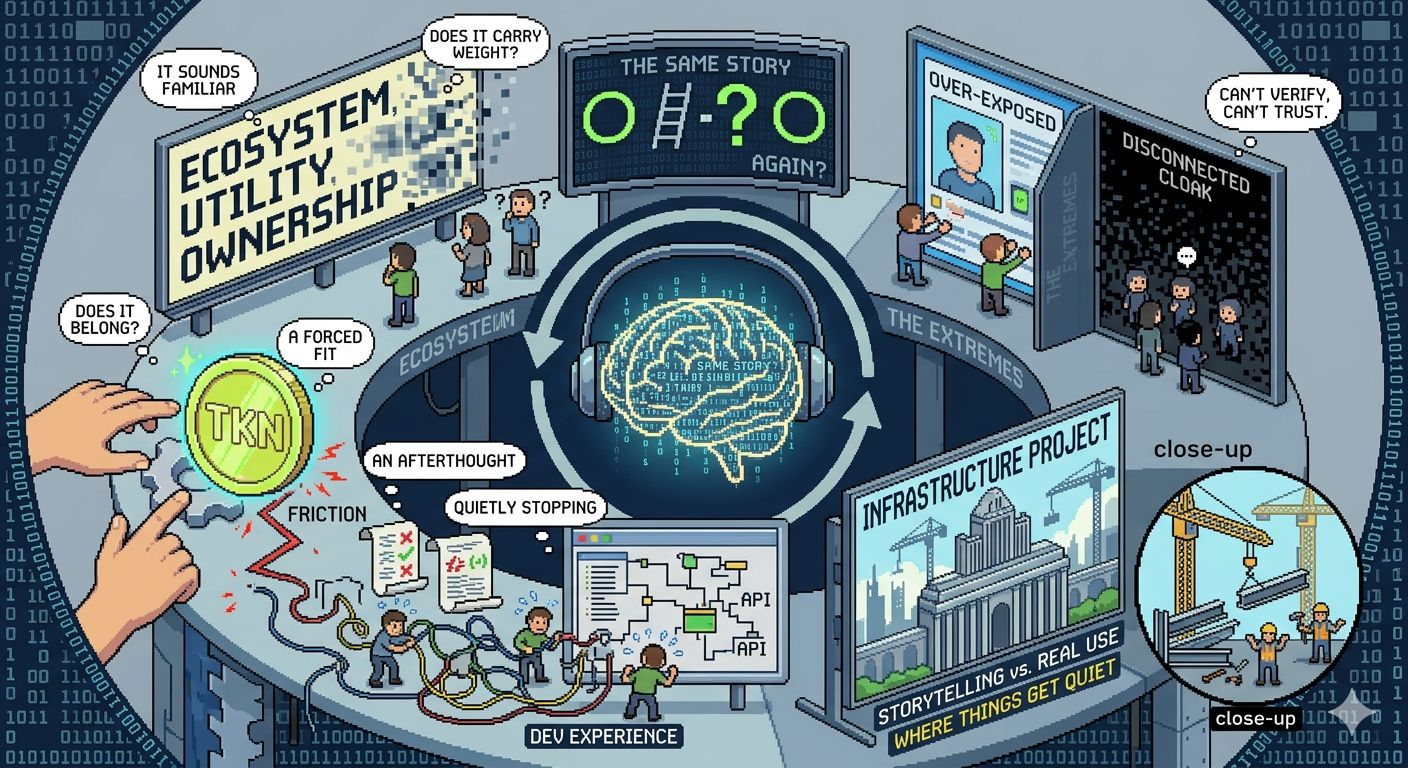
With Pixels, I notice how easily narratives start to blur together again. It begins with something that sounds fresh, but after a while it feels like I’m listening to echoes. Words like “ecosystem,” “utility,” “ownership,” they get repeated so often that they stop carrying weight. I catch myself wondering if I’m reacting to the idea itself or just to how familiar it feels. And that familiarity isn’t comforting anymore, it’s exhausting. It makes me question whether anything is actually changing or if we’re just getting better at rephrasing the same story.
What bothers me more when I think about Pixels is how the same trade-offs keep showing up, especially around privacy and transparency. I’ve never been comfortable with how often systems push me into choosing one over the other, as if balance isn’t even an option. Either I expose more than I should just to participate, or I retreat into something that claims to protect me but ends up breaking basic usability. And somehow, over time, too much exposure has started to feel normal. That’s the part I can’t shake. It shouldn’t feel normal.
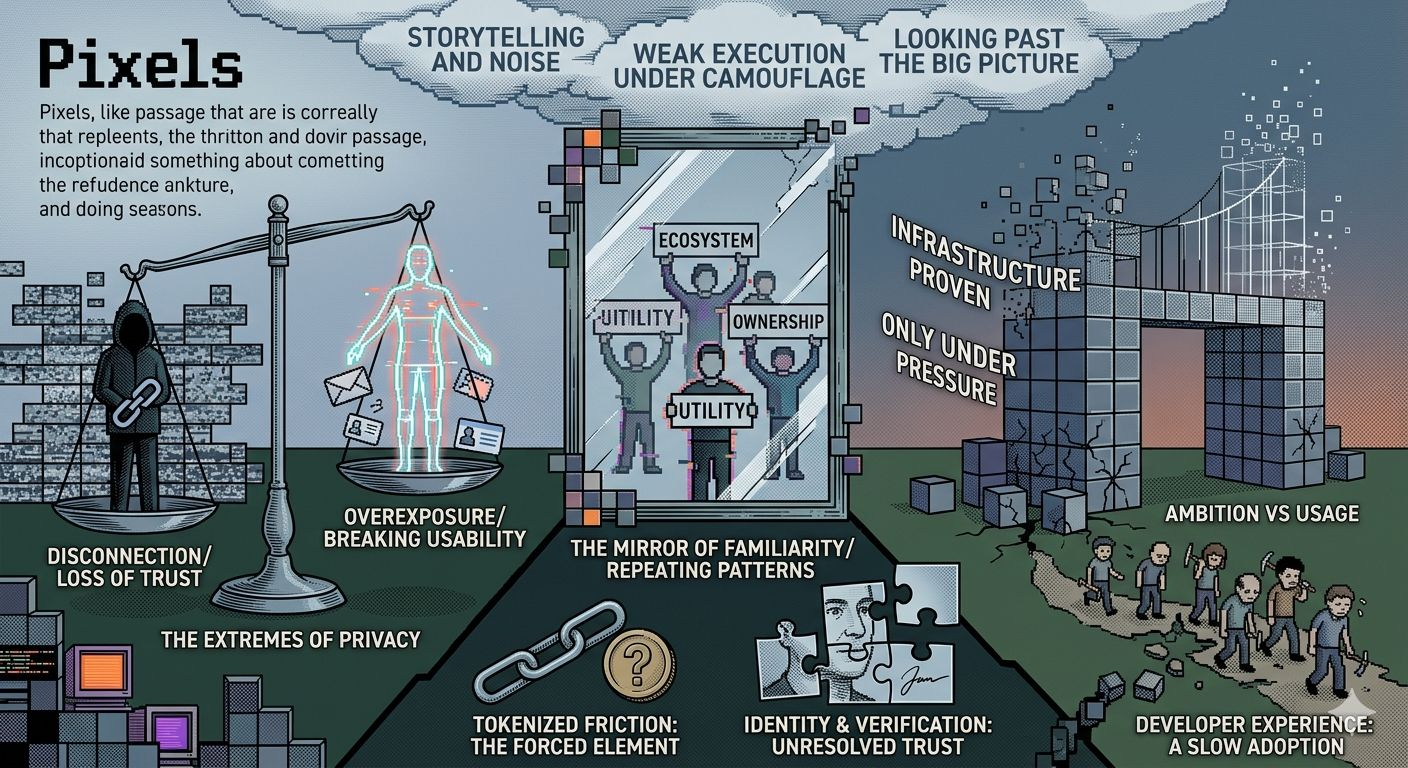
Then there’s the other side of it, where privacy solutions within Pixels and similar systems swing so far that they start to lose trust instead of building it. When I can’t see anything, can’t verify anything in a meaningful way, I don’t feel secure, I feel disconnected. It becomes harder to trust the system, not easier. And I keep thinking, why does it always have to be this extreme? Why does balance feel like the one thing no one actually manages to get right?
When I look deeper into Pixels, I keep noticing how much of it feels like it’s built for storytelling rather than for real use. It sounds good when you describe it. It looks good from a distance. But when I imagine real pressure, real usage at scale, I hesitate. I’ve seen too many systems that worked perfectly in theory but started to fall apart the moment people actually depended on them. Infrastructure always sounds convincing until it has to prove itself, and that’s usually where things get quiet.
Another thing that stays in the back of my mind with Pixels is how little attention is given to the developer experience. It’s strange because everything ultimately depends on it, yet it feels like an afterthought. If it’s difficult to build, difficult to maintain, difficult to experiment, then adoption slows down quietly. Not dramatically, not in a way that makes headlines, but slowly enough that people just stop showing up. And when that happens, no amount of narrative can cover it.
I also can’t ignore how the token side of Pixels keeps feeling forced at times. I try to understand where it truly fits, where it actually becomes necessary rather than just expected. But often it feels like something that was added because it had to be there, not because it naturally belonged. And when something feels forced, people sense it, even if they can’t explain it directly. It creates friction that’s hard to measure but easy to feel.
Then there’s identity and verification within Pixels, which still feel unresolved in a deeper way. I keep asking myself who or what I’m actually trusting in these systems. The answers are rarely clear. Identity feels fragmented, verification feels inconsistent, and trust ends up being more of a guess than a certainty. It’s strange because these are supposed to be foundational pieces, yet they still feel unstable.
What stands out the most to me with Pixels is the gap between ambition and actual usage. It never fully closes. The vision always seems a few steps ahead of reality, and I keep waiting for the moment when the two finally align. Sometimes it feels close, almost within reach. Other times it feels like the distance hasn’t changed at all, just the way it’s being described.
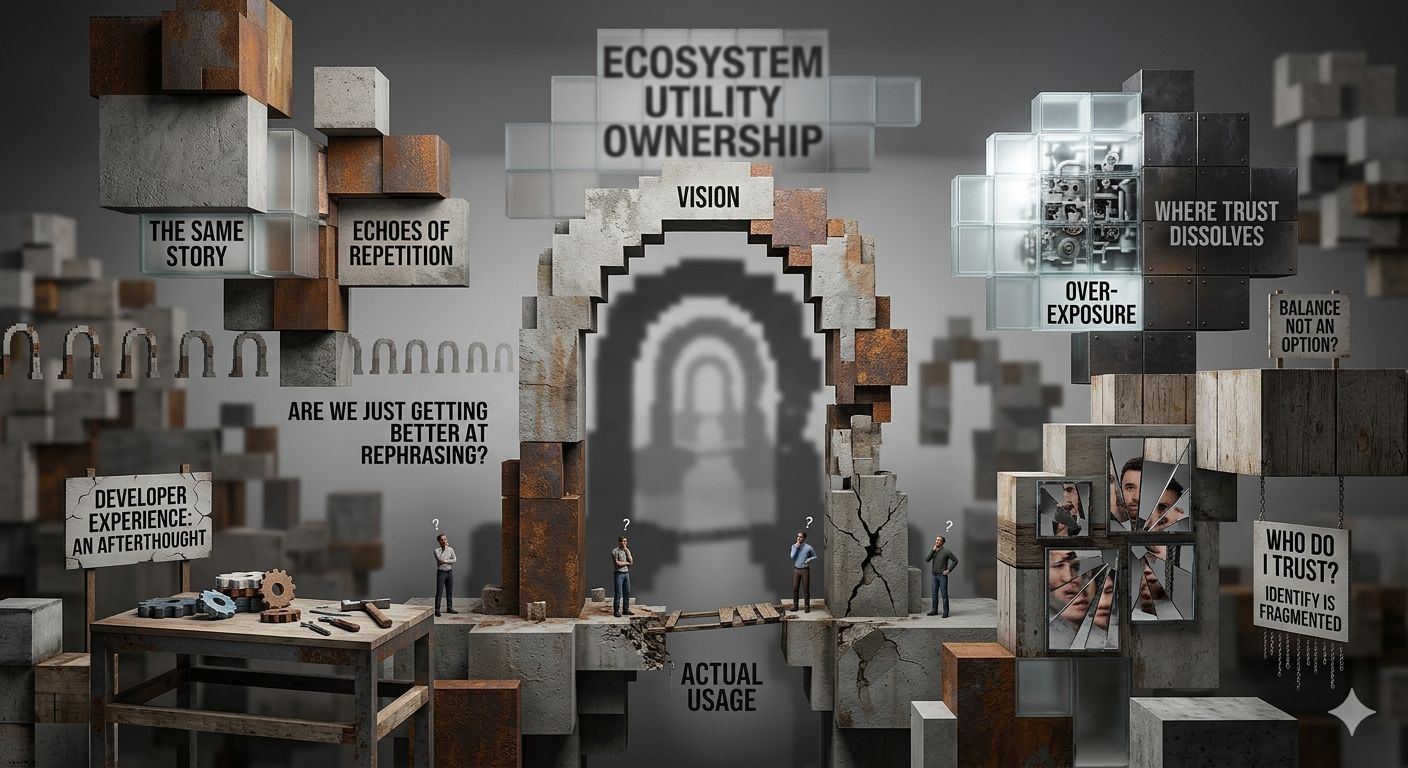
I’ve also started to notice how often big ideas in Pixels act as a kind of camouflage. They draw attention, they create excitement, but they also make it harder to see weak execution underneath. It’s not always intentional, but it happens. And over time, I’ve become more cautious. I find myself looking past the big picture and focusing on the small cracks, the points where things might actually break.
The market’s reaction to Pixels doesn’t help either. Noise keeps getting rewarded, and substance often goes unnoticed. It makes it harder to trust anything that looks too polished, too complete, too confident. I’ve learned to be wary of things that feel finished, because they rarely are. The real signals are usually quieter, harder to see, and far less appealing on the surface.
So when I think about Pixels now, I don’t feel convinced or dismissive. I feel somewhere in between. Observing, questioning, waiting. I’m not looking for promises anymore. I’m looking for breaking points, for moments where the system is forced to prove itself without the safety of narrative. And until I see that, I’ll probably keep circling back to the same thought: maybe it’s different this time, or maybe it just feels like it is.