
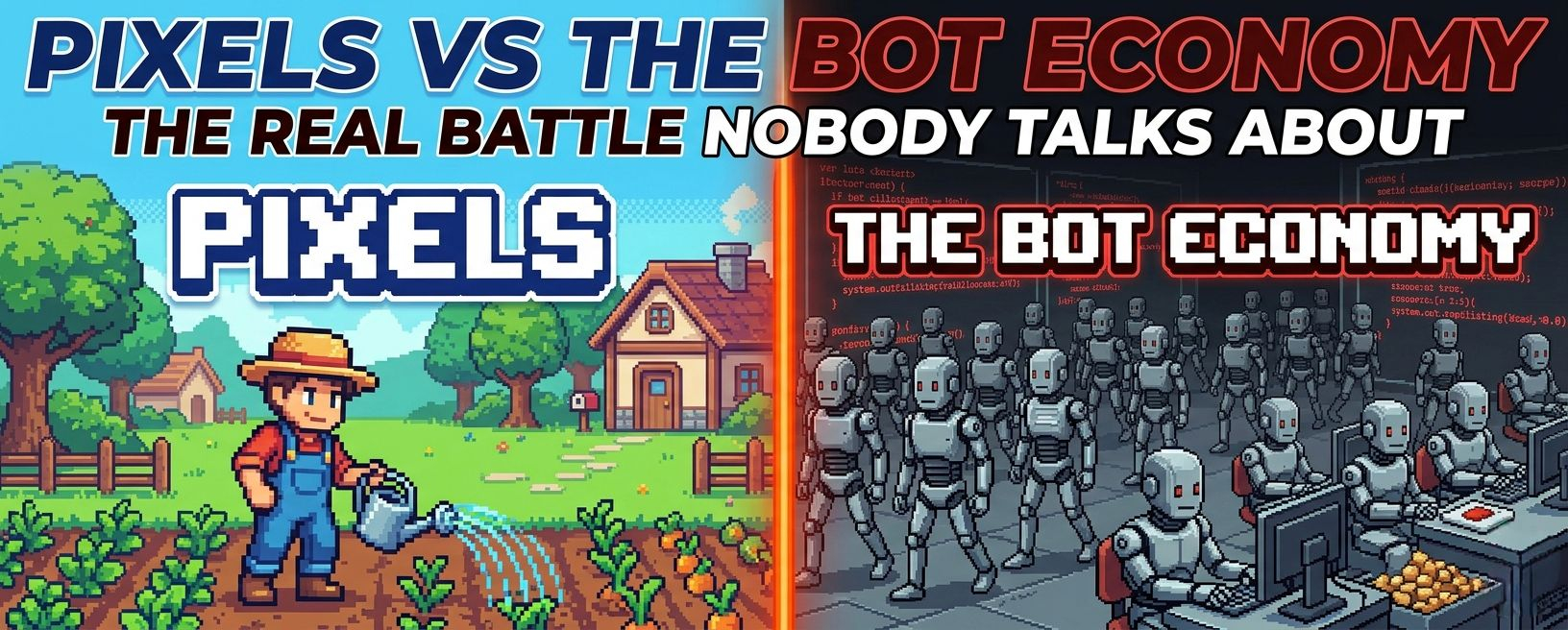

Alright… now this? This is where things stop being a game and start looking a little uncomfortable.
Because let’s be real for a second most of Web3 gaming right now isn’t a game economy. It’s a bot economy wearing a Halloween costume.
I’ve been around long enough to stop getting impressed by big DAU numbers. You see a chart go vertical, Twitter starts screaming “mass adoption,” and I’m just sitting there thinking… yeah, show me the wallets. Show me the behavior. Show me actual humans.
Nine times out of ten? It’s scripts.
Clean, efficient, industrial-level scripts quietly farming the system while everyone else celebrates “growth.”
I’ve literally watched this happen. Not theory. Not speculation. Real conversations, real setups. Studios running automation farms like it’s just another business line. Cheap scripts, rotating IPs, some randomness sprinkled in done. Incentive pools drained. Nobody notices until it’s too late.
And that’s the part people don’t talk about enough.
The entire reward layer in Web3? It’s been rotting for a while. From the inside.
You look at platforms like Galxe or Beam Hub trying to stitch together cross-game narratives, and honestly… it feels fragile. Not in a dramatic way. Just structurally weak. Like paper walls against something that’s already evolved past basic defenses.
I tested this stuff myself. Nothing fancy. No AI magic. Just simple automation with a bit of noise for k timing variation, IP rotation, fake “hesitation.” That’s it.
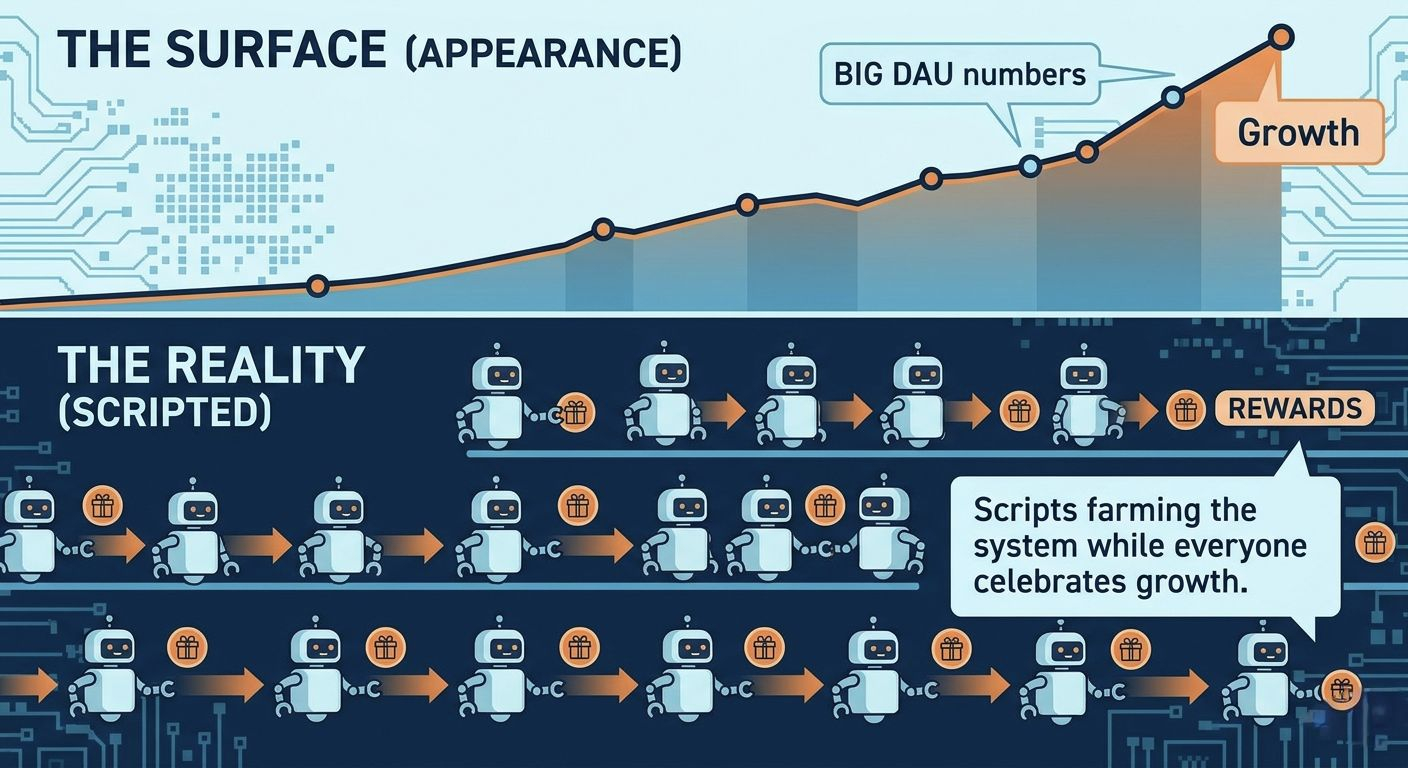
The backend numbers? Straight up.
Vertical.
That’s when it clicks. We’re not rewarding users. We’re feeding bots. At scale.
So when Pixels comes in talking about “behavioral entropy,” yeah… I didn’t clap. I squinted.
Because I’ve seen fancy terms before. This space loves dressing up weak ideas in strong language.
But this is where it gets interesting.
I actually dug into what they’re doing. Looked at transaction data we’re talking 200 million+ interactions over months and then traced how their newer systems, especially this Stacked engine tied into Dungeons, actually behave.
And I’ll say it straight.
This isn’t surface-level defense.
Most systems ask: what did you do?
Pixels asks: how did you do it?
That’s a completely different game.
And it sounds subtle until you really think about it.
Scripts today aren’t dumb. They don’t just spam clicks anymore. They mimic humans. They move the cursor with curves, they pause randomly, they simulate “thinking.” Honestly, it’s creepy how good they’ve gotten.
But here’s the flaw. And it’s a big one.
They still optimize.
Always.
They chase the most efficient path because that’s what code does. It minimizes waste. It cuts randomness down to controlled noise.
Real humans? We’re messy.
We hesitate. We make bad moves. We explore things that don’t matter. We double back for no reason. We click the wrong thing and sit there for a second like… wait, what was I doing?
That chaos that’s the fingerprint.
And Pixels leans into that hard.
Inside something like their Dungeons system, every little decision matters. Timing, pathing, reaction delays, even pointless actions. The system builds a behavioral profile that’s nonlinear, layered, and honestly kind of brutal.
If you move too cleanly? Too efficiently? Too perfectly aligned with the “optimal” route?
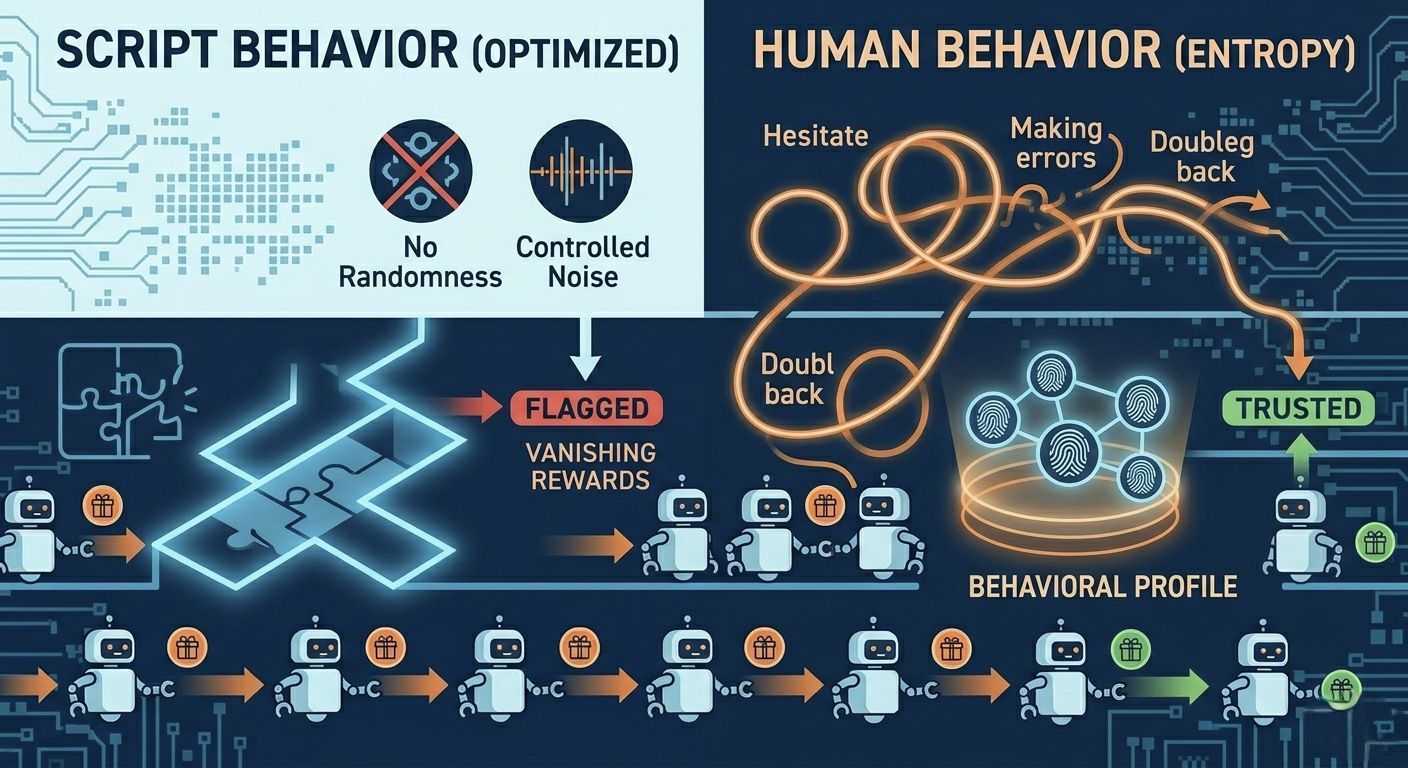
You don’t look smart.
You look fake.
And the system treats you like it.
Credit drops. Rewards vanish. In some cases, you’re basically invisible.
It’s ruthless. I respect that.
It reminds me of something outside crypto, actually — supply chain tracking. In real logistics, you don’t fake authenticity with documents. You prove it with messy, timestamped, real-world activity across a long chain. Small errors. Delays. Human fingerprints everywhere.
Pixels basically turns that idea into on-chain behavior.
That’s not a gimmick. That’s a shift.
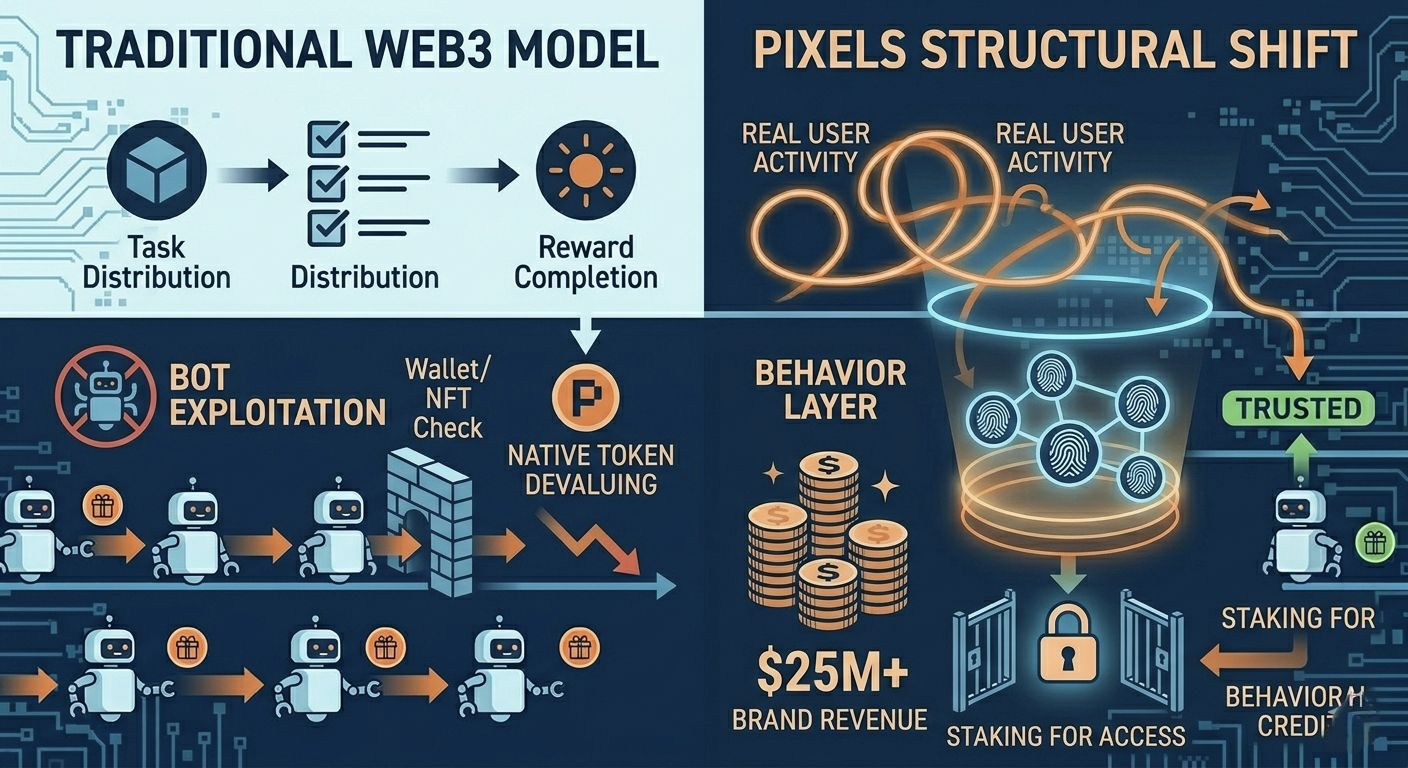
Now, compare that to something like Galxe. I’m not even trying to be harsh here — it just operates at a different depth. It distributes tasks, checks boxes, rewards completion. But if you bring enough wallets and social accounts, you can still run through it like a machine.
Because it doesn’t see behavior deeply enough.
Same with Beam Hub trying to connect multiple games. Cool idea. I get the vision. But if each game acts like a black box, and verification stays at the level of “does this wallet hold X NFT,” then yeah… attackers will route around it. Easily.
Wallet splitting. Asset cycling. Done.
Pixels doesn’t play that game.
It goes straight into the ground layer. Behavior itself.
And here’s where things get a bit wild — the revenue side.
They’ve pulled in around $25 million internally. And no, that’s not just token speculation or retail getting chopped up. That’s actual spend. Brands. Advertisers. Real budgets.
That matters more than any hype cycle.
Because brands don’t care about your DAU screenshots. They care about real users who might actually buy something.
If Pixels can prove that its system filters out bots and surfaces real humans consistently, then yeah… that becomes sticky. Very sticky.
Now you’re not just a game. You’re infrastructure.
And that changes how the token behaves too.
PIXEL isn’t just a reward anymore. It starts acting like access.
You want into higher-yield tasks? Stake.
You want better opportunities? Build behavioral credit.
You dump your tokens for a quick flip? Cool… but now your access drops. Your “reputation” weakens. You might not even qualify for the good stuff later.
That loop — that’s dangerous in a good way.
It creates friction against mindless selling. Finally.
But let’s not get carried away.
This is still a cat-and-mouse game.
What happens when studios start designing scripts specifically to mimic behavioral entropy? What if they mix automation with real human input at key moments? What if they just throw more money at the problem?
Yeah. That’s coming.
No system stays unbeatable.
MN pp
But I’ll give Pixels this — they’re fighting the right war.
They’re not patching holes. They’re changing the battlefield. No
And honestly, I respect the attitude. It’s cold. It’s strict. It doesn’t try to please everyone. People who rely on zero-cost farming? They’re going to hate it. Good.
Clear them out.
Because what we had before? Script-to-earn. Not play-to-earn. Not even close.
Just bots fighting bots while humans watched from the sidelines.
Pixels is trying to drag it back to something real. Real effort. Real participation. Real rewards.
Does it fully work yet?
I’ll be honest… I’m still watching.
I’m digging through SDK docs, looking for cracks, checking retention, waiting to see if this system actually holds under pressure. I don’t trust narratives anymore. I trust stress.
But even with that skepticism, I can’t ignore this:
Most projects in this space talk.
Pixels builds, tests, and cuts.
Quietly.
And that alone makes it stand out in a market full of noise.
So yeah — if you’re still staring at K-lines trying to guess the future, you’re probably looking in the wrong place.
Watch the behavior layer instead.
Watch how aggressively they filter low-quality traffic.
Watch whether real users actually stick.
Because in a world where code runs everything, only behavior that survives scrutiny has any value.
Everything else?
Just noise pretending to be growth.
