Gaming isn’t what it used to be—and that’s a good thing. With the rise of blockchain technology and NFTs, players are no longer just spending money for entertainment; they’re stepping into worlds where their time and effort can actually hold real value. Pixel Network–style platforms are right at the heart of this shift, blending nostalgic pixel-art gameplay with cutting-edge digital ownership.
So, What Is Pixel Network?
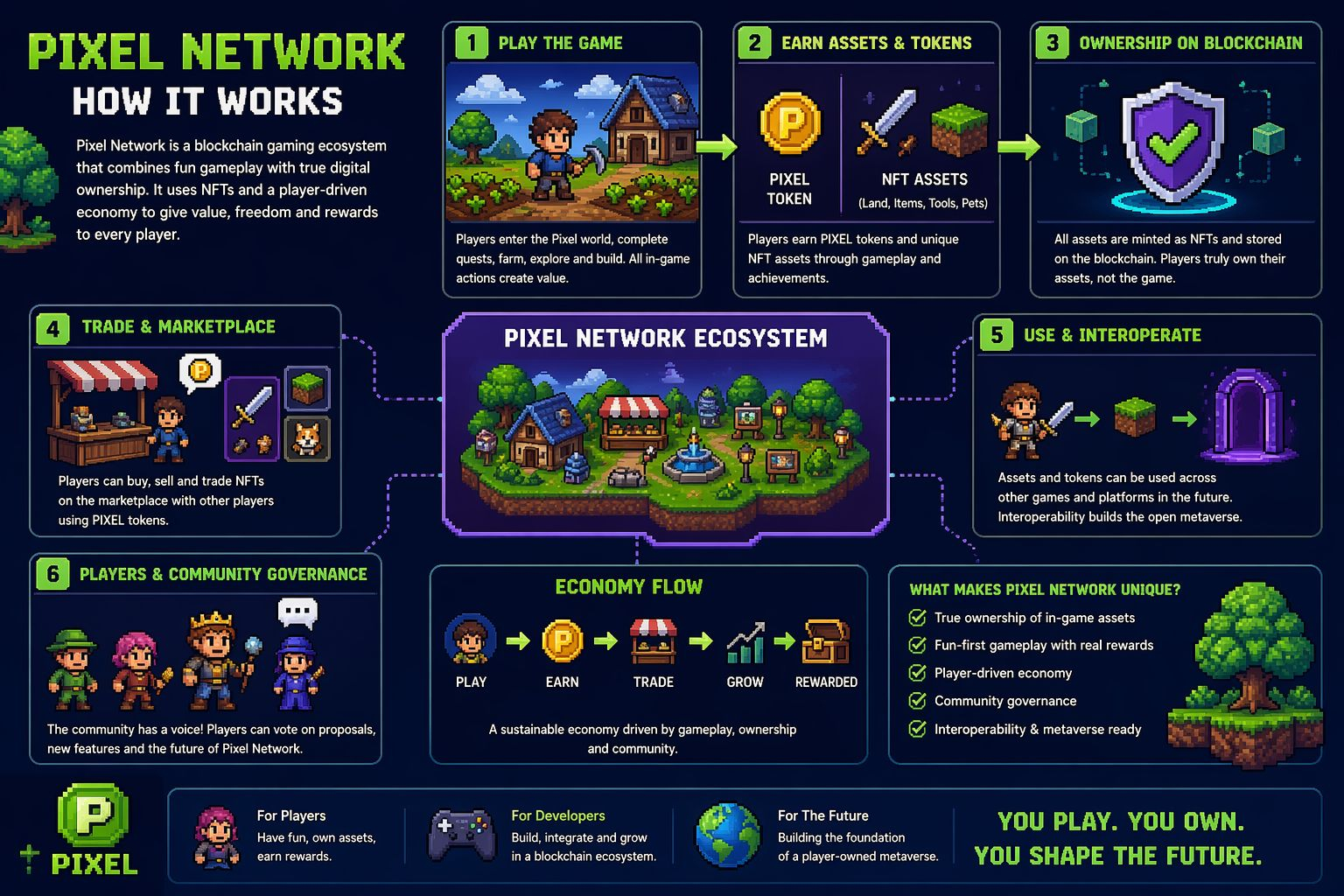
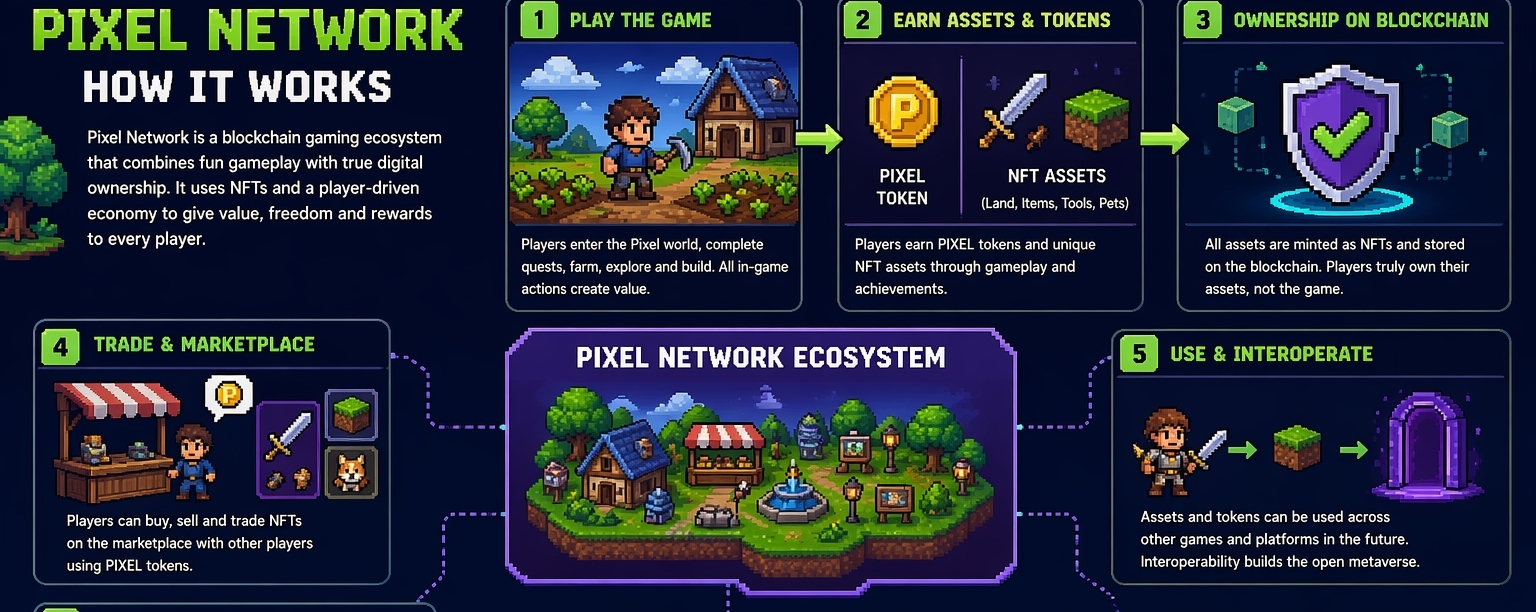
Think of @Pixels Network as a new kind of gaming ecosystem where everything you earn or build can truly belong to you. Games like Pixels are great examples. Instead of your items being locked inside a company’s servers, they exist as NFTs on the blockchain.
That means your in-game land, tools, or collectibles aren’t just “game items”—they’re digital assets you can trade, sell, or keep as long as you want. It’s a simple idea, but it completely changes the relationship between players and games.
Real Ownership, Finally
If you’ve ever spent hours grinding for a rare item in a traditional game, you know the frustration—you don’t actually own it. If the game shuts down, it’s gone.
Pixel Network flips that idea on its head. By turning items into NFTs, players gain real ownership. Your progress isn’t just saved; it’s secured on the blockchain. This creates a sense of permanence and value that traditional games simply can’t offer.
More Than Just “Play-to-Earn”
You’ve probably heard of play-to-earn gaming, where players earn tokens while playing. Pixel ecosystems use tokens like PIXEL to reward users—but here’s the twist: the focus is shifting.
Early NFT games often felt more like financial tools than actual games. Pixel Network is part of a new wave that puts fun first. Earning is still there, but it’s built around engaging gameplay rather than hype or speculation. That balance is key to long-term success.
Powered by Community
Another thing that makes Pixel Network stand out is its strong community focus. These aren’t just games you play—they’re worlds you help shape. Players can trade, collaborate, and even influence how the game evolves over time.
This creates a living, breathing ecosystem where the community has real input. It’s less about developers controlling everything and more about players becoming part of the experience.
Building Toward the Metaverse
Pixel Network also plays a role in the bigger picture: the metaverse. The idea is simple but powerful—your digital identity and assets shouldn’t be stuck in one game.
In the future, you might use the same character, items, or currency across multiple platforms. Pixel-based systems are helping lay the groundwork for that kind of interconnected digital world.
Challenges Still Exist
Of course, it’s not all smooth sailing. NFT gaming still faces issues like market ups and downs, scalability, and making sure rewards are fair for everyone—not just early adopters.
But these challenges aren’t roadblocks; they’re part of the growing process. As the technology improves, so will the experience.
The Bottom Line
Pixel Network represents where gaming is headed: toward ownership, freedom, and community-driven experiences. It’s turning players into participants—and even stakeholders—in the worlds they love.
As NFT gaming continues to evolve, Pixel-style ecosystems could become a major piece of the puzzle, shaping a future where gaming is not just something you play, but something you truly own.