
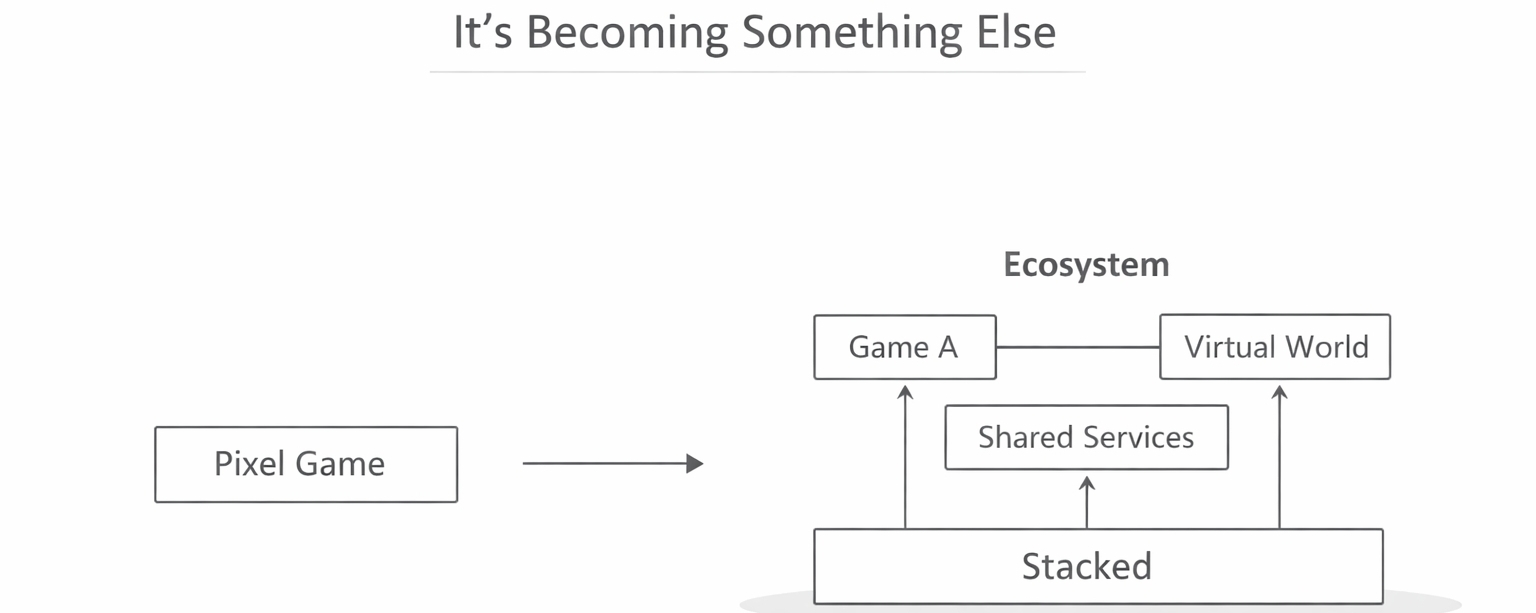
I didn't notice it happening gradually.
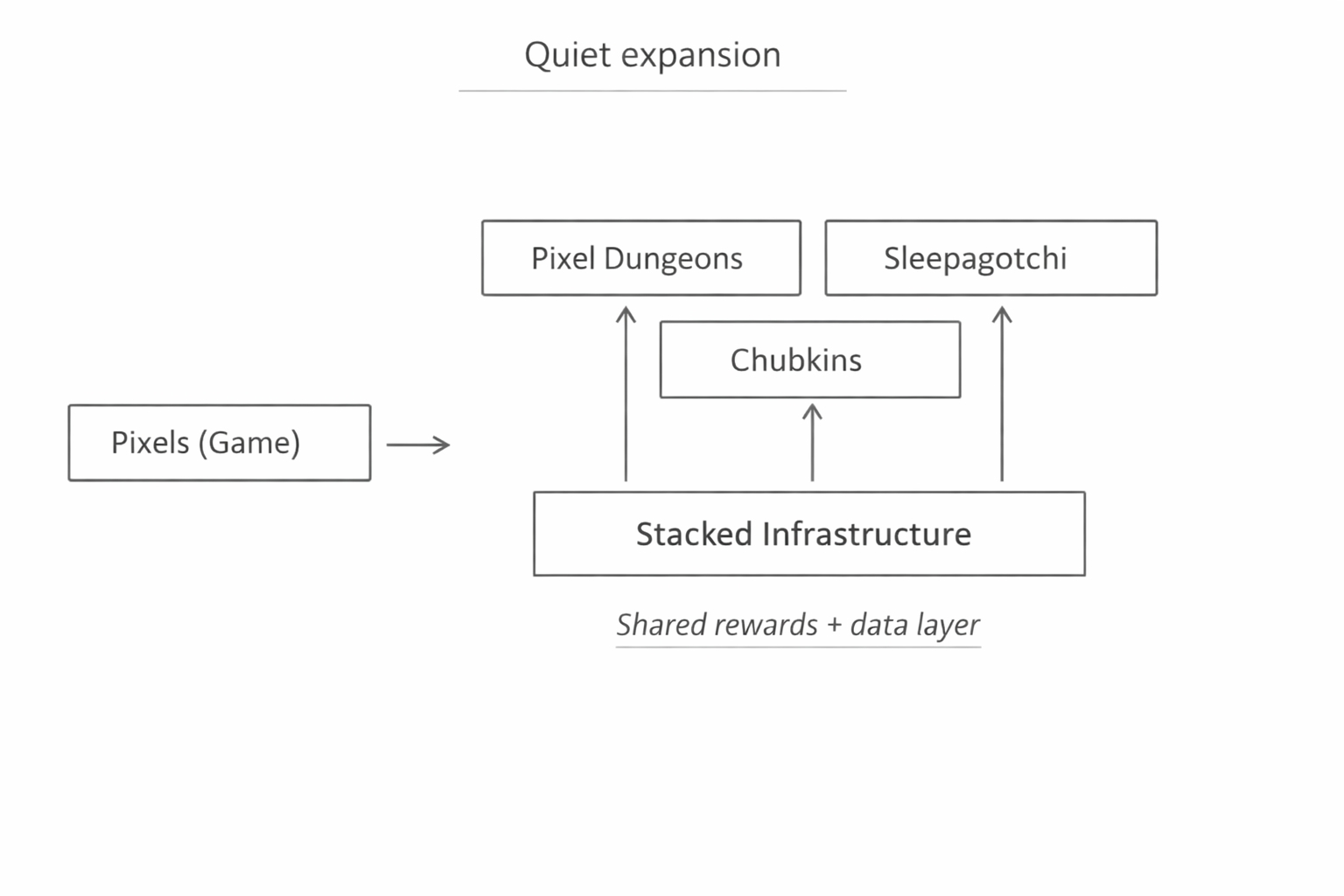
One day Pixels was a farming game on Ronin. Then Pixel Dungeons appeared. Then Sleepagotchi. Then Chubkins. Then Stacked sitting underneath all of them as a shared layer. The ecosystem kept getting wider without making much noise about it. No grand announcements. No rebrand. Just more things appearing that were clearly connected to each other in ways that took time to understand.
That pattern of quiet expansion is what I've been sitting with.
Because most Web3 projects expand loudly. Partnerships get announced with fanfare. New chains get added with breathless threads. Ecosystem growth gets measured in press releases. The expansion is always the story. The infrastructure underneath the expansion rarely is.
Pixels feels inverted from that.
The infrastructure appeared first. The staking system that lets $PIXEL flow between games. The behavioral data layer that tracks player patterns across the ecosystem. The reward targeting that can deploy incentives to specific players at specific moments regardless of which game they're inside. All of that existed and was being refined before most people understood what it was being built for.
The expansion is just the infrastructure finding more surfaces to run on.
That inversion changes how I read every new game that joins the Pixels ecosystem. Most coverage treats each addition as a content announcement. New game available. New ways to earn. New players coming in. That reading is not wrong but it misses what is actually accumulating underneath.
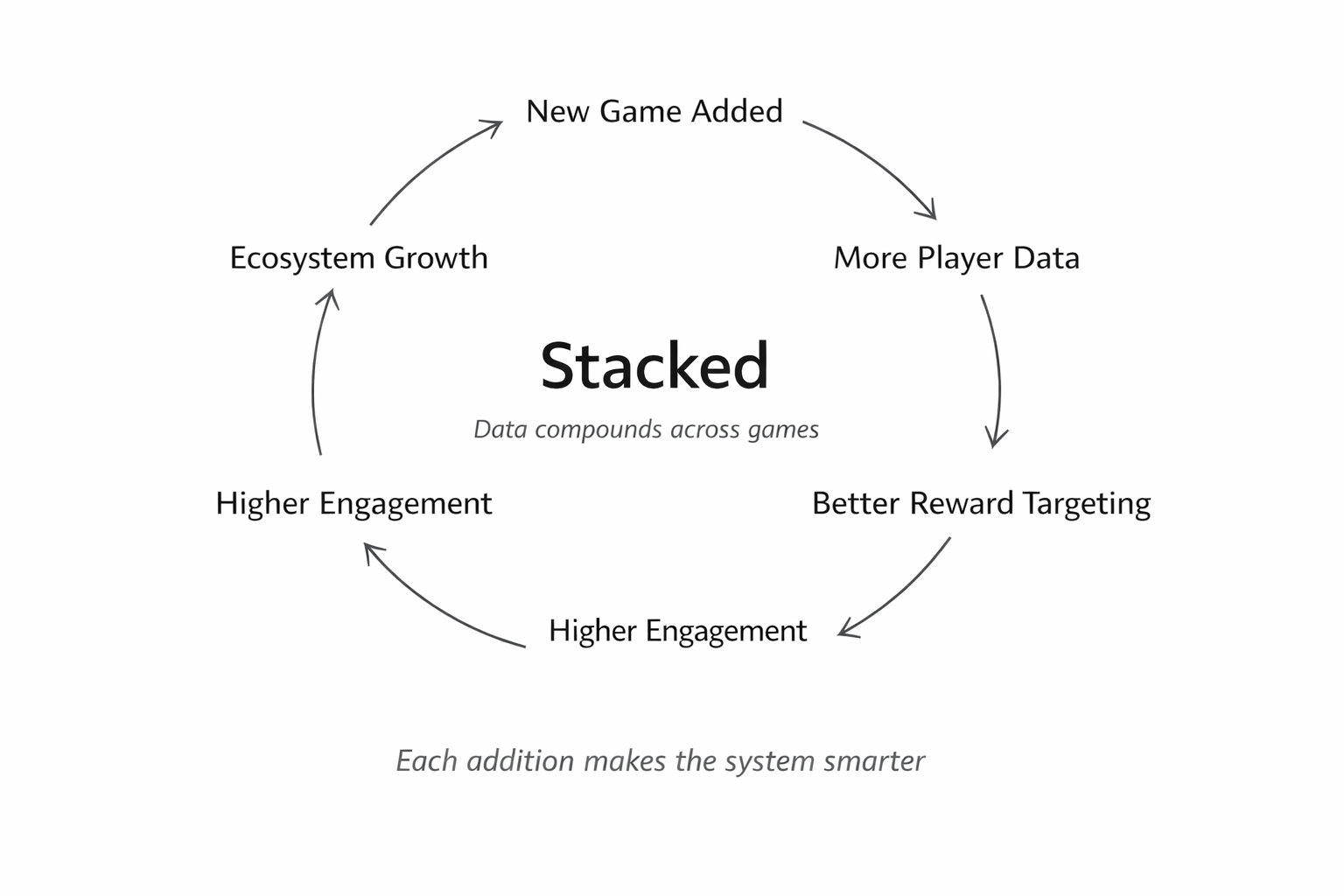
Every game that plugs into Stacked adds behavioral data the system didn't have before. Different player types. Different engagement patterns. Different churn profiles. Different responses to different reward types. That data doesn't just serve the new game. It sharpens the entire targeting layer for every game already in the ecosystem.
So each addition makes the whole system smarter. Not linearly. Compoundingly.
I kept thinking about something outside gaming while sitting with this. Early internet platforms that survived long enough to become infrastructure all went through a similar transition. They started as products. Specific things you used for specific purposes. Then quietly, without announcing it, they became the layer that other products were built on. The transition was never a single moment. It was an accumulation of decisions that only looked inevitable in retrospect.
Pixels doesn't look like infrastructure yet to most people watching it.
It still looks like a farming game with a token and some partner titles.
But the staking system directing resources between games, the behavioral data flowing across titles, the reward targeting operating at the ecosystem level rather than the individual game level — that is not a game with partners. That is something closer to a publishing layer with games as its first tenants.
And PIXEL sits differently inside a publishing layer than it sits inside a single game.
Inside a single game, PIXEL competes with every other game token for the same pool of player attention. Its value is bounded by how many people want to play that specific game. When the game loses players, the token loses value. When the game gains players, the token gains value. The relationship is direct and fragile.
Inside a publishing layer, PIXEL's relationship to player attention changes. It's no longer tied to one game's retention curve. It's tied to the health of the entire system running underneath multiple games. A player who migrates from Pixels to Pixel Dungeons to Sleepagotchi doesn't leave the PIXEL ecosystem. They move deeper into it. Their staking decisions follow them. Their behavioral data follows them. Their reward eligibility follows them.
The token travels with the player across the ecosystem rather than being left behind when the player moves on.
That is a structural difference that most PIXEL analysis hasn't fully priced in.
I'm not certain this transition is complete. Ecosystems that describe themselves as infrastructure before they've achieved infrastructure scale have a long history of overpromising. The gap between architecture on paper and architecture that actually holds weight under real conditions is where most of these stories end badly.
But the data points that do exist are unusual. 200 million rewards processed not across one game but across a growing ecosystem. $25 million in revenue generated from systems that were already operating at the infrastructure level inside Pixels before Stacked was positioned externally. A staking system that crossed 100 million tokens within weeks not because of aggressive incentives but because the ecosystem gave players genuine reasons to direct their stake somewhere specific.
Those numbers don't prove the transition is complete.
They suggest it started earlier than most people realized.
And PIXEL might be further along the path from game token to ecosystem currency than the price chart currently reflects.
That gap between what something is becoming and what the market currently thinks it is — that's usually where the most interesting things are hiding.