

The PIXEL campaign on Binance is becoming interesting not just because of rewards or hype, but because it shows a deeper problem in Web3 gaming that most people still don’t notice.
Today, many Web3 games and reward systems look active on the surface—high daily users, fast activity, and growing numbers. But the real question is: how much of this activity is actually done by real humans?
In many cases, a large part of activity is no longer only human. Bots and automatic scripts have become very advanced. They don’t just do simple actions anymore—they act like humans, including delays, random clicks, changing IPs, and natural-looking interaction patterns.
This creates a big problem for reward systems. When a system only checks “task done = reward given,” it becomes easy to abuse. Bots can do more work than humans at scale, which slowly reduces fairness and real value in the system.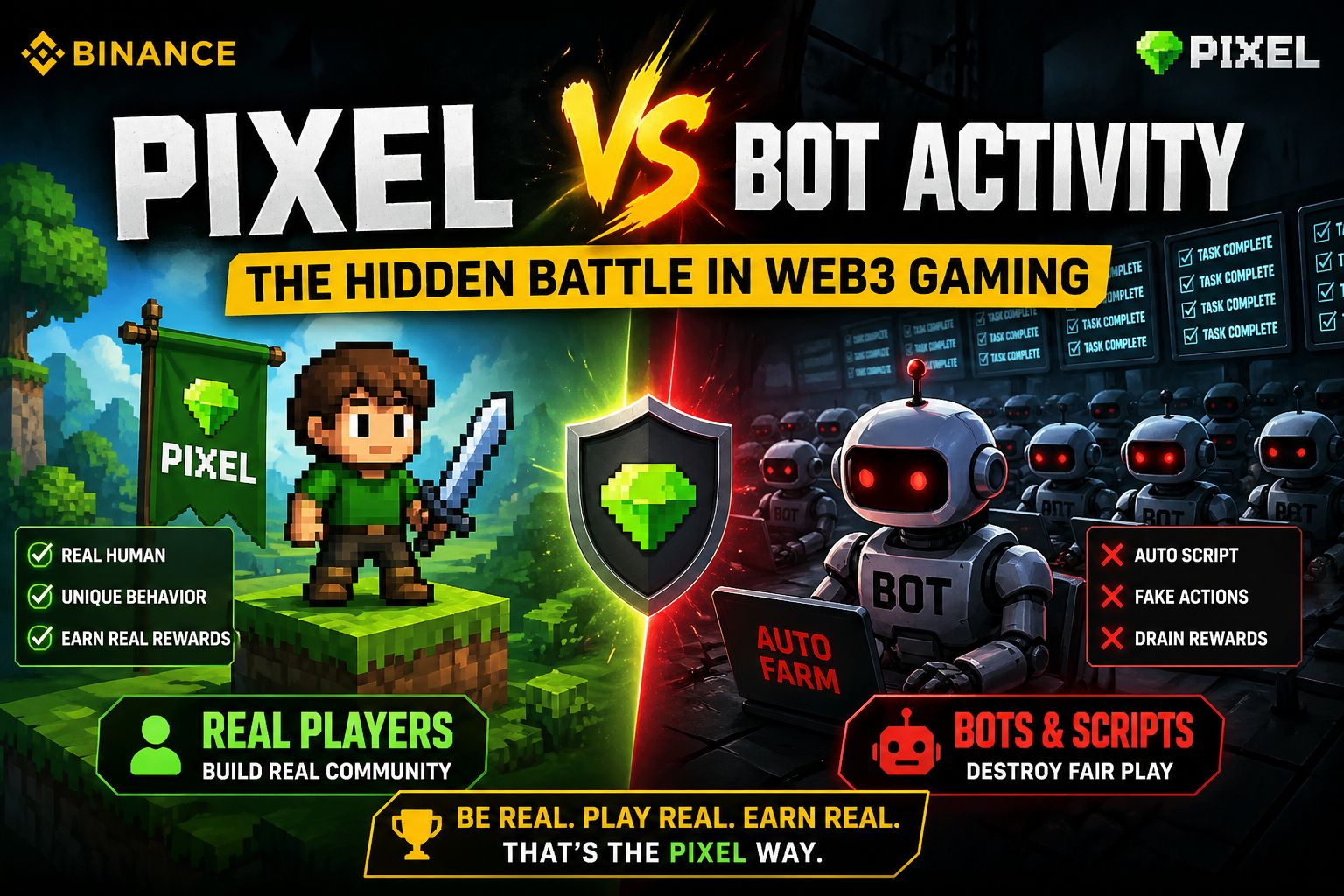
This is where PIXEL on Binance becomes interesting.
Instead of only focusing on task completion, the idea around PIXEL is moving toward behavior-based activity. That means the system doesn’t just look at what you do, but also how you do it.
Real users are not always perfect. Human behavior naturally includes waiting, timing changes, random decisions, and small mistakes. These patterns create a kind of personal behavior identity.
Advanced systems can use these signals to tell the difference between real users and automated activity. This approach is important because it makes cheating harder and improves real participation quality.
From a campaign point of view, this also makes engagement more real. Instead of farming rewards using bots, real users who actually take part become more valuable in the system.
Another important point is long-term stability. If Web3 gaming wants to grow for a long time, it cannot depend only on fake or inflated activity numbers. It needs real users, real behavior, and real interaction. Otherwise, reward systems lose value over time.
PIXEL’s approach in this Binance campaign shows a shift toward more real participation instead of simple task-based activity. If systems can successfully separate real behavior from bot activity, it can change the whole reward system structure.
Of course, this is still developing. Bots will keep improving, and systems will also keep improving to stop them. It is an ongoing competition between automation and real human activity.
But one thing is clear: the future of Web3 gaming will not only be about rewards or tokens—it will be about who is real and who is not inside the system.
And that is why this PIXEL campaign is getting attention. It is not just a normal task campaign—it is part of a bigger experiment to build better and cleaner systems.
