I came across Pixels on a day when nothing in the market felt convincing.
You know the kind of day. Charts moving, narratives pretending to form, CT acting like something big is happening when it’s mostly just rotation. AI had already done its thing for now, restaking conversations were getting a bit recycled, and RWAs were being pushed again like they’d suddenly fix everything. It didn’t feel like conviction. It felt like capital looking for somewhere to sit without committing.
That’s usually when I start paying attention to the quieter corners.
Pixels wasn’t trending. No aggressive threads, no “this will change gaming forever” energy. Just a steady presence. People playing. Not speculating. Actually playing. That alone was enough to make me pause, because in this market, attention is expensive. Time even more so.
So I opened it, not expecting much.
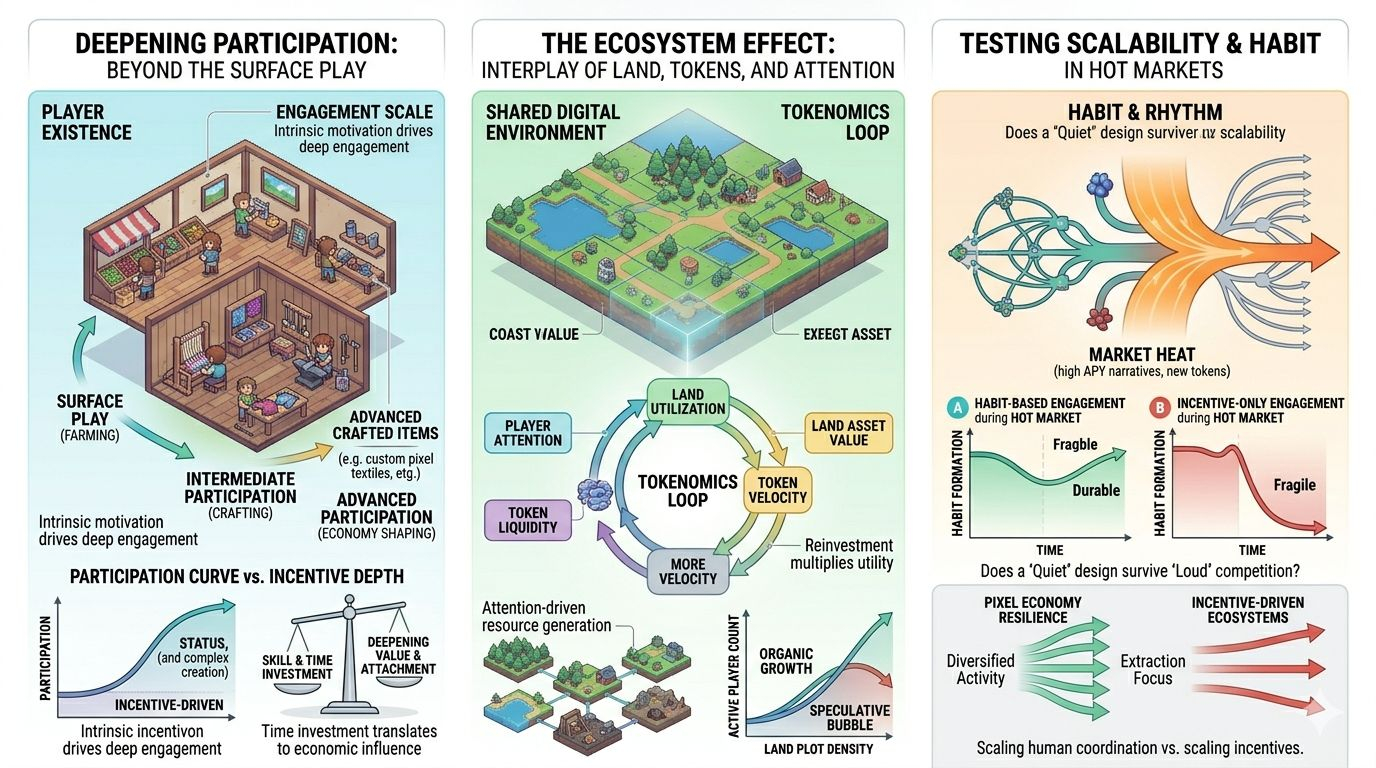
At first, it almost felt too basic. Farming, collecting, moving around a pixelated world. It didn’t try to overwhelm me with mechanics or impress me with complexity. And honestly, that made me suspicious. Crypto products usually try too hard. They front-load everything vision, tech, tokenomics before you’ve even had a chance to care.
Pixels does the opposite. It lets you exist in it first.
Then slowly, you start noticing what’s underneath.
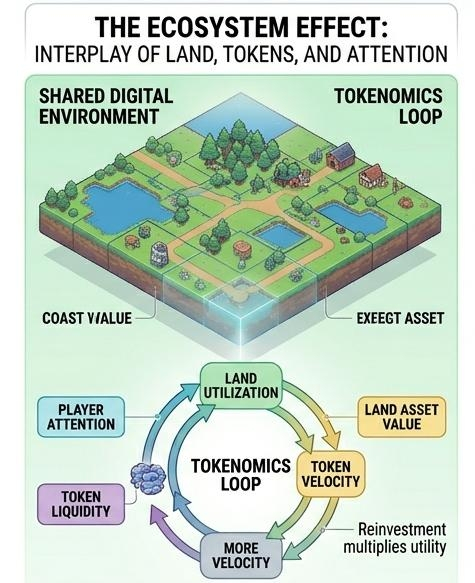
The items you collect aren’t just sitting in a closed system. They exist beyond the game. The world isn’t entirely controlled in the usual top-down way. There’s a shared layer to it players interacting, shaping small parts of the economy, moving resources around in a way that actually matters.
And that’s when it stops feeling like just a game.
What it’s really trying to do is coordinate people, assets, and activity without relying completely on a central authority. That sounds like something we’ve heard a hundred times in crypto, but here it’s quieter. Less ideological, more practical.
You don’t think about decentralization while you’re playing. But it’s there, shaping the experience.
And right now, that kind of design matters more than people admit.
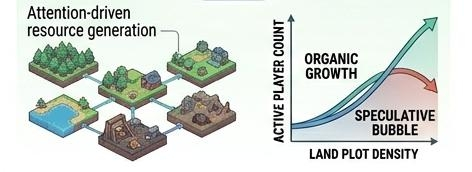
Because the market has shifted. It’s not enough to have a token and a narrative anymore. We’ve seen too many systems that rely purely on incentives. Liquidity flows in, extracts value, and moves on. There’s no stickiness. No reason to stay once the yield compresses.
Pixels is clearly trying to solve that. Not perfectly, but intentionally.
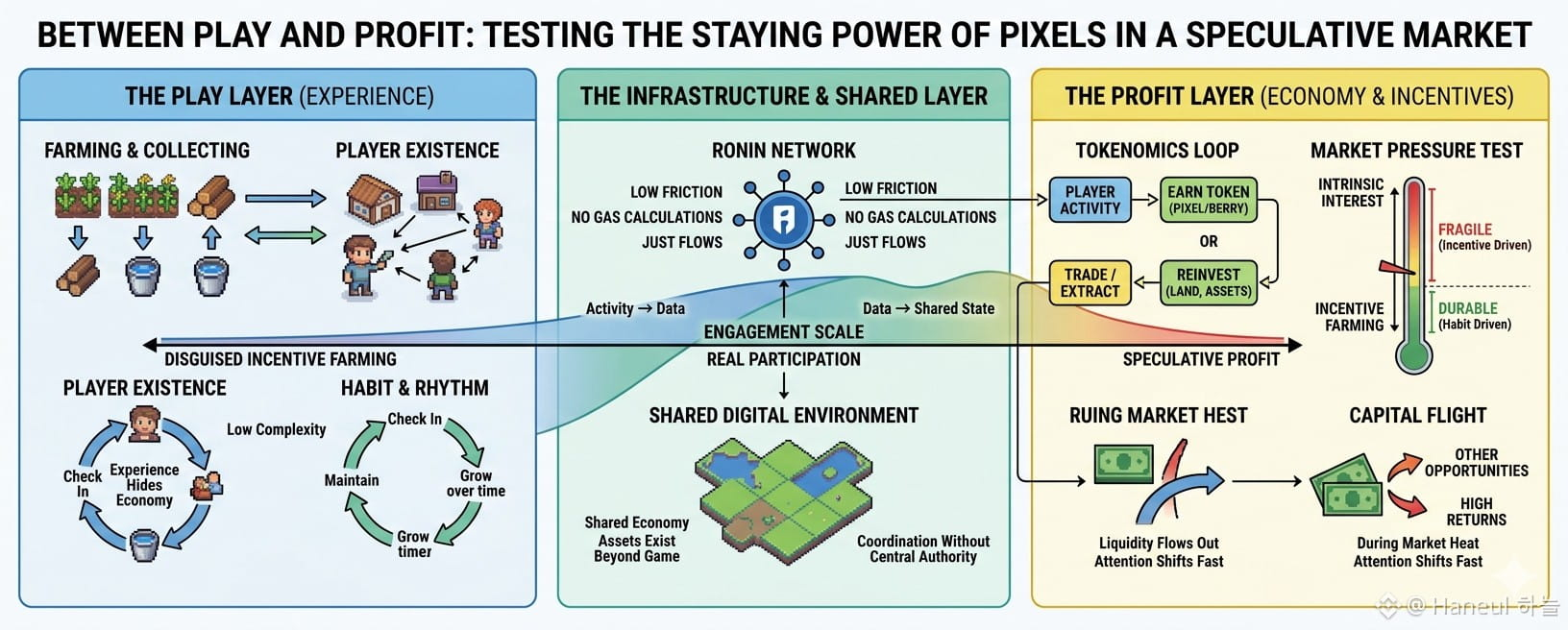
The way it works is simple enough. There’s a token. You earn through activity. You spend, trade, maybe reinvest into assets or land. It’s an economy, but a lightweight one. Not overwhelming. Not over-engineered.
The difference is in how it’s presented.
Most Web3 games make the economy the main attraction. Pixels hides it behind the experience. You can engage with it deeply, or barely think about it at all. That flexibility is rare.
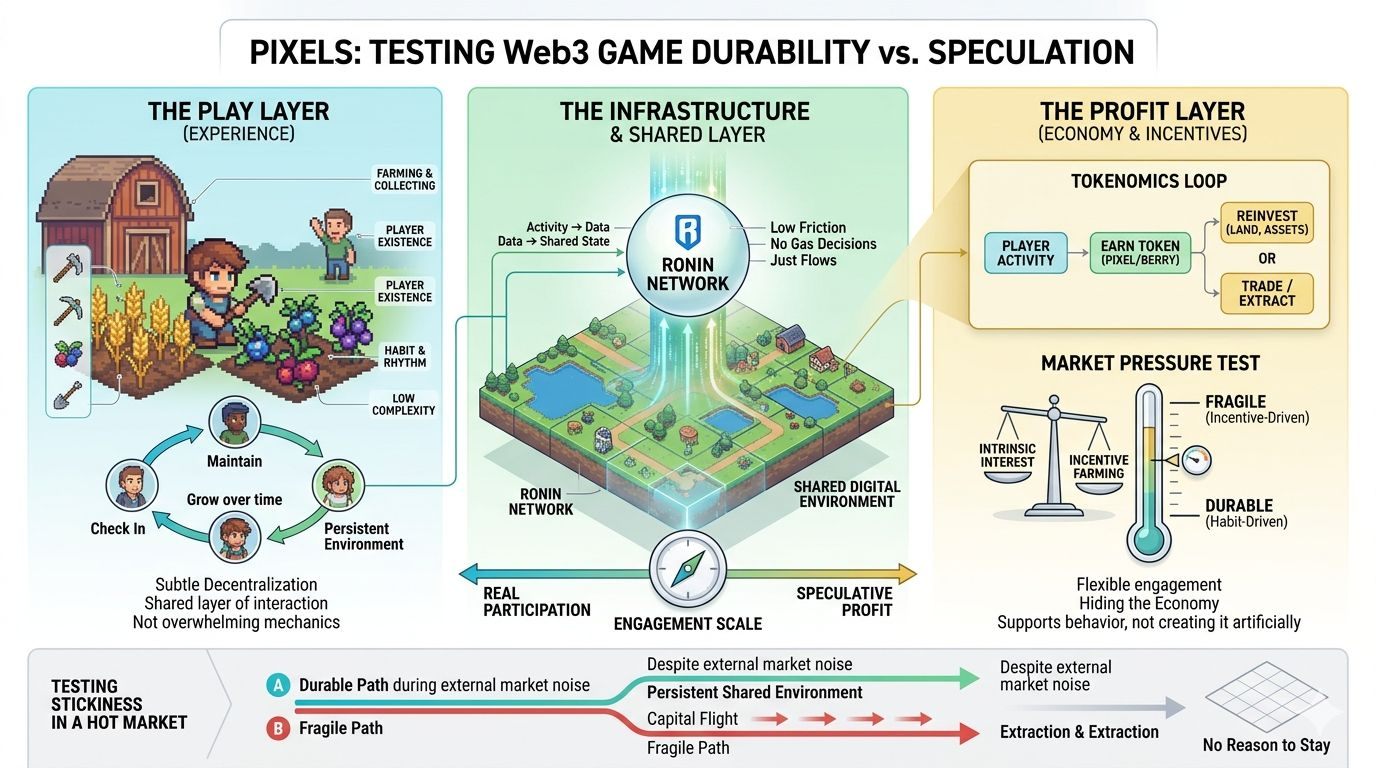
And the choice of infrastructure matters too. Running on Ronin isn’t just a technical detail. It removes friction. Transactions don’t feel like decisions. You’re not constantly calculating gas costs or waiting for confirmations. It just flows.
That’s a bigger deal than it sounds. Most crypto applications still haven’t figured that part out.
But I keep coming back to the same tension.
Is this engagement real or just well-disguised incentive farming?
Because the activity is there. You can feel it. People are spending time, not just clicking through tasks. But incentives are still part of the system. They always are. The question is whether they’re supporting behavior or creating it artificially.
And that line is thin.
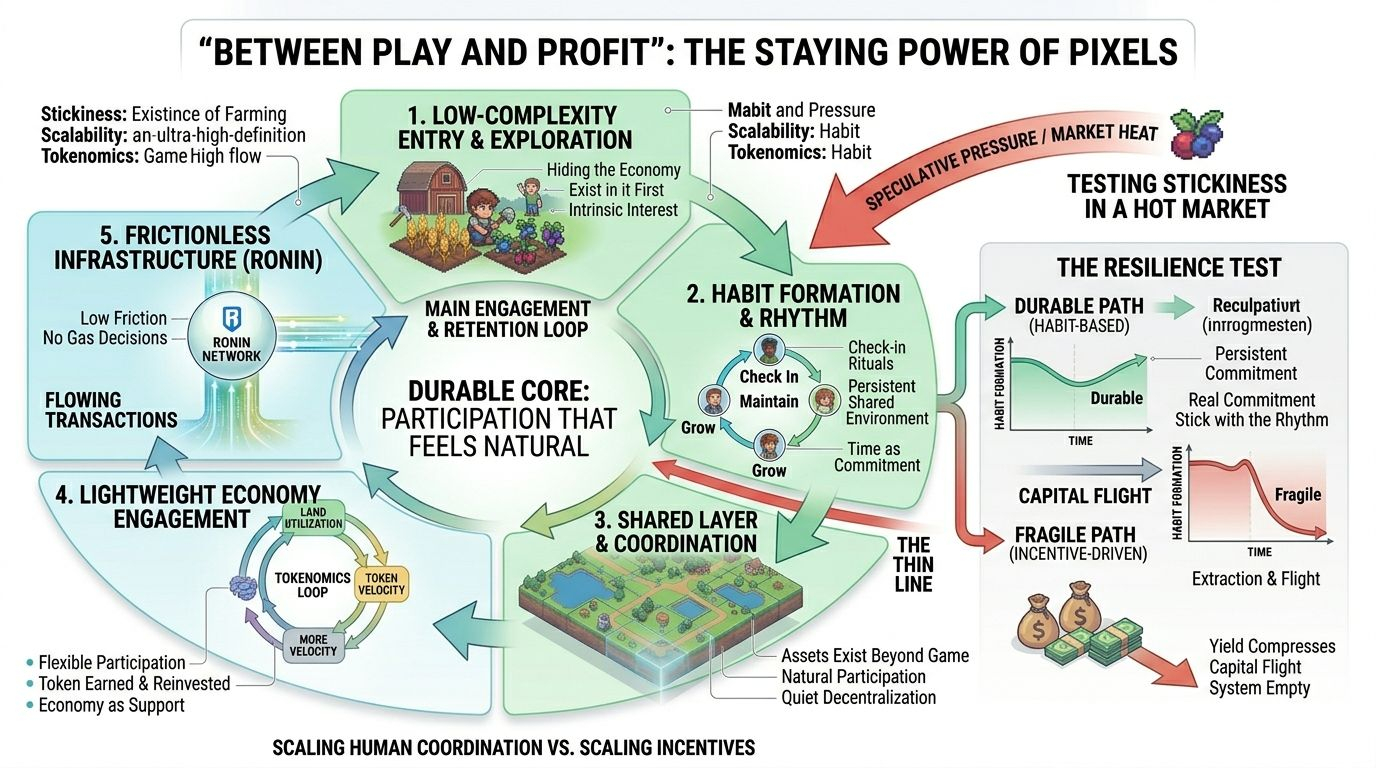
If rewards start to outweigh intrinsic interest, the system becomes fragile. You won’t notice it immediately. It happens gradually. Slight drop in engagement, more extraction, less reinvestment. Then one day it feels empty, even if the numbers still look fine.
Pixels hasn’t hit that point. But it’s not immune to it either.
There’s also something else that feels under-discussed.
Pixels sits in a strange psychological space. It’s not quite a game in the traditional sense, and it’s not purely financial. It’s closer to a habit. Something you check in on. Maintain. Grow over time.
That might actually be the real experiment here.
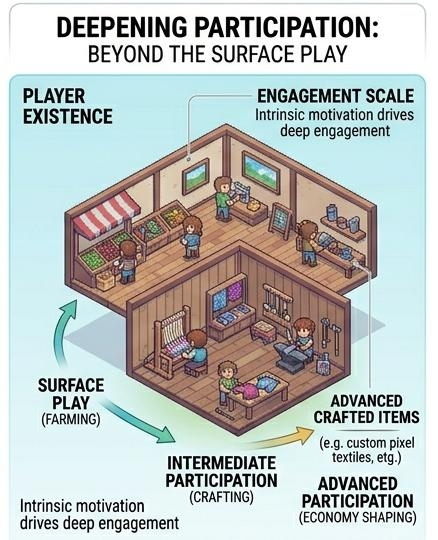
Not whether people will play a Web3 game, but whether they’ll maintain a shared digital environment where their time, assets, and small decisions accumulate into something persistent.
That’s a different kind of commitment. Less intense than trading. More consistent than speculation.
And honestly, I’m not sure how scalable that is.
Because habits are fragile in crypto. Attention shifts fast. One new narrative, one better opportunity, and people move. Not slowly. Instantly.
So the real test isn’t what Pixels looks like today. It’s what happens when the market heats up again. When capital starts chasing higher returns, when attention fragments, when people become more selective about where they spend their time.
Does this kind of system hold or does it get outcompeted by something louder, faster, more immediately rewarding?
I keep thinking about how it didn’t try to demand my attention. It just earned a bit of it over time.
That’s rare here.
But rare doesn’t always mean durable.
And maybe that’s the part I can’t fully resolve yet.
Because if this works, it points to a version of crypto that isn’t driven purely by speculation, but by participation that actually feels natural. Systems where people stay not because they have to, but because it fits into their rhythm.
If it doesn’t, then it’s just another well-designed loop that held together as long as the incentives made sense.
So I’m left with this quiet question in the back of my mind.
Are we finally seeing something people might genuinely stick with or just another system that hasn’t been tested by real market pressure yet?